Breaking President Donald Trump will hold back-to-back rallies in Iowa and Kansas on Sunday, Nov. 1, reversing a decision announced a day earlier to skip the two Senate battleground states in the final weekend before the midterms, according to the Associated Press. The Iowa rally has moved from Dubuque to Cedar Rapids, and the Kansas
Breaking
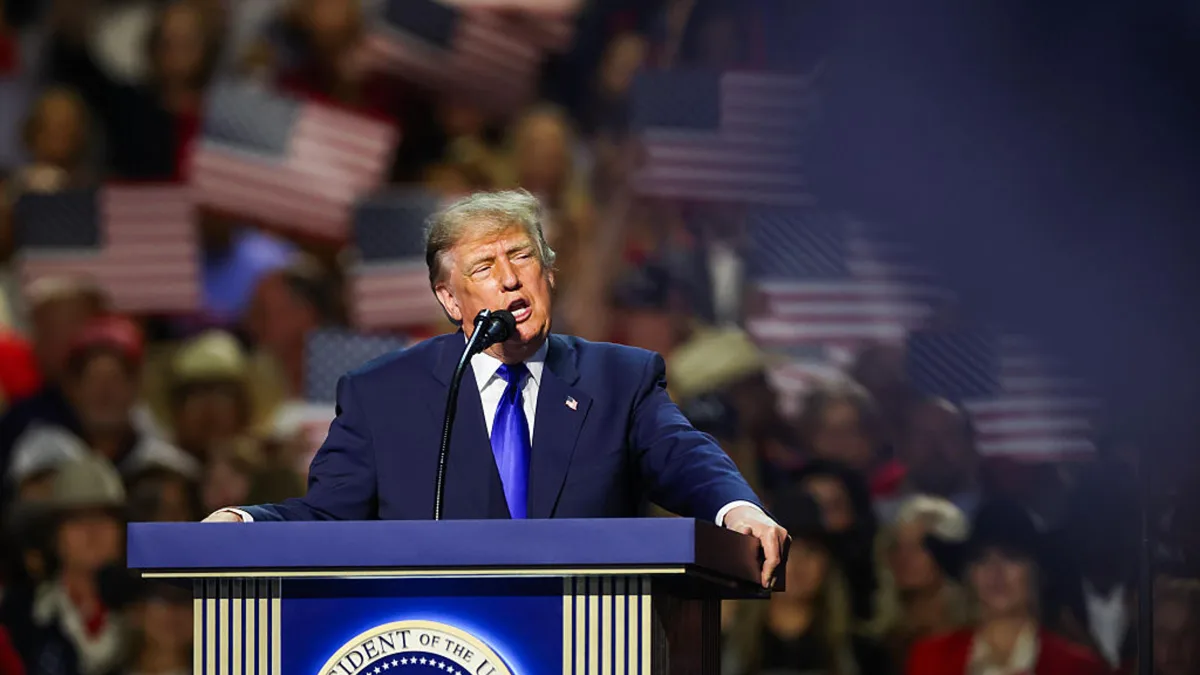
President Donald Trump will hold back-to-back rallies in Iowa and Kansas on Sunday, Nov. 1, reversing a decision announced a day earlier to skip the two Senate battleground states in the final weekend before the midterms, according to the Associated Press. The Iowa rally has moved from Dubuque to Cedar Rapids, and the Kansas stop, originally planned for Saturday in Salina, is now set for Sunday.
On Thursday, Trump had brushed off the need to visit Kansas. “I don’t feel I have to go to Kansas,” he said, adding, “I’m not going to Kansas because he’s doing very well,” in an apparent reference to Republican Sen. Roger Marshall. Trump also rejected suggestions that fatigue or his health played a role in the cancellation. “I feel perfect,” he said. The comments came as Democrats questioned whether the president was pulling back from states where Republicans are struggling.
12,200+
patriots joined
Keep reading — stay on the brief
Daily MAGA briefing in your inbox. Free, unsubscribe anytime.
Details & Background
The Republican National Committee initially said Trump would hold telerallies instead, as part of a “72-hour sprint” of phone events to reach more voters. Telerallies are much cheaper than in-person events and typically last about 10 minutes, the AP reported. A source told Al Jazeera the schedule was rearranged to fit in more telerallies while restoring the two in-person stops. Trump has headlined 25 rallies in October, including a Friday night stop in Daytona Beach, Florida, with gubernatorial nominee Byron Donalds and Sen. Ashley Moody.
Both states have competitive Senate races that could decide control of the chamber. In Kansas, Marshall faces Democrat Adam Hamilton, a Methodist pastor running as a moderate, and an Emerson College poll showed Hamilton leading 49% to 45%, according to Al Jazeera. Kansas has not elected a Democrat to the Senate since 1932. In Iowa, Trump is backing Republican Rep. Ashley Hinson in her Senate race against Democrat Josh Turek, in a race Fox News has described as tightening. Vice President JD Vance campaigned for Marshall in Kansas earlier this week.
Reactions
Trump went after Hamilton in a Kansas City radio interview, calling him “radical” and saying he “caused turmoil with the church because he’s so liberal.” He called Marshall “fantastic.” Marshall has been blunt about the stakes in his race, warning, “if we lose Kansas, I don’t see how we keep control of the Senate.” In Daytona Beach, Moody urged the crowd, “Vote like you have something to lose, because you do.”
Democrats seized on the original cancellation. Former Obama strategist David Axelrod called it a “strategic retreat,” according to Al Jazeera. The RNC argued that virtual appearances are a more efficient way to reach voters in the final days, and Republican officials have not ruled out adding another campaign event before Tuesday. Earlier this month, Trump said he planned to hold five to seven rallies a week through the election.
Why This Matters to You
Control of the Senate will determine whether President Trump can confirm judges and advance his agenda in his final two years in office. Republicans hold a 53-47 Senate majority, and Democrats need a net gain of four seats to take control. Kansas and Iowa, normally safe Republican states, are now in play, and the president’s decision to show up in person signals how seriously Republicans are taking the threat.
Analysts warn that cost-of-living concerns, including higher fuel prices tied to the war with Iran, could hurt Republicans at the polls. With more than 30 million Americans having already voted and Election Day on Tuesday, Sunday’s rallies are among the president’s last chances to fire up voters in states that could decide the balance of power in Washington for the rest of his term.