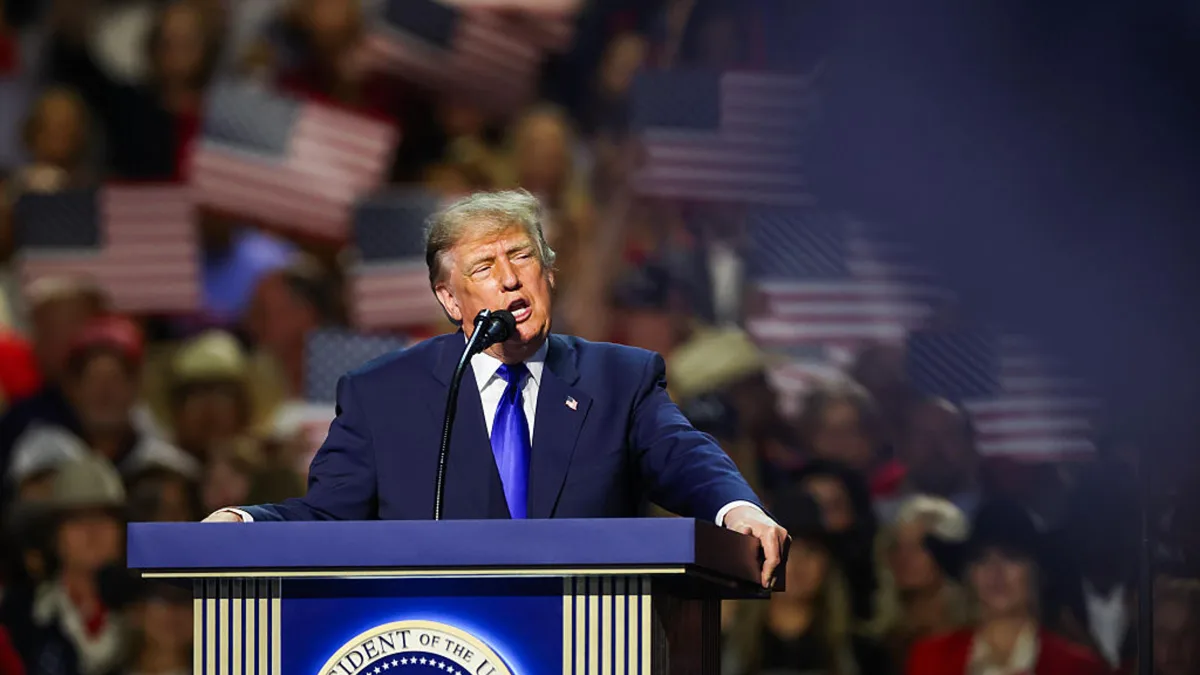
President Donald Trump has signed an executive order to pour new energy into women’s health research, and he did it at the urging of someone very close to home. In a Rose Garden ceremony on Monday, October 19, 2026, the president credited First Lady Melania Trump with driving the effort. The order creates a brand

President Donald Trump has signed an executive order to pour new energy into women’s health research, and he did it at the urging of someone very close to home. In a Rose Garden ceremony on Monday, October 19, 2026, the president credited First Lady Melania Trump with driving the effort. The order creates a brand new Women’s Health Division at the National Institutes of Health and a White House task force to go with it.
The order is titled Advancing Women’s Health to Improve Outcomes in All Phases of Life. It directs the Department of Health and Human Services, working through the NIH, to stand up the new division within 90 days. That is a short clock by Washington standards, and it signals that the White House wants results rather than a study that gathers dust.
12,200+
patriots joined
Keep reading — stay on the brief
Daily MAGA briefing in your inbox. Free, unsubscribe anytime.
Melania Trump spoke first, introducing the order from the Rose Garden before her husband took the podium. She said it establishes a new standard for women’s health in America. Her signature was added to the document after the president’s, though it carries no legal weight, a symbolic touch that underlined whose project this really was.
The president said the order will promote new research and go after understudied diseases affecting women. He told the crowd that despite remarkable advances in medical science, many conditions that disproportionately affect women remain chronically understudied. It is a point that doctors and patient advocates across the political spectrum have made for years.
Then came a classic Trump moment. Recalling that he asked the first lady whether it was true that no such division already existed, he asked who the hell wouldn’t have a women’s health division. The line drew attention precisely because it captured the bewilderment many Americans feel that something this basic was not already in place.
The order puts a spotlight on a list of conditions. It calls for targeting maternal health, mental health and endometriosis, and it also names Alzheimer’s disease, osteoporosis, heart disease and stroke. Infertility and menopause are among the other areas flagged as needing more research.
The new division will not replace the NIH’s existing Office of Research on Women’s Health. Instead, it will carry a broader mandate that reaches beyond research alone. The order also aims to promote diagnostic technology and improve treatment, which suggests an eye toward getting discoveries out of the lab and into the exam room.
A White House Women’s Health Task Force will coordinate across federal agencies and programs. It is co-chaired by White House Chief of Staff Susie Wiles and Health and Human Services Secretary Robert F. Kennedy Jr. The task force was scheduled to hold its first meeting the very same Monday, another sign that the administration intends to move fast.
The Wiles connection is personal. The chief of staff recently completed treatment for breast cancer, and her presence at the head of this effort gives the initiative a human face that cannot be dismissed as pure politics. A senior White House official who has lived the experience of a women’s health diagnosis is now helping steer federal priorities.
Melania Trump’s role was more than ceremonial. The order came after she held a series of meetings with physicians, federal health officials and other experts to understand what was missing in women’s health. She then helped shape the order and the task force in consultation with White House officials, Kennedy and the president.
According to the White House, the effort rests on five objectives. Among them are directing research funding toward cures for illnesses that affect women in unique ways, and making conversations about women’s health less taboo. Both goals speak to long-standing gaps in how medicine and public discussion have treated women’s bodies.
The administration says the order builds on actions since January 2025. HHS points to expanded NIH research initiatives on midlife health, maternal health, autoimmune disease, endometriosis, infertility, sex differences and hormone health. Officials describe it as a shift away from treating conditions in isolation and toward a whole-person approach built on prevention, root causes and rigorous science.
The order also explicitly revokes former President Joe Biden’s March 2024 executive order on women’s health research, along with a November 2023 memorandum that created a White House initiative on the subject. That Biden order, signed in an election year and led on the political side by then first lady Jill Biden, was widely seen as a campaign-season gesture even as it covered similar ground. The Trump team is replacing it with its own framework.
It is worth remembering how late the federal government came to this issue in the first place. It was not until the 1990s that Washington required women to be included in federally funded medical research. For most of medical history, scientific study was based almost entirely on men, leaving real gaps in what doctors know about women’s health.
The order is notable for what it avoids. It does not bury women’s health in a sprawl of bureaucratic language or tie it to a partisan slogan. It focuses on diseases, diagnostics and treatments, the things that actually decide whether a woman gets the right answer in a doctor’s office.
For Kennedy, the order fits neatly with his push to rethink chronic disease in America and look harder at root causes. Women’s health conditions such as autoimmune disease, hormone health and metabolic problems sit at the heart of that agenda. The task force gives him a formal vehicle to press the case across agencies.
For Melania Trump, the signing marks one of the most visible policy achievements of her time as first lady in the second term. She has often kept a lower profile than her predecessors, which made the Rose Garden event all the more striking. Her husband made sure everyone knew who deserved the credit.