Nearly a decade after the FBI’s Russia investigation first ensnared General Michael Flynn, the Trump White House has released a new batch of declassified records that once again raise hard questions about how federal agents built the case that forced out the president’s first national security adviser. The documents, made public Wednesday by the White
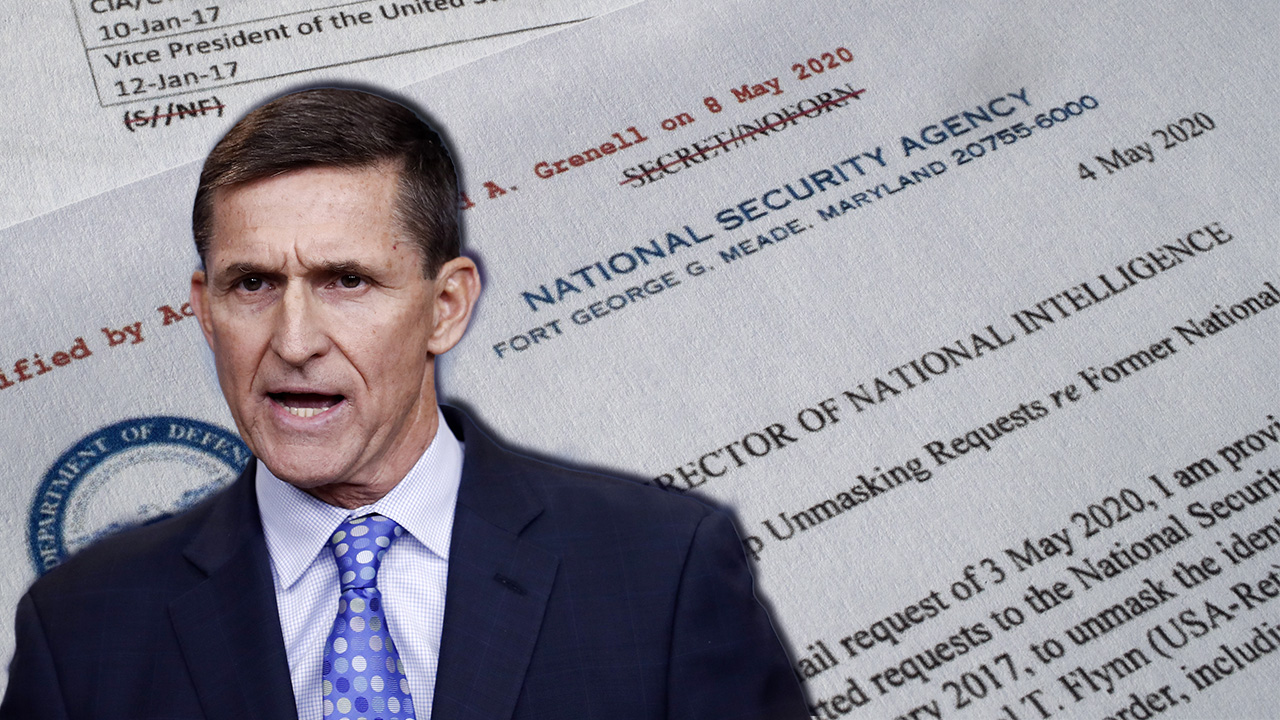
Nearly a decade after the FBI’s Russia investigation first ensnared General Michael Flynn, the Trump White House has released a new batch of declassified records that once again raise hard questions about how federal agents built the case that forced out the president’s first national security adviser. The documents, made public Wednesday by the White House Government Transparency Task Force, show clear discrepancies between the handwritten notes agents took during Flynn’s January 2017 interview and the official typed report the FBI later used to justify charging him.
The task force released the handwritten notes alongside the FBI’s formal interview report, known internally as a 302, documenting the January 24, 2017, questioning of Flynn inside his own White House office. Two agents conducted that interview: then Deputy Assistant Director Peter Strzok, the same official whose anti-Trump text messages later blew up his career, and Supervisory Special Agent Joe Pientka. The underlying documents themselves were declassified by the FBI back on July 30, but Wednesday marked the first time the public could see the notes and the typed report side by side.
12,200+
patriots joined
Keep reading — stay on the brief
Daily MAGA briefing in your inbox. Free, unsubscribe anytime.
The comparison is revealing. Flynn ultimately pleaded guilty in December 2017 to a single count of lying to the FBI. Prosecutors built that charge around two specific claims: that Flynn falsely denied asking Russian Ambassador Sergey Kislyak to hold off on retaliating against a fresh round of American sanctions and diplomat expulsions, and that he falsely denied asking Kislyak to delay or help defeat a United Nations Security Council vote on Israeli settlements. It was that first claim, the one about the sanctions and expulsions, where the newly released records show the sharpest gap between what agents actually wrote down in the room and what the FBI’s official account later claimed.
According to the typed 302 report, Flynn responded to questions about the expulsions by saying he did not really remember discussing the matter, adding that it was not a case of telling Kislyak to do nothing. That qualifying language, the suggestion that Flynn actively clarified he had not instructed the ambassador to hold back, became a key piece of the government’s theory that Flynn had crafted a specific and deliberate denial.
But Pientka’s own handwritten notes from that exact moment in the interview tell a simpler story. His contemporaneous notes render Flynn’s answer without any of that qualifying language at all, capturing a far more direct and less parsed response. The absence of the more elaborate phrasing in the agent’s real-time notes raises an obvious question that Flynn’s defenders have asked for years: where exactly did the more detailed, prosecution-friendly version of Flynn’s answer actually come from, if not directly from the room?
A similar gap shows up in the records concerning how many phone calls Flynn placed that day. The FBI’s typed report states plainly that Flynn remembered making four to five calls related to the sanctions issue, a detail prosecutors used to paint Flynn as having a clear and specific recollection of his own conduct. Pientka’s handwritten notes, however, indicate the opposite. Rather than recalling the calls with confidence, Flynn appears to have expressed uncertainty about whether he made them at all, and if he did, questioned whether it would have even been an appropriate place to place them. Strzok’s own separate notes back this up, capturing Flynn essentially asking aloud whether he made four or five calls that day, and stating that if he did, he simply did not remember.
That is not a small discrepancy. The entire foundation of a false statements charge rests on the government being able to prove precisely what someone said and precisely how that statement diverged from the truth. If the contemporaneous notes taken by the very agents conducting the interview show a vague, uncertain Flynn rather than the confident, specific Flynn described in the official report, that gap becomes central to any honest evaluation of whether the case against him was built the way it should have been.
Not every part of the record breaks the same way. On the second statement underlying Flynn’s guilty plea, the one involving the United Nations vote on Israeli settlements, the newly released notes and the FBI’s typed report actually line up. Both agents recorded Flynn denying that he had asked Kislyak to vote a particular way or to slow the vote down. Strzok’s notes capture the exchange directly, noting the question about voting a certain way or slowing things down, followed simply by Flynn’s denial. On that specific point, at least, the contemporaneous record supports the official government account.
Still, the discrepancies on the sanctions and expulsions question are significant enough on their own to reignite a debate that has simmered since 2017: was the official FBI report of Flynn’s interview an accurate, faithful record of what was said in that room, or was it shaped, whether through sloppiness, bias, or something more deliberate, into a version more useful for building a criminal case? Flynn’s legal team argued for years that the 302 form had been altered from the agents’ original notes, and these newly declassified records give that argument fresh oxygen.
Adding to the intrigue is a technical detail buried in the paperwork itself. The typed report is stamped as a draft document and deliberative material, and while it lists January 24 as the date the interview occurred and was drafted, the report’s own recorded date of entry is February 15, more than three weeks later. That gap between the interview and the finalized paperwork has long been a point of suspicion for those who believe the document went through unusual editing before it was locked into its final form, and the newly declassified stamp only reinforces how irregular the process behind this particular piece of evidence really was.
Flynn’s case, of course, did not end quietly. After years of legal wrangling, changed legal teams, and a formal attempt to withdraw his guilty plea on the grounds that he had been set up by corrupt actors inside the FBI, the Justice Department itself moved to dismiss the case entirely in May of 2020. President Trump followed that up in November 2020 with a full pardon, closing the book on a prosecution that had already become one of the most contested chapters of the entire Russia investigation saga.
Wednesday’s document release did not stop with the Flynn interview materials. The task force also released the transcript of former FBI Director James Comey’s December 2018 closed-door testimony before the House Judiciary and Oversight committees. In that testimony, Comey stated that he personally ordered the interview of Flynn in order to figure out why the incoming national security adviser appeared to be making false statements to the vice president regarding his conversations with the Russian ambassador. That admission, that the interview was specifically triggered by concerns about what Flynn had or had not told Vice President Pence, has long been cited by conservatives as evidence that the entire episode began as a political and internal White House matter rather than a genuine national security threat requiring FBI intervention.
The timing of this release is anything but incidental. It comes as a federal grand jury sitting in Fort Pierce, Florida, is actively examining whether officials inside the Obama administration coordinated in an effort against Trump during the transition period and the early days of his first term. Comey himself has been subpoenaed as part of that broader inquiry, placing his own conduct and his own account of ordering the Flynn interview squarely in the crosshairs of federal investigators for the second time in his post-FBI career.