President Donald Trump departed for Beijing on Tuesday, May 12, 2026, embarking on a state visit to China that marks the first time an American president has set foot in the People’s Republic in nearly nine years and arrives at one of the most consequential diplomatic moments of his second term. Trump’s first state visit
Trump will pay a state visit to China from May 13 to 15 at the invitation of President Xi Jinping. It will mark the first visit to China by an American president in almost nine years and comes at a time of heightened bilateral tensions over a range of issues, including trade, technology, and defense.
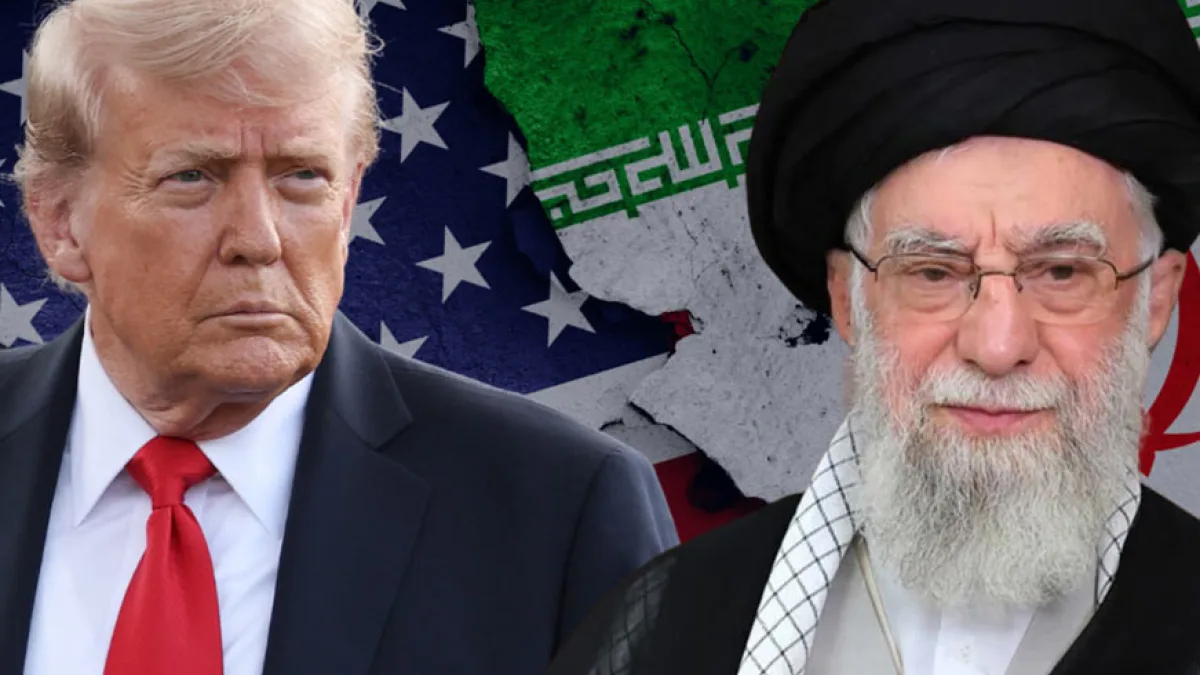
The timing also intersects with a precarious U.S.-Iran ceasefire and a dual blockade of the Strait of Hormuz that is driving up energy prices and weighing on global economic growth.
The state visit was planned for the first week of April, but the meeting was postponed to May due to the 2026 Iran war. Trump had hoped the conflict would be resolved in a matter of weeks, clearing the diplomatic calendar for a clean bilateral summit focused on trade and economic priorities.
The war is now in its third month, with a ceasefire Trump himself described on Monday as “on massive life support.” The Iran shadow will hang over every bilateral discussion, reshaping an agenda that was originally designed around economic rebalancing into a conversation dominated by geopolitical crisis management.
Trump’s schedule includes a welcome ceremony, two bilateral meetings with Xi, a state banquet, a tour of the Temple of Heaven, and tea in a whirlwind less than 48 hours on the ground.
The compressed timeline reflects both the urgency of the visit and the recognition that, in a relationship as complicated as the one between Washington and Beijing, symbolic gestures of mutual respect can accomplish as much as detailed technical negotiations.
Two bilateral meetings give Trump and Xi private time to address the most sensitive issues without the constraint of prepared remarks or the presence of staffers taking notes.
Trump invited Tesla’s Elon Musk, Apple’s Tim Cook, and BlackRock’s Larry Fink to join his China trip for talks with Xi Jinping on trade, AI, and geopolitics.
The business delegation is one of the most high-profile commercial accompaniments to any presidential trip in recent memory, spanning technology, finance, aviation, and energy.
Musk’s Tesla has significant manufacturing operations in China. Cook’s Apple depends on Chinese supply chains for the majority of its hardware production.
Their presence signals that the administration views this trip not merely as a diplomatic exercise, but as a commercial opening that American companies are ready to capitalize on.
Trump and Xi are expected to unveil a series of agreements on aerospace, agriculture, and energy, and discuss a U.S.-China Board of Trade and a U.S.-China Board of Investment, according to White House principal deputy press secretary Anna Kelly.
Agricultural purchases, Boeing airplane orders, and energy deals represent the tangible economic deliverables that both sides can claim as wins regardless of what happens on the more contested issues.
China wants American farm products and aircraft. America wants Chinese market access and purchase commitments.
The commercial dimension of the summit is where agreement is most achievable.
Trump is also expected to raise the topic of artificial intelligence, with the U.S. and China locked in a race to build the most sophisticated and advanced AI technology.
The AI competition between Washington and Beijing is one of the defining strategic contests of the 21st century, and Trump’s decision to raise it directly in bilateral meetings reflects the administration’s recognition that technology competition cannot be separated from the broader relationship management that the summit is designed to achieve.
On April 16, Defense Secretary Pete Hegseth announced that Beijing had provided high-level assurances to the White House that it would not send weapons to Iran, explicitly ruling out the potential transfer of surface-to-air missiles to the Iranian military.
Hegseth attributed this breakthrough to the strong and direct relationship between President Trump and Xi Jinping, noting that the assurances were vital for the upcoming meeting in Beijing.
That pre-summit assurance is itself a significant diplomatic achievement, and it signals that China has made a strategic calculation that protecting its relationship with Washington is worth the short-term cost of denying Iran the weapons systems that would make enforcing the U.S. blockade more dangerous for American naval forces.
The Iran question is expected to dominate the summit’s most sensitive bilateral sessions.
Lyle Goldstein, director of the China Initiative at Brown University, said: “I do think that this war will dominate the summit. Let’s face it, it will push a lot of other things off the agenda. Iran’s foreign minister recently went to China and met with his counterpart there. And China is credited with helping to push Iran to accept the initial ceasefire.”
Trump is expected to press Xi directly to use China’s economic leverage over Iran, specifically its role as Iran’s primary oil purchaser, to push Tehran toward accepting a deal that includes verifiable dismantlement of its nuclear enrichment program.
China has sought to portray itself as a potential peacemaker, which Xi may look to parlay into goodwill with his American counterpart.
Beijing is aware that Trump’s more transactional approach toward them is at odds with U.S.-China hawks who would like to see the president take a harder line.
China’s peacemaker positioning is convenient for Beijing because it costs relatively little while generating significant diplomatic credit.
If Xi can deliver an Iranian concession on the nuclear question through quiet pressure, the goodwill generated with the Trump administration would benefit China’s broader strategic interests in ways that far outweigh the modest commercial sacrifice of reducing Iranian oil purchases.
Both leaders will likely announce Chinese purchases of American products, such as Boeing airplanes and agricultural goods.
They also likely will announce a bilateral Board of Trade to identify non-sensitive sectors for purchase commitments and limited tariff adjustments.
Those commercial deliverables will be the headline announcements from the summit, and they serve the political needs of both leaders.
Trump can tell American farmers, manufacturers, and workers that he extracted significant purchase commitments from China.
Xi can tell Chinese audiences that he secured favorable trade terms and demonstrated China’s indispensability to the American economy.
Anna Kelly, the White House deputy press secretary, said: “The American people can expect the president to deliver more good deals on behalf of our country. These agreements will further rebalance trade with China while putting American workers, farmers, and families first and safeguarding U.S. national security interests.”
That framing—rebalancing trade while safeguarding national security—is the dual mandate the administration brings to every engagement with Beijing and reflects the genuine tension at the heart of the relationship: America needs Chinese commercial engagement while simultaneously competing with China on technology, military capability, and strategic influence.
The Taiwan question will be present in every bilateral discussion even when it is not the explicit subject.
China is expected to push the U.S. to adjust its Taiwan policy to express opposition to Taiwan independence and reduce arms sales to the island.
Beijing also wants its companies, including electric vehicle makers, to have more access to the U.S. market and to be removed from blacklists.
Taiwan arms sales and market access for Chinese EV makers are the two issues where China’s demands are most likely to produce friction, and the administration has given no indication it is prepared to make significant concessions on either.
Trump has long expressed an admiration for Xi and the power he wields within China.
Dennis Wilder, a professor at Georgetown University who was a top adviser to President George W. Bush on China policy, said: “It’s not just hyperbole, but the president is his own China officer. And he believes he understands Xi Jinping, he believes he can negotiate good deals with China.”
The personal relationship between the two leaders is the most important variable in any Trump-Xi summit.
Both men operate on personal rapport and direct communication in ways that career diplomats and institutional processes cannot replicate.
Treasury Secretary Scott Bessent is set to join his counterpart He Lifeng for a meeting Wednesday in Seoul ahead of the leaders’ summit.
The Treasury-to-Treasury channel handles the financial and currency dimensions of the bilateral relationship that are too technical for leader-level discussion but too consequential to leave entirely to working-level staff.
Bessent’s involvement signals that the financial architecture of any trade deal, including questions about currency management and investment rules, is being addressed in parallel with the political summit.
Eric Trump and his wife, Lara, will accompany Trump in a personal capacity on the visit.
Reuters noted that this may represent a conflict of interest, given that Trump’s personal wealth and business dealings are managed by Eric and other members of his family.
The presence of Eric and Lara Trump in the delegation in a personal capacity has drawn criticism from Democratic members of Congress and ethics watchdogs who argue that the mixing of personal business interests with official diplomatic activity creates, at minimum, the appearance of a conflict.
The White House has characterized their participation as entirely personal.
The American president is landing in a much different China than when he made his last visit nearly a decade ago.
In the face of mounting tensions with the U.S., Beijing has marshaled a vast, top-down push to shore up self-sufficiency across supply chains and high tech.
China’s decade-long push for technological and industrial self-sufficiency means that Trump arrives in a country that has been deliberately reducing its dependence on American technology, American financial markets, and American goodwill.
The China of 2026 is more confident and more self-reliant than the China of 2017, and Xi approaches the summit from a position of comparative strength relative to the last time the two men met on Chinese soil.
The fentanyl question is one of the agenda items where significant progress has historically proven elusive, but where domestic American political pressure makes results essential.
The Trump administration’s preferred tool of diplomacy, tariffs, was gutted by the February 2026 U.S. Supreme Court decision against its use of the International Emergency Economic Powers Act.
In March 2026, the United States began charging Chinese precursor smugglers with material support for terrorism, following the designation of Mexican cartels as foreign terrorist organizations.
The new terrorism charges against Chinese precursor suppliers represent a more aggressive legal approach to the fentanyl problem than prior administrations pursued.
The Council on Foreign Relations described the meeting as an effort to stabilize U.S.-China relations rather than resolve long-standing disputes between the two countries.
It also highlighted China’s trade with Russia during the Russo-Ukrainian war, including exports of dual-use goods and imports of Russian energy products, as a continuing source of tension between Washington and Beijing.
The Russia dimension of the bilateral relationship is one where American and Chinese interests are most directly opposed, as China’s economic relationship with Russia provides Moscow with the commercial lifeline that sustains its capacity to continue the Ukraine war.
Trump noted Monday that he’ll bring up the fates of both former Hong Kong media tycoon Jimmy Lai, who was sentenced to 20 years in prison earlier this year, and Pastor Ezra Jin, who is imprisoned in China.
The human rights cases represent the moral dimension of the bilateral relationship that Trump is raising directly with Xi in a way that distinguishes his approach from the pure transactionalism that critics sometimes attribute to his China policy.
Raising individual cases is a long-standing practice in presidential diplomacy with China, and the outcomes in such cases are often more influenced by the overall state of the relationship than by the strength of any particular argument.
White House deputy press secretary Anna Kelly said: “These agreements will further rebalance trade with China while putting American workers, farmers, and families first and safeguarding U.S. national security interests.”
China is expected to have plans to purchase additional soybeans and other farm goods, as well as Boeing airplanes.
Agricultural purchases represent the most straightforward deliverable from a Chinese perspective.
Beijing can announce soybean and wheat purchase commitments that deliver concrete benefits to American farmers in key electoral states without making any concession on the technology, military, or Taiwan issues that matter most to China’s long-term strategic interests.
The summit’s success or failure will ultimately be measured less by the agreements signed and more by whether it produces the conditions for further stability in the relationship.
The summit can be understood more for what it aims to avoid, such as a breakdown in the relationship, than what it seeks to achieve.
To be clear, there will be outcomes from Trump’s visit. But many Chinese analysts expect a U.S. snapback to a more competitive China policy, either after the midterms or after Trump steps down in 2029.
Some experts state that the ongoing 2026 Iran war could give China greater leverage when dealing with Donald Trump, given that the U.S. has diverted resources away from South Korea and Japan to the Middle East, which could be used during a potential conflict over Taiwan.
The geopolitical leverage argument is the most pointed critique of the summit’s timing from the hawkish wing of American foreign policy commentary.
An America at war in the Middle East, with its naval resources partially committed to the Strait of Hormuz blockade, is an America with reduced capacity to deter Chinese pressure on Taiwan.
The business executives accompanying Trump understand the commercial stakes clearly.
Apple’s supply chain dependence on Chinese manufacturing, Tesla’s market dependence on Chinese consumers, and Boeing’s need for Chinese aircraft orders are not abstractions.
They are revenue-critical realities that give the corporate delegation a direct financial interest in the summit producing a stable and commercially functional bilateral relationship regardless of the broader geopolitical tensions between Washington and Beijing.
Trump’s personal conviction that he can negotiate effectively with Xi, backed by a track record that includes the Phase One trade deal of 2020; the tariff truce that stabilized the relationship heading into the summit; and the pre-summit assurance on Iran weapons, gives the administration legitimate grounds for optimism about what personal diplomacy can achieve.