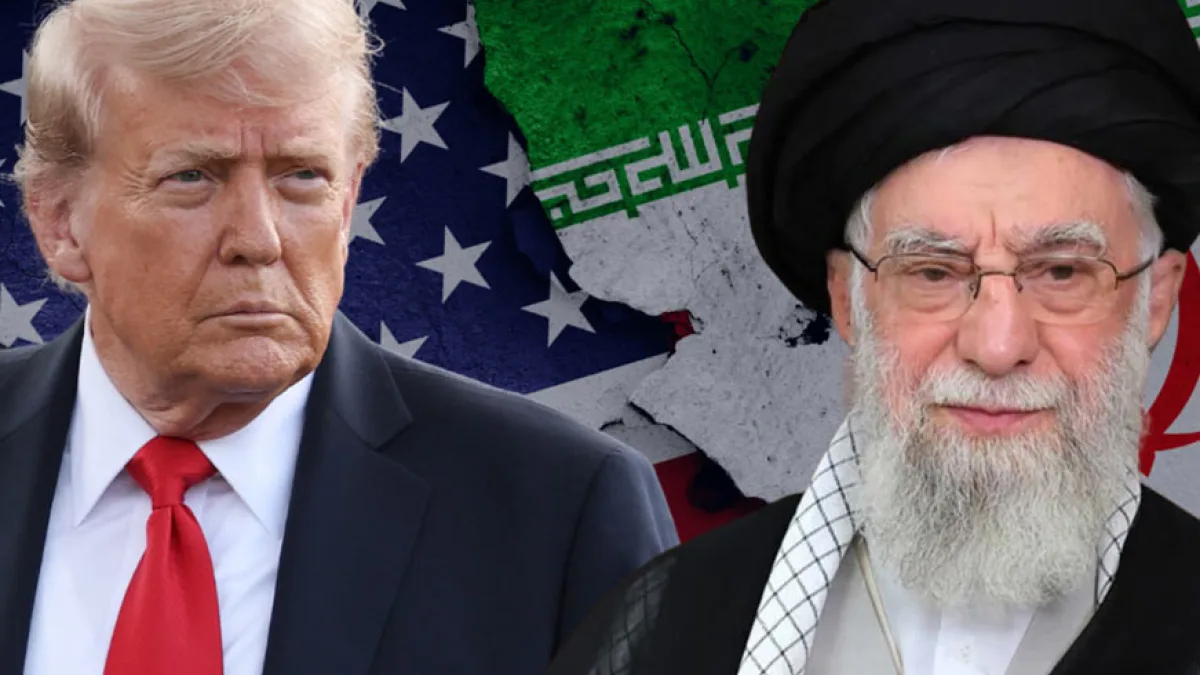
President Donald Trump rejected Iran’s latest counterproposal to end the 70-day Middle East conflict on Sunday, May 10, 2026, declaring on Truth Social that the ceasefire is now on “massive life support” and warning that a return to active military operations could come very soon. “I have just read the response from Iran’s so-called ‘Representatives,’̶

President Donald Trump rejected Iran’s latest counterproposal to end the 70-day Middle East conflict on Sunday, May 10, 2026, declaring on Truth Social that the ceasefire is now on “massive life support” and warning that a return to active military operations could come very soon.
“I have just read the response from Iran’s so-called ‘Representatives,'” Trump posted. “I don’t like it. TOTALLY UNACCEPTABLE!” The rejection came as multiple Gulf Arab states reported fresh drone attacks over the weekend that the United Arab Emirates publicly attributed to Tehran, adding to more than ten confirmed Iranian attacks on American forces since the ceasefire was declared on April 8.
The ceasefire that nominally ended major hostilities in the 2026 Iran war has been under sustained stress since its declaration. Chairman of the Joint Chiefs General Dan Caine confirmed publicly at a congressional hearing that Iranian forces had attacked American forces more than ten times since the ceasefire’s start, though none of those incidents had individually crossed the threshold of a return to full combat operations.
The May 7 exchange in the Strait of Hormuz, in which Iranian forces launched missiles, drones, and small boats against three American guided-missile destroyers and US forces responded with retaliatory strikes on Iranian military facilities at Bandar Abbas and Qeshm Island, represented the most significant single incident since the April 8 ceasefire declaration.
Iran’s counterproposal, transmitted through Pakistani mediators, called for halting maritime attacks against Iranian vessels, unfreezing Iranian assets, recognition of Iranian sovereignty over the Strait of Hormuz, and compensation for war damages.
Trump’s Truth Social rejection did not specify which elements of the proposal he found most objectionable, consistent with his practice of maintaining negotiating flexibility by not publicly committing to specific bottom-line positions during active diplomatic exchanges.
US Ambassador to the United Nations Mike Waltz told ABC News that Trump was giving diplomacy every chance before resuming military action, framing the rejection as a negotiating position rather than a declaration of imminent hostilities.
Israeli Prime Minister Benjamin Netanyahu, speaking on CBS News the same day, said there was still work to be done on dismantling Iranian enrichment sites and ballistic missiles.
His statement signals that from Israel’s perspective, the war’s core military objectives have not yet been fully achieved and that any ceasefire framework that leaves Iran’s enrichment capability intact would be insufficient.
The trilateral dynamic of the United States, Iran, and Israel means that a bilateral agreement between Washington and Tehran that does not address Israeli security requirements on nuclear dismantlement faces the risk of resuming Israeli unilateral action regardless of American diplomatic commitments.
The enriched uranium question is the fundamental issue on which the gap between the American position and Iran’s counterproposal is widest.
The Trump administration’s proposal required Iran to permanently dismantle its nuclear enrichment facilities at Natanz, Fordow, and Isfahan.
US Special Envoy Steve Witkoff had stated that Iran must end its enrichment program entirely and that there can be no path to weaponization. Iran’s enriched uranium stockpile, which at the time the conflict began in February had reached enrichment levels sufficient to potentially produce a deliverable nuclear weapon within weeks, remains physically present in Iran.
Trump has stated that the stockpile can be addressed through a deal or through military means.
The drone attacks over the weekend of May 10 and 11 underscore the difficulty of maintaining a ceasefire framework when one party continues to use military force against third countries during the negotiation period. Kuwait, Qatar, and the United Arab Emirates all reported drone attacks over the weekend. The UAE publicly attributed the strikes to Tehran.
Qatar was targeted despite serving as one of the primary mediating parties in the current negotiations. Iran attacking a country that is simultaneously helping to mediate a peace deal between Iran and the United States represents a significant escalation of diplomatic bad faith that complicates the administration’s stated commitment to giving diplomacy every chance.
The fourth round of negotiations was held on May 11 in Oman, just before Trump’s scheduled departure for a state visit to China beginning May 14.
The Omani talks proceeded after Trump’s TOTALLY UNACCEPTABLE rejection on May 10, suggesting that both sides retain some interest in continued diplomatic engagement despite the apparent failure of the counterproposal exchange. The talks’ outcome was not publicly disclosed in the sources available before publication.
Iran’s Foreign Minister Abbas Araghchi had previously told state media that Tehran would never bow to pressure and that diplomacy is always the victim of American military actions, creating a significant gap between the public rhetoric Iranian officials have maintained for domestic audiences and the diplomatic engagement continuing through Omani and Pakistani channels.
The global economic consequences of the Strait of Hormuz situation have reached a severity that is generating sustained international pressure toward resolution from outside the immediate principals. Oil prices remain elevated at approximately $106 per barrel for US crude and $118 per barrel for global benchmark Brent.
Indian Prime Minister Narendra Modi urged Indians to work from home, use public transportation, and minimize international travel in response to the energy crisis the conflict has created. India is the world’s third-largest oil consumer, and Modi’s public call for energy conservation reflects the pressure the Strait’s closure is placing on major economies beyond the immediate conflict zone.
The UN Food and Agriculture Organization has flagged ongoing uncertainty about next year’s wheat output as the Strait’s closure drives up energy and fertilizer costs. Those cost increases translate directly into food production costs and food prices globally.
The secondary economic effects of the conflict on food security in countries across Asia and Africa add to the international pressure on all parties to reach a resolution, pressure that is felt most acutely by the mediating nations Qatar and Pakistan, both of which are experiencing the economic consequences of the disruption they are simultaneously working to end.
The war began on February 28, 2026, when the United States and Israel launched coordinated strikes on Iranian military and government sites under Operation Epic Fury, targeting Iran’s nuclear and ballistic missile infrastructure and resulting in the death of Supreme Leader Ali Khamenei.
Iran responded by closing the Strait of Hormuz and launching missile and drone attacks against American military bases in the region and against Arab Gulf states that host American forces.
The new Iranian supreme leader, Khamenei’s son, has been operating in an extraordinarily constrained command environment since his designation. American intelligence has not been able to visually confirm his whereabouts.
He is communicating exclusively through physical couriers rather than electronic means. On May 10, the day after Iran transmitted its counterproposal to American negotiators, the new supreme leader publicly supported chants of “Death to America” during a speech.
Trump has maintained throughout the conflict that the strategic objective of preventing Iran from acquiring a nuclear weapon justifies the economic and military costs of the operation. The strikes that began February 28 degraded Iran’s nuclear enrichment infrastructure substantially.