Breaking President Donald Trump ignited global concern after issuing a dramatic statement warning of a potentially catastrophic turning point involving Iran. In a post on Truth Social, Trump declared: “A whole civilization will die tonight, never to be brought back again.” The message, delivered with a specific reference to an imminent moment, quickly drew attention
Breaking
President Donald Trump ignited global concern after issuing a dramatic statement warning of a potentially catastrophic turning point involving Iran. In a post on Truth Social, Trump declared: “A whole civilization will die tonight, never to be brought back again.” The message, delivered with a specific reference to an imminent moment, quickly drew attention from policymakers, analysts, and international observers.
Trump’s statement included a firm deadline of 8 p.m., adding urgency to an already tense geopolitical situation. While no official confirmation has been provided by U.S. government agencies, the tone and specificity of the message have intensified speculation about possible military or strategic actions underway.
12,200+
patriots joined
Keep reading — stay on the brief
Daily MAGA briefing in your inbox. Free, unsubscribe anytime.
Details & Background
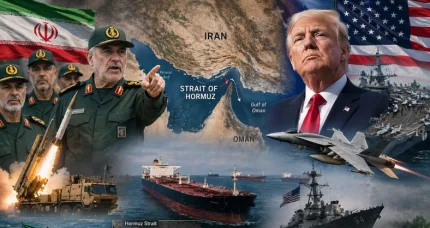
Central to the growing concern is the Strait of Hormuz, a critical global chokepoint through which approximately 20% of the world’s oil supply flows. Any disruption in this narrow waterway would have immediate and far-reaching consequences for global energy markets, trade, and economic stability.
Trump’s reference to “Complete and Total Regime Change” echoes long-standing discussions among U.S. policymakers about addressing Iran’s leadership. However, no official announcement has confirmed that such actions are currently in progress. Reports have surfaced suggesting potential U.S. military activity near Iran’s Kharg Island, a key oil export hub, though these reports remain unverified.
Iranian officials have responded with strong warnings, emphasizing their readiness to defend national sovereignty. State media has reinforced messages of resilience, while military leaders have highlighted their capability to respond to threats, particularly in strategic areas like the Strait of Hormuz.
Reactions
The international response has been swift and cautious. Analysts have noted that even the suggestion of major instability involving Iran can send shockwaves through global markets. Energy prices are particularly sensitive to developments in the region, and any perceived threat to supply routes can trigger rapid economic consequences.
Trump’s message also included a note of potential optimism, stating: “Maybe something revolutionarily wonderful can happen, WHO KNOWS?” This dual tone—warning of destruction while hinting at transformation—has added to the uncertainty surrounding the situation.
Why This Matters to You
The situation involving Iran is not a distant geopolitical issue—it has direct implications for American families and the global economy. Any disruption in oil supply routes could lead to higher gas prices, increased costs of goods, and broader economic instability.
From a national security perspective, the stakes are even higher. Escalation in the Middle East has historically drawn in multiple global powers, increasing the risk of widespread conflict. The U.S. government’s response, both diplomatically and militarily, will play a critical role in shaping the outcome.
This moment underscores the importance of strong leadership and clear strategy in dealing with hostile regimes. The balance between deterrence and diplomacy will determine whether the situation stabilizes—or escalates further.
As the world watches closely, the coming hours may define not only the future of Iran, but the stability of an entire region and beyond.