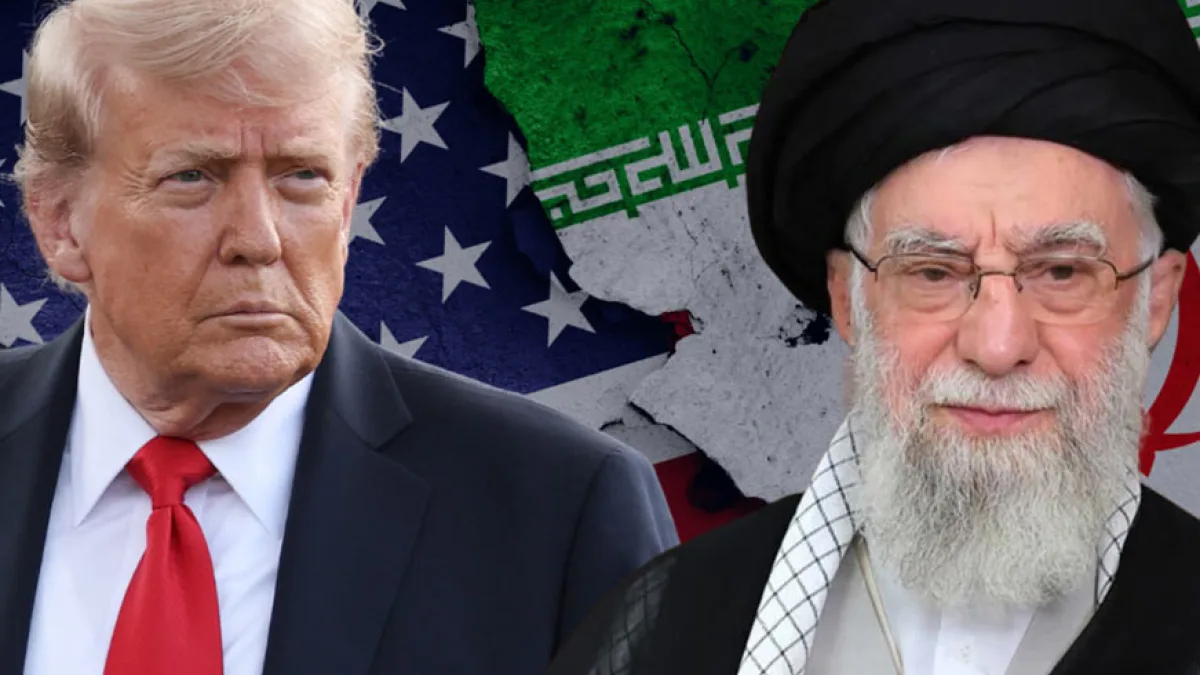
The fragile ceasefire between the United States and Iran has collapsed, and President Trump made it official this week when he declared the deal “over” following a fresh round of Iranian aggression in the Strait of Hormuz. For a president who has spent months trying to give Tehran a chance at peace, the message was

The fragile ceasefire between the United States and Iran has collapsed, and President Trump made it official this week when he declared the deal “over” following a fresh round of Iranian aggression in the Strait of Hormuz. For a president who has spent months trying to give Tehran a chance at peace, the message was clear: America will not sit back while the regime attacks commercial shipping and threatens American interests in the region.
The breakdown began when Iran struck multiple commercial vessels transiting the Strait of Hormuz, one of the most critical waterways in the world for global oil and gas shipments. The attacks came just as Trump was attending the NATO summit in Ankara, Turkey, a timing that reportedly infuriated the president and hardened his resolve to respond with overwhelming force.
Trump did not mince words when reporters asked him about the state of the truce. “As far as I’m concerned, it’s over,” he said, referring to the Islamabad Memorandum of Understanding that Iran and the United States had signed last month to formally pause hostilities. He added that talks could continue but made clear he had little patience left for Tehran’s stalling tactics.
Within hours, US Central Command confirmed it had launched a fresh wave of strikes on Iranian military and port infrastructure. The Pentagon said the operation was designed to further degrade Iran’s ability to threaten freedom of navigation through the strait, through which roughly a fifth of the world’s traded oil and natural gas passes.
The strikes hit a range of targets across Iran, including the port cities of Bandar Abbas, Chabahar, Konarak, and Bushehr, home to Iran’s nuclear power complex, as well as Iranshahr and Aq Qala in the country’s northeast. American forces also struck railway and bridge infrastructure for the first time since the earlier phase of the conflict, a sign that the Pentagon intends to make any renewed aggression costly for the regime.
Iranian state media reported casualties from the strikes, including a firefighter killed in an attack on the Iranshahr airport. Tehran wasted no time retaliating, striking American bases in Bahrain and Kuwait and setting off air raid sirens across the Gulf region. Iran’s Revolutionary Guard claimed responsibility for the attacks and threatened further retaliation if the United States continues its campaign.
This is not the first time Trump has had to respond forcefully to Iranian provocations. The war that began in late February, when the United States and Israel launched joint strikes against Iranian nuclear and military targets, was itself a response to years of the regime’s destabilizing behavior across the Middle East. Despite a ceasefire reached in June, Iran has repeatedly tested the limits of that agreement, closing the Strait of Hormuz, refusing full compliance with shipping terms, and now attacking vessels outright.
Trump made clear that if Iran continues its provocations, the American response will only intensify. “Every time they hit us, we hit them twenty,” he told reporters, underscoring a doctrine of overwhelming retaliation rather than restrained diplomacy. He also warned that the United States could reinstate its naval blockade on Iranian shipping and, if necessary, strike the regime’s electricity and water infrastructure.
The president’s tough posture stands in stark contrast to the failed appeasement strategies of past administrations, which many conservatives argue only emboldened Tehran’s ambitions. For years, the regime exploited diplomatic softness to fund terrorist proxies across the region, from Hezbollah in Lebanon to the Houthis in Yemen. Trump’s approach, by comparison, has been to make clear that aggression carries an immediate and painful price.
Predictably, Trump’s decisive action drew criticism from the political left. Vermont Senator Bernie Sanders claimed that renewed strikes would “cost more lives and waste more taxpayer dollars,” while Massachusetts Senator Elizabeth Warren argued that Trump’s handling of Iran had already cost American lives. Neither senator offered a serious alternative for deterring a regime that just attacked international shipping lanes and fired on American allies in the Gulf.
Iranian officials, for their part, tried to spin the exchange as evidence of American weakness rather than resolve. Deputy Foreign Minister Kazem Gharibabadi claimed Trump’s comments about the ceasefire being over were “not a sign of power but an admission of failure” of American policy. Parliament Speaker Mohammad Bagher Qalibaf issued a thinly veiled threat on social media, warning that any further American strikes would be met with retaliation.
Such bluster is nothing new from Tehran, a regime that has spent decades threatening the United States and its allies while its economy crumbles under the weight of sanctions and mismanagement. Analysts note that four months after the war began in February, Iran’s military capacity has already been significantly degraded, even as hardline elements within the regime cling to power.
Trump has also floated the possibility of targeting Kharg Island, through which roughly ninety percent of Iran’s oil exports pass, a move that would represent a severe blow to the regime’s already fragile economy. While the president has stopped short of ordering such a strike, his willingness to even raise it signals that he is prepared to apply maximum pressure until Iran abandons its aggressive posture for good.
The renewed conflict has not been without cost. The economic toll of the broader war on American taxpayers has already reached well over a hundred billion dollars, according to independent estimates, and global oil markets reacted with immediate volatility after Trump’s comments in Ankara. Still, supporters of the president’s approach argue that the cost of failing to confront Iran decisively would be far higher in the long run, both in dollars and in American lives.
Trump also used the NATO summit to needle European allies over their tepid response to the Iran crisis, arguing that countries that have relied on American military protection for decades were nowhere to be found when Washington needed support against Tehran.
That frustration, which boiled over publicly during the summit, reflects a broader theme of the Trump presidency: a demand that allies contribute their fair share rather than free-riding on American strength.
Despite the harsh rhetoric, Trump insisted he does not want a return to full-scale war with Iran, and that any further military action would be swift and limited rather than an open-ended campaign. He suggested that back-channel talks with Iranian officials were ongoing, even as he expressed skepticism about whether Tehran was serious about reaching a lasting deal.
“They called a little while ago; they want to make a deal so badly,” Trump told reporters aboard Air Force One, adding that he was unsure whether Iranian leaders were “worthy” of one.
The events of the past several days underscore a pattern that has defined Trump’s foreign policy since he returned to office: peace through strength, not through concessions.
Where previous administrations often responded to Iranian provocations with statements of concern and diplomatic hand-wringing, Trump has consistently answered force with force, a posture that supporters credit with degrading Iran’s military capabilities far more than years of sanctions alone ever achieved.
Whether the ceasefire can be salvaged in the coming days remains uncertain. What is clear is that the regime in Tehran, after attacking commercial ships and firing on American bases, has once again shown its true colors.