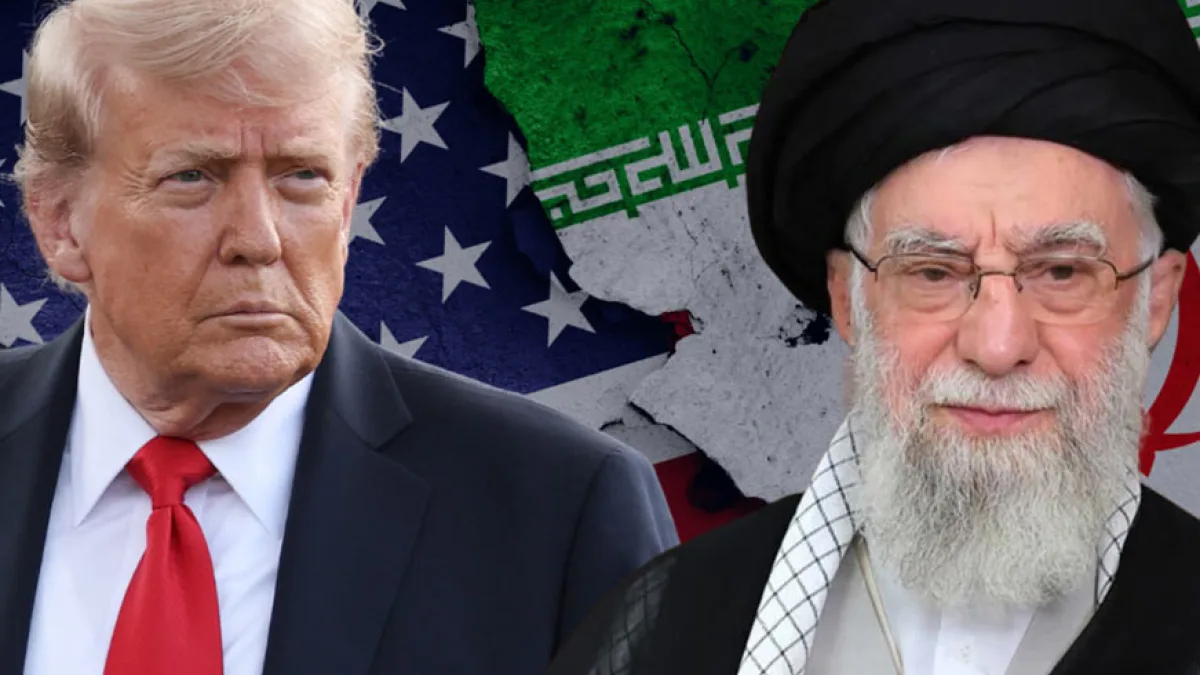
Global financial markets delivered their verdict on President Trump’s Iran peace deal with the kind of speed and clarity that economic data rarely produces. Within hours of Trump’s June 14 announcement on Truth Social that the United States and Iran had reached a framework agreement to end their 109-day war, oil prices were falling sharply
The reaction was not subtle.
It was the most decisive single-day global market move in 2026, and it told a clear story about how much damage the closure of the Strait of Hormuz had done to the world economy over the preceding three and a half months.
Brent crude, the international benchmark for oil pricing, fell 4.8 percent on Monday to $83.17 per barrel, its lowest level since early March 2026.
West Texas Intermediate, the American standard, dropped 4 percent to $81.46 per barrel.
Both figures remain above the roughly $70 per barrel crude was trading at before the conflict began on February 28, but they represent a dramatic reversal from the oil prices that had exceeded $100 per barrel at the height of the Strait of Hormuz closure.
For American consumers who have been absorbing the energy cost spike through higher gasoline prices and elevated inflation since March, the drop was the first concrete financial evidence that relief is on the way.
American equity markets responded with equal enthusiasm.
The Dow Jones Industrial Average gained 469 points, or 0.9 percent, to close at 51,671, a new all-time high.
The S&P 500 climbed 123 points, or 1.7 percent, to 7,554, also a new record.
The technology-heavy Nasdaq composite surged 3.1 percent, its largest single-day gain since the early weeks of the year.
All three major American indexes closed Monday at or near record territory.
Financial analysts said the clean sweep reflected the magnitude of the relief the market had been waiting to express.
Asian markets moved first because of the time zone difference, and their response was even more dramatic.
Japan’s Nikkei 225 soared 5.5 percent in morning trading, its strongest single-day gain in months.
South Korea’s Kospi jumped as much as 5.7 percent.
Taiwan’s Taiex climbed 2.7 percent, while Australia’s ASX200 rose approximately 1.5 percent.
The synchronized surge across the Asia Pacific reflected the region’s acute vulnerability to Middle Eastern energy supply disruptions.
Asian economies collectively import enormous quantities of oil, and the closure of the Strait of Hormuz had imposed punishing costs on their energy supply chains for more than three months.
The economic case for why the markets responded so powerfully is straightforward.
The Strait of Hormuz is the narrow waterway through which approximately 20 percent of the world’s daily oil supply and a significant portion of global liquefied natural gas shipments normally pass.
When the conflict between the United States and Iran effectively closed the Strait beginning in late February, it instantly removed a fifth of global oil supply from the accessible market.
The resulting supply shock drove Brent crude above $100 per barrel for the first time since 2022.
It also contributed directly to the highest American inflation reading in more than three years, which the Labor Department reported for May 2026 just days before the peace deal was announced.
That inflation reading had been a significant source of political vulnerability for the Trump administration and a drag on consumer confidence surveys.
The connection between the Strait closure and American kitchen-table economics was direct and well understood by voters.
Gasoline prices, which respond to crude oil costs with a short lag, had climbed to painful levels in many regions of the country.
The burden was especially clear in the Midwest and Mountain West, where driving distances are long and alternatives to personal vehicle travel are limited.
Trump’s Truth Social post announcing the deal included the phrase, “Ships of the World, start your engines. Let the oil flow.”
It was a characteristically theatrical line, but it also conveyed genuine economic urgency.
The president confirmed that the Strait of Hormuz would be fully reopened on Friday, June 19, when the formal memorandum of understanding is signed in Geneva.
The American naval blockade of Iranian ports would be lifted at the same time.
Together, the reopening of the Strait and the end of the blockade will allow Middle Eastern producers, particularly Saudi Arabia, Kuwait, and the United Arab Emirates, to resume normal export operations for the first time since the conflict began.
The nuclear dimensions of the peace framework also contributed to the market’s positive reaction.
Iran’s nuclear program had been a source of geopolitical anxiety in energy markets for years, and its most recent escalation in enrichment activity had been the proximate cause of the American and Israeli military campaign.
The memorandum of understanding to be signed on June 19 sets up 60 days of formal negotiations aimed at a comprehensive nuclear agreement.
Markets interpreted the existence of that diplomatic framework, however provisional, as reducing the risk of a return to hostilities over the nuclear issue, at least in the near term.
The market move was also shaped by what had already been priced in over the preceding two weeks.
The de-escalation had been building in stages before Trump’s June 14 announcement.
On June 8, Iran announced an end to military operations against Israel, and equity markets rallied on that news while oil pulled back from recent highs.
On June 11, Trump indicated he had pulled back from threatened additional military strikes and cited ongoing negotiations.
The S&P 500 climbed 1.8 percent that day alone as WTI crude slid toward $86 per barrel.
By the time the formal deal announcement came Sunday evening, markets had already partially priced in a resolution.
That made Monday’s full-point movements feel like the completion of a process rather than the first reaction to a surprise.
The Energy Information Administration had already projected that reopening the Strait would push American oil prices back toward or below $80 per barrel in the near term.
That projection depends on how quickly Saudi Arabia and other Gulf producers can ramp export operations back to pre-conflict levels.
It also depends on the pace of mine clearance in the Strait itself.
Mine removal is a logistical challenge that could delay the full reopening of the waterway even after the diplomatic signing ceremony takes place.
Britain and France have both expressed willingness to contribute naval assets to the mine clearance effort.
That topic was discussed at the G7 summit in Evian-les-Bains this week.
The United States military has extensive experience with mine countermeasures operations, and a senior administration official indicated that mine clearance logistics would be among the first operational matters addressed after the memorandum is signed.
For American consumers, the relevant timeline is not the diplomatic timeline or even the mine clearance schedule.
It is the gasoline price schedule.
Crude oil prices fell sharply Monday, but retail gasoline prices typically lag crude movements by several weeks.
Refineries still have to process crude, produce refined products, and move those products through the distribution chain to retail stations.
Analysts projected that American drivers could begin seeing meaningfully lower prices at the pump by early July.
Further reductions are possible through the summer if crude prices stabilize at or below current levels.
The inflationary picture more broadly is more complicated.
The May inflation reading reflected more than three months of elevated energy costs flowing through the economy into the prices of goods and services that depend on energy inputs.
Those costs touched everything from food transportation to manufacturing to airline tickets.
Those second-order inflationary effects will take longer to unwind than crude prices themselves.
Some may prove stickier than the direct energy component.
Economists cautioned that the inflation relief from the Iran deal, while real and meaningful, would arrive gradually rather than immediately.
Markets were not waiting for the caveats.
The record highs on the Dow and S&P 500, the 5-plus percent gains in Tokyo and Seoul, and the 3 percent surge in the Nasdaq reflected collective investor relief that the worst-case scenario had been avoided.
That worst-case scenario was a prolonged conflict with no diplomatic off-ramp, no reopening of the Strait, and no clear path to lower energy prices.
The peace deal may be provisional.
The nuclear negotiations may be difficult.
The mine clearance may take weeks.
But the direction of travel is unmistakably toward lower energy costs, improved shipping flows, and higher economic confidence.
Financial markets priced that direction with enthusiasm and conviction.
The implications extend beyond energy.
The Strait of Hormuz closure had disrupted shipping routes far beyond oil tankers.
It affected container shipping, LNG transport, and the broader logistics of global trade that transits through the Persian Gulf.
The reopening will reduce shipping costs, shorten transit times for goods moving between Asia and Europe through Middle Eastern routes, and remove one of the most significant supply chain disruptions the global economy has experienced since the pandemic.
Those benefits are diffuse but real.
They add to the economic case for why Monday’s market reaction was proportionate to the news.
The American economy received another positive development in the same window.
The SpaceX IPO on June 12, the largest in stock market history, had already boosted market sentiment heading into the week.
The combination of the world’s largest IPO and a peace deal ending the world’s most consequential ongoing energy supply disruption within four days created a market environment full of economic optimism.
That is exactly the kind of turnaround the Trump administration had been promising its supporters would arrive, even as the preceding months had severely tested that promise.
By the close of trading on Monday, the verdict was in.
The Iran deal was worth hundreds of Dow points, several percentage points of S&P 500 gains, and a significant reduction in crude oil prices.
With time, that reduction should translate into lower costs for every American who drives a car, heats a home, or buys goods that depend on energy-intensive supply chains.
For Trump, the market reaction was more than a political win.
It was a real-time financial endorsement of the peace deal and a reminder that strong diplomacy, energy security, and economic confidence remain deeply connected.