Tehran is once again drawing hard lines with Washington, demanding the complete withdrawal of American military forces from the Middle East as a central condition for ending months of open conflict, even as the fragile ceasefire between the United States and Iran has collapsed into renewed strikes on both sides. President Trump has responded with

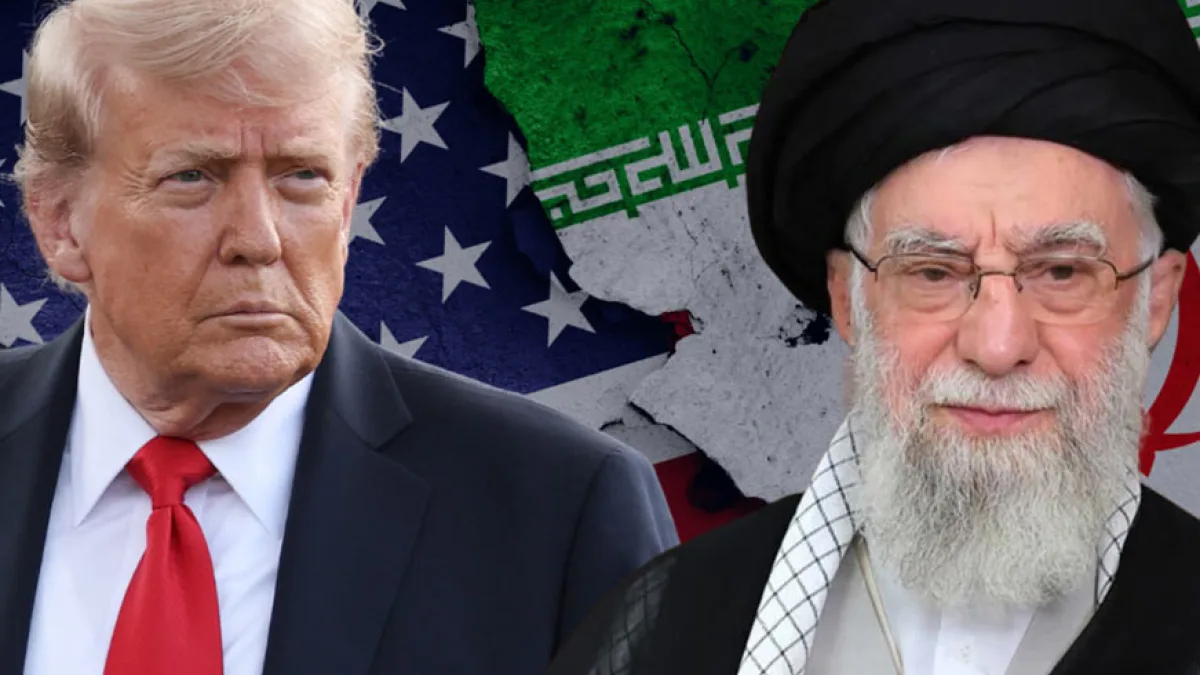
Tehran is once again drawing hard lines with Washington, demanding the complete withdrawal of American military forces from the Middle East as a central condition for ending months of open conflict, even as the fragile ceasefire between the United States and Iran has collapsed into renewed strikes on both sides. President Trump has responded with characteristic bluntness, declaring the ceasefire “over” while simultaneously keeping the door open to further negotiations.
The current standoff traces back to a memorandum of understanding signed in mid-June, which established a 60-day framework meant to give both sides room to negotiate a final, lasting deal after the brutal 2026 Iran war that began in late February. That conflict erupted after joint American and Israeli strikes killed several senior Iranian officials, including Supreme Leader Ali Khamenei, triggering a decentralized wave of Iranian retaliation against Israel, American-backed Arab states, and U.S. military installations scattered across the region.
That understanding has now effectively unraveled. Iran launched attacks on commercial vessels transiting the Strait of Hormuz, a vital chokepoint through which roughly 20 percent of the world’s oil once passed before the war began.
The United States responded with a fresh wave of airstrikes, hitting approximately 90 Iranian military targets along the country’s coastline, including air defense systems, missile and drone storage sites, and naval infrastructure.
Iran’s Islamic Revolutionary Guard Corps did not sit idle. The IRGC’s navy and air force launched a joint drone and missile attack against American installations in Kuwait and Bahrain, striking Camp Arifjan and Ali Al Salem Air Base in Kuwait, along with Shaikh Isa Air Base and the Juffair facility in Bahrain, which hosts the U.S. Navy’s Fifth Fleet headquarters. Air raid sirens sounded across the Gulf as regional partners scrambled their defenses against incoming projectiles.
Speaking to reporters aboard Air Force One following a NATO summit in Ankara, Trump did not mince words about where things now stand. “I think it’s over. I don’t want to deal with them anymore,” he said of the ceasefire, adding that continuing to negotiate with Tehran felt like “a waste of time” given what he described as a pattern of dishonesty from the regime. “They’re liars,” Trump said flatly.
Yet just two days later, Trump struck a somewhat different tone, announcing on social media that the United States had agreed to continue talks with Iran even as he insisted the ceasefire itself remained finished. “The Islamic Republic of Iran has asked us to continue ‘talks.’ We have agreed to do so, but the United States has stated to them, in no uncertain terms, that the Ceasefire is OVER!” the president wrote. It is a posture that reflects the difficult balancing act Trump faces: projecting strength against a regime that has repeatedly tested American resolve, while also trying to avoid dragging the country into a prolonged and costly Middle Eastern conflict ahead of the November midterms.
At the heart of the impasse is Tehran’s list of demands, which have remained strikingly consistent for months and go well beyond simply ending hostilities. Iran’s official proposals have called for a complete withdrawal of U.S. combat forces from every base and position in the region, reparations for war damage, the lifting of all primary and secondary sanctions, the release of frozen Iranian assets, and formal recognition of Iranian control over passage through the Strait of Hormuz.
Iranian state media, through the semi official Tasnim news agency, carried a statement from the Revolutionary Guards warning that any renewed American aggression would not stay contained to the Middle East. “If aggression against Iran is repeated, the promised regional war will extend beyond the region this time,” the statement read, a threat that regional security officials have taken seriously given Iran’s extensive network of proxy militias stretching from Lebanon to Yemen to Iraq.
That regional militia network has already been active. Drones launched from Iraq, where Iran backed militia groups operate, have targeted Saudi Arabia and the United Arab Emirates in recent days. Jordan reported shooting down a drone of its own. These are not isolated incidents but part of a broader pattern of Iran using proxy forces to apply pressure on American allies throughout the Gulf without necessarily engaging U.S. forces directly, a strategy Tehran has relied on for years precisely because it offers plausible deniability while still inflicting real costs on Washington’s regional partners.
Trump has made clear he is willing to escalate further if Iran does not stand down. “Every time they hit us, we hit them 20,” he told reporters, warning that military action would get “much worse” should Iran continue launching strikes.
He has also floated reinstating a full naval blockade against Iran, a move that would tighten the economic vise on a regime already reeling from a currency collapse and international sanctions imposed after the war began.
The human and political toll inside Iran itself has been severe. Following the initial 12-day phase of the war, Iran’s currency went into a free fall, worsened by new international sanctions imposed in September.
That economic spiral helped trigger mass protests beginning in late December, protests that spread rapidly across the country in January with quiet encouragement from Washington. Iranian security forces responded with a brutal crackdown, and according to officials inside Iran’s own Ministry of Health, at least 30,000 people were killed when the regime moved to suppress the unrest.
Khamenei’s death earlier this month, following the initial February strikes, has left Iran in a period of significant internal turmoil, culminating in a marathon weeklong funeral procession that concluded with his burial in Mashhad. Reports out of Tehran describe a mixed public reaction, with some Iranians openly celebrating the death of the man who ruled the country for decades, while regime loyalists mourned and security forces moved to suppress public displays of dissent.
Despite the devastating cost the war has already inflicted on Iran, the regime has so far managed to retain its stockpile of near weapons-grade enriched uranium, along with much of its capacity to threaten neighboring countries using missiles, drones, and proxy militias.
That is precisely the outcome hawks within the Trump administration warned against from the outset, cautioning that anything short of complete denuclearization and disarmament would simply set the stage for round after round of renewed conflict, which is exactly what has now materialized.
Trump is facing real domestic pressure to bring this conflict to a definitive close. Soaring energy prices tied to the closure of the Strait of Hormuz have become a political liability for Republicans heading into the midterm elections, with oil prices climbing on an upward trend week over week even as the administration’s public messaging has swung between threats of massive retaliation and optimistic declarations that a lasting peace deal is close at hand.
Vice President JD Vance, who led the American delegation during the most recent round of formal peace talks, has struck a more measured tone than the president, telling reporters “we’re in a pretty good spot here” even as fighting resumed on the ground. Special envoy Steve Witkoff and White House senior adviser Jared Kushner have continued working the diplomatic channel behind the scenes, reportedly still eager to finalize a lasting agreement despite the president’s public declaration that the ceasefire itself is finished.
Israel, for its part, has not been sitting quietly on the sidelines. Prime Minister Benjamin Netanyahu has largely avoided directly criticizing the emerging U.S. Iran framed it in public, insisting instead that the war’s main objectives, curbing Iran’s support for regional terror proxies and degrading its nuclear and missile capabilities, have largely been achieved.
But Netanyahu has also made clear that Israeli forces will remain in southern Lebanon regardless of what Washington and Tehran ultimately agree to, and Israeli officials have signaled today they do not consider themselves bound by any clause in a U.S. Iran deal addressing the Lebanon front, where fighting with the Iranian-backed terror group Hezbollah continues.