United States Central Command announced this week that American forces completed another powerful round of strikes against Iran, hitting approximately 90 military targets in a decisive response to Tehran’s continued aggression against commercial shipping in the Strait of Hormuz. The strikes mark the second major wave of American firepower unleashed against the Islamic Republic in

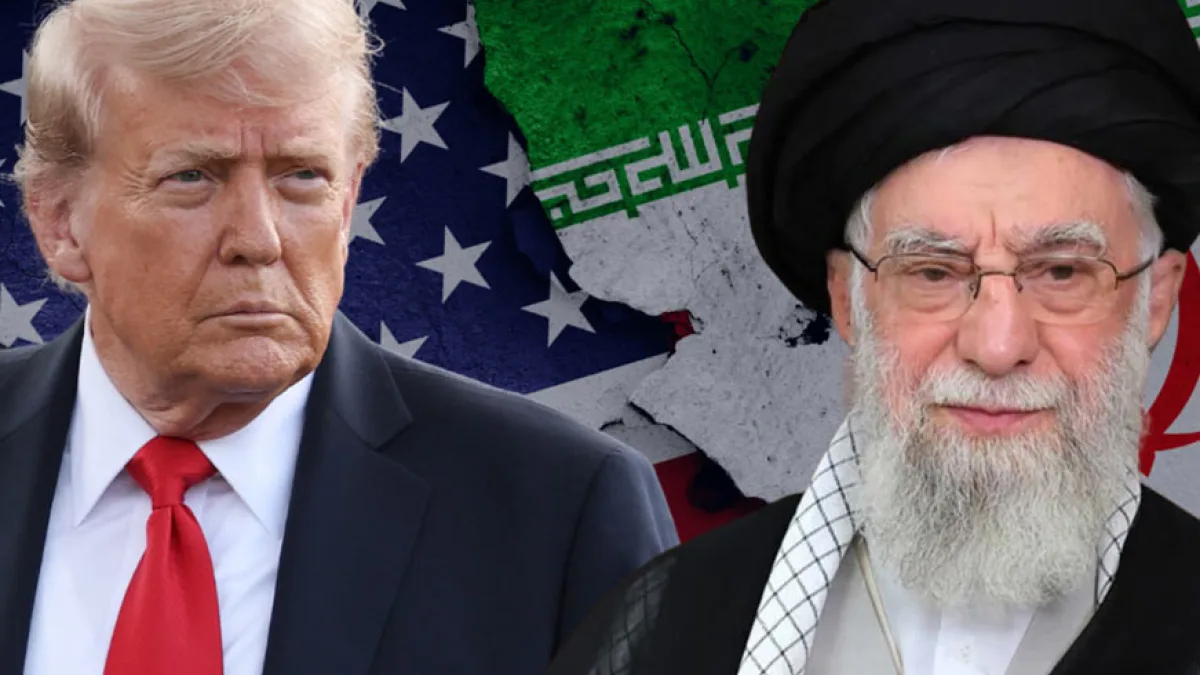
United States Central Command announced this week that American forces completed another powerful round of strikes against Iran, hitting approximately 90 military targets in a decisive response to Tehran’s continued aggression against commercial shipping in the Strait of Hormuz. The strikes mark the second major wave of American firepower unleashed against the Islamic Republic in as many days, and they send an unmistakable message that President Trump is not interested in letting Iran walk back the terms of a ceasefire it agreed to just weeks earlier.
According to a statement from CENTCOM, the operation was carried out specifically “to further degrade Iran’s ability to attack commercial shipping and innocent civilian mariners in the Strait of Hormuz.” The targets struck included air defense systems, coastal surveillance assets, missile and drone storage sites, naval capabilities, and military logistics infrastructure stretched along Iran’s coastline. In short, American forces went after the very infrastructure Iran has relied on to threaten one of the world’s most critical energy chokepoints.
This latest round of strikes followed an initial wave carried out just one day earlier, on Tuesday, which hit approximately 80 Iranian military targets, including more than 60 fast-attack boats operated by Iran’s Islamic Revolutionary Guard Corps. Taken together, the two nights of American airpower represent one of the most substantial military responses against Iran in years, a clear signal that the Trump administration intends to enforce the terms of its agreement with Tehran, by force if necessary.
The renewed hostilities trace back to Iran’s decision to attack three commercial vessels navigating the Strait of Hormuz, a brazen act that violated the spirit, if not the letter, of the ceasefire understanding reached between Washington and Tehran just weeks prior. President Trump made his position on the matter unmistakably clear. “As far as I’m concerned, it’s over,” Trump said of the ceasefire, adding that attempting to negotiate with the Iranian regime had been “a waste of time.” When a reporter pressed him on next steps, Trump made clear the United States was prepared to take further military action that very night if necessary.
Vice President JD Vance provided additional context on how the ceasefire unraveled, explaining that the original understanding with Iran called for an easing of sanctions in exchange for Tehran halting attacks on commercial vessels in the strait. According to Vance, Iran actually adhered to that arrangement for roughly a week before resuming its attacks on shipping traffic, at which point the United States moved swiftly to reimpose consequences.
In direct response to Iran’s renewed provocations, the United States revoked its waiver of sanctions on Iranian oil sales, a waiver that had been a key component of the temporary ceasefire arrangement. Washington also launched the dozens of retaliatory strikes that followed, sending a clear signal that sanctions relief and continued attacks on international shipping simply cannot coexist. It is a straightforward proposition that Iran’s leadership, for reasons of its own, has apparently struggled to grasp.
Iran’s Foreign Affairs Ministry spokesman Esmaeil Baqaei attempted to flip the script, accusing the United States of violating the agreement’s structure through what he called “unilateral actions” and “aggressive attacks” against Iran. In a statement posted to social media, Baqaei declared that “the Islamic Republic of Iran will steadfastly pursue the protection of its national interests and the exercise of its sovereignty.” Given that Iran fired the first shots by targeting commercial vessels in international waters, that framing is unlikely to find much sympathy among Western allies or the international shipping community that depends on a secure Strait of Hormuz.
Iran did not sit idly by after the American strikes. The Islamic Revolutionary Guard Corps retaliated by targeting American military installations in the region, including Arifjan and Ali Al Salem bases in Kuwait, as well as the Juffair and Sheikh Isa bases in Bahrain. Both Kuwaiti and Bahraini defense officials confirmed that hostile air assets, including ballistic missiles, cruise missiles, and drones, were detected and intercepted in their respective airspaces.
The Kuwaiti Ministry of Defense reported that three ballistic missiles, one cruise missile, and 10 drones were detected and successfully intercepted, bringing the cumulative total since the start of the conflict to a staggering 16 cruise missiles, nearly 400 ballistic missiles, and more than 900 drones fired at targets in the region. Those numbers alone illustrate the scale of the aerial campaign Iran has waged, and the remarkable success American and allied air defense systems have had in blunting it.
Bahrain’s Defense Force offered a similarly firm account of its own successful interceptions. “The General Command clarifies that, with firm resolve and high combat readiness, the Bahrain Defense Force’s air defense systems confronted, intercepted, and destroyed several treacherous Iranian aerial attacks this morning,” the force stated. The word choice speaks to the mounting frustration among Gulf allies who have found themselves caught in the crossfire of Iran’s escalating aggression.
CENTCOM struck a tone of steady resolve throughout its public statements on the operation. “U.S. forces remain vigilant, lethal, and prepared to execute operations directed by the Commander in Chief,” the command said following the completion of Wednesday’s strikes. It is the kind of language that should reassure Americans that their military remains fully capable of projecting decisive force in the region while also protecting American personnel and assets stationed there.
A senior American official speaking to Axios suggested the current round of escalation could last anywhere from a day or two to a week or even a month, depending entirely on whether Iran chooses to continue its attacks on commercial shipping. The official offered a blunt characterization of the administration’s mindset going forward. “We’re going to slap them a bit,” the official said, attributing the fresh escalation in part to frustration among elements of the Iranian leadership who apparently believe the earlier deal with Washington failed to deliver meaningful benefits for Tehran.
That frustration inside Iran’s government, whatever its source, does not excuse attacking international commercial shipping, nor does it obligate the United States to simply absorb repeated provocations without response. President Trump has made clear throughout his time in office that American strength, not appeasement, is what keeps adversaries like Iran in check, and this latest round of strikes reflects that same philosophy in action.
Some reports have suggested the American operation may have also struck targets beyond the immediate scope of coastal military infrastructure, including what appeared to be a bridge, though CENTCOM’s official statement made no mention of any such target and focused exclusively on the roughly 90 military sites along Iran’s coastline. CNN reported it had reached out to CENTCOM for further comment on the matter, though no additional clarification had been provided as of this writing.
Since the ceasefire agreement was first reached, American strikes have largely concentrated on military infrastructure in southern Iran near the Strait of Hormuz, a strategic waterway through which a significant share of the world’s oil supply passes each day. Iran’s demonstrated willingness to threaten that waterway, and its stated intent at various points to begin charging tolls on vessels seeking safe passage, underscores exactly why the Trump administration has taken such an aggressive posture in defending freedom of navigation in the region.
Earlier in the conflict, President Trump had ordered a naval blockade of Iranian ports in response to Tehran’s threats against shipping. As part of the ceasefire arrangement reached last month, the United States agreed to lift that blockade in exchange for Iran making its best efforts to ensure the safe passage of commercial vessels through the Gulf region. Iran’s decision to attack three commercial ships despite that commitment is precisely what triggered the current round of American strikes and the corresponding revocation of sanctions relief.
President Trump addressed the broader situation while attending the NATO summit in Ankara, Turkey, marking the first visit to Turkey by a sitting American president in recent memory. During his remarks, Trump reiterated longstanding concerns about the spread of communism, stating he believes it is taking root both in the United States and around the world, a reminder that the administration is simultaneously managing multiple fronts on the global stage even as tensions with Iran remain elevated.
For all the noise generated by critics of American involvement in the region, the results of this latest campaign speak for themselves. Iran’s coastal military infrastructure, its air defense network, and its ability to threaten commercial shipping have all been significantly degraded over the course of just two nights of American strikes. That is precisely the kind of decisive, overwhelming response that deters further aggression rather than inviting it.
As the situation continues to develop, all eyes remain on Tehran to see whether its leadership will finally abandon its attacks on international shipping or continue testing the patience of an American administration that has shown no hesitation in responding with overwhelming force. Given the scale of destruction already inflicted on Iran’s coastal military assets, continued escalation from Tehran would appear to be a losing proposition, though the regime’s history of miscalculation suggests further conflict cannot be ruled out.