The United States has reached an energy milestone that would have seemed fantastical to the Americans who waited in gas lines during the 1973 Arab oil embargo: the country is now the world’s largest exporter of oil. Ship-tracking data from Vortexa confirmed in June that American exports of crude and refined fuel climbed to approximately
Russia’s exports stood at 7 million barrels per day in May, while Saudi Arabia shipped approximately 5.9 million barrels per day, leaving both traditional energy giants well behind.
The turnaround from energy-dependent nation to energy-dominant superpower has been decades in the making but has accelerated sharply in recent months due to a combination of record domestic production, strategic petroleum reserve releases, and geopolitical disruptions that have hammered Middle Eastern and Russian supply chains.
For an administration that has staked its economic identity on American energy dominance, the news represents a landmark validation of a central policy goal.
The foundation of this transformation is the American shale revolution. Before 2010, the United States was importing vast quantities of foreign oil and remained deeply dependent on OPEC production decisions.
The development of hydraulic fracturing technology and horizontal drilling changed the fundamental calculus of global energy, enabling domestic producers to unlock reserves that had previously been inaccessible.
The result was a production boom that remade the global energy map over the course of roughly 15 years.
United States crude oil and liquids production has nearly tripled since the year 2000, reaching approximately 22 million barrels per day as of 2026.
In 2025 alone, the country produced a record 13.58 million barrels of crude oil and lease condensate per day, according to the U.S. Energy Information Administration.
Russia, the second-largest producer, reached 9.87 million barrels per day, and Saudi Arabia checked in at 9.51 million barrels per day.
Those three countries together accounted for roughly 39 percent of global crude oil production in 2025.
Saudi Arabia had been the world’s dominant oil exporter for decades.
In 2025, the kingdom exported approximately 8.1 million barrels per day, compared to 6.6 million from the United States and 5.8 million from Russia.
The shift in ranking between that full-year 2025 figure and the May 2026 monthly figure of 10.5 million barrels per day illustrates how dramatically the situation changed in a matter of months.
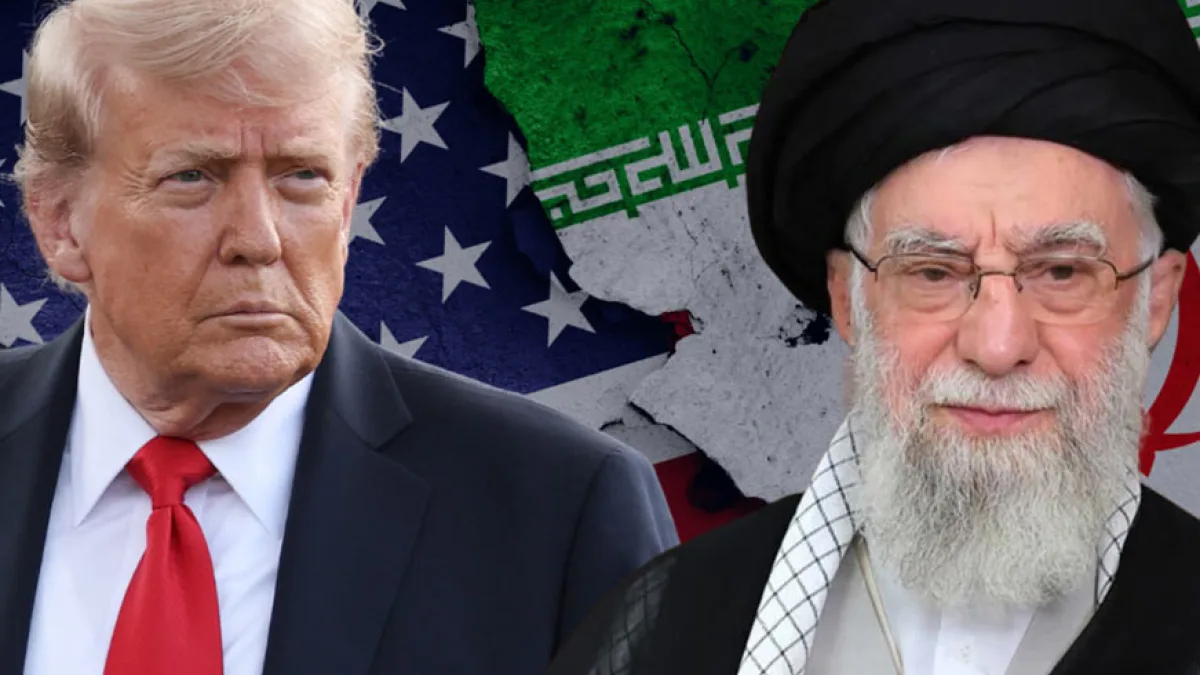
Much of that acceleration traces directly to the conflict with Iran.
The U.S.-Iran military confrontation that began in early 2026 severely disrupted shipping traffic through the Strait of Hormuz, the narrow waterway through which a significant share of the world’s seaborne oil travels.
The EIA’s June 2026 Short-Term Energy Outlook reported that very limited shipping traffic through the Strait of Hormuz caused Middle Eastern producers to cut crude production by more than 11 million barrels per day in May compared with pre-conflict levels.
Saudi Arabia, which depends on the Strait for its exports, was hit especially hard.
Russia’s export capacity has also been constrained by Ukrainian drone attacks on energy infrastructure and the continued weight of Western sanctions tied to the invasion of Ukraine.
Those two simultaneous disruptions to the traditional number one and number two exporters created a gap that American producers were able to fill.
American companies had already been growing their production capacity well before the geopolitical disruptions added urgency to the shift.
Both Saudi Arabia and Russia were trailing the United States on production growth before the U.S.-Iran conflict began.
The war accelerated a trend that was already well underway, transforming a gradual shift in global energy rankings into a rapid and decisive one.
The reach of American oil extends across both major global markets.
European countries absorbed approximately 47 percent of American oil exports in the first months of 2026, up significantly from 37 percent in 2021.
That jump reflects the sustained effort by European nations to replace Russian energy supply following Moscow’s 2022 invasion of Ukraine.
American oil has effectively stepped into the gap that European policymakers scrambled to fill when they moved to reduce their dependence on Russian pipelines.
The United States has become the largest supplier of crude oil to the European continent as a direct result of that transition.
Asia accounted for roughly 46 percent of American oil exports in May 2026, up from 37 percent a year earlier.
The combination of European and Asian demand has given American producers a truly global customer base, a development that oil executives and energy analysts barely dared to imagine during the years when the United States maintained strict limits on crude oil exports.
Those limits were lifted in December 2015, when Congress removed the 40-year-old ban on exporting American crude.
That legislative change set the stage for everything that followed, allowing domestic producers to sell their output on the global market and respond to price signals from buyers around the world.
The shale boom had already established the production base. The removal of export restrictions gave producers the market access they needed to scale.
The current milestone builds on earlier American energy achievements.
The United States became the world’s largest natural gas producer years ago, and it has been the largest exporter of liquefied natural gas since March 2026, when LNG shipments reached a record 11.7 million metric tons in a single month.
The combination of record oil export status and record LNG export levels means the United States now holds the top position in both major global hydrocarbon export categories simultaneously.
American crude oil exports averaged 4.0 million barrels per day for the full year of 2025, roughly 85 times the level exported in 2011.
That figure already represented a dramatic expansion from the years of the export ban, and the acceleration in 2026 has pushed the monthly figures well beyond anything the EIA had projected even in optimistic scenarios.
The implications for American foreign policy and economic leverage are substantial.
For decades, the ability of Middle Eastern OPEC members to manipulate global oil prices by adjusting production gave those nations significant geopolitical influence over energy-importing countries, including the United States itself.
That leverage has now shifted. American energy exports have become a tool of diplomatic and economic statecraft, particularly with European partners who have explicitly sought to reduce dependence on authoritarian energy suppliers.
One energy analyst described the current American position as occupying a similar role to what OPEC and Saudi Arabia held with spare production capacity, but driven by market mechanisms rather than strategic production management.
The distinction matters.
American producers respond to market prices and investor returns rather than to government directives, which makes American supply more reliable as a long-term energy partner for importing nations.
President Trump has made American energy dominance a centerpiece of his economic agenda since his first term in office.
The slogan “drill, baby, drill” evolved from a campaign rallying cry into an actual policy framework, with the administration accelerating permits on federal lands, reducing regulatory barriers for pipeline construction, and signaling to energy companies that Washington welcomed expanded production.
The results have now materialized in the form of a definitive global energy ranking.
The EIA has noted that total American oil and refined product exports will remain under scrutiny as long as the geopolitical factors behind the recent surge persist.
The situation in the Strait of Hormuz and the state of Russian infrastructure will heavily influence global supply dynamics in the months ahead.
If the conflict with Iran resolves and Saudi production capacity comes back online, the competitive landscape could shift again.
But the structural changes in American production capacity are not going away regardless of geopolitical outcomes.
The shale fields of Texas, North Dakota, New Mexico, and the broader Permian Basin are not dependent on military conflict to remain productive.
The technology and infrastructure built over the past decade and a half have created an enduring production base that gives the United States a permanent claim to global energy leadership even in a more stable international environment.
For American consumers, the energy boom has had mixed effects.
Domestic gasoline prices remain influenced by global crude markets rather than purely by domestic production levels, so the export surge does not automatically translate into lower prices at the pump.
Critics have noted this disconnect and argued that American energy resources should prioritize domestic affordability.
Supporters of the export expansion counter that the revenue generated by global sales funds further investment in domestic production capacity, which ultimately benefits the broader economy.
The strategic implications of American energy dominance became particularly vivid when the Iranian conflict disrupted Middle Eastern supply.
The United States found itself in the position of being able to redirect production to meet European and Asian demand at precisely the moment when traditional suppliers were unavailable or unreliable.
That flexibility reflects the true value of domestic energy abundance in an unpredictable world.
For a country that once feared it had exhausted its domestic reserves and resigned itself to permanent import dependence, the arrival at the top of the global export rankings represents a historic reversal.
The 1973 embargo, the 1979 Iranian revolution, the 1990 Gulf War, and the 2008 oil price spike each reinforced the American vulnerability that policymakers spent decades trying to address.
That vulnerability no longer exists.