On March 21, 2026, President Donald Trump issued a clear 48-hour ultimatum to the Iranian regime via Truth Social, demanding that they fully open, without threat, the vital Strait of Hormuz or face severe consequences. The Strait of Hormuz remains one of the world’s most critical chokepoints, through which approximately 20% of the global oil
On March 21, 2026, President Donald Trump issued a clear 48-hour ultimatum to the Iranian regime via Truth Social, demanding that they fully open, without threat, the vital Strait of Hormuz or face severe consequences.
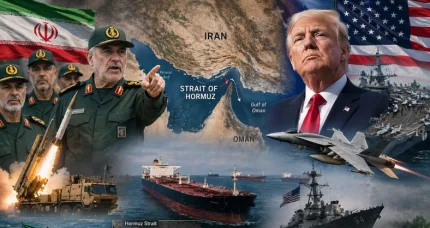
The Strait of Hormuz remains one of the world’s most critical chokepoints, through which approximately 20% of the global oil supply flows daily. Iran’s reckless closure—or effective blockade—of this waterway has driven up energy prices worldwide, hurting American families at the pump and crippling economies dependent on stable oil markets.
Trump’s post was unambiguous: “If Iran doesn’t FULLY OPEN, WITHOUT THREAT, the Strait of Hormuz within 48 HOURS from this exact point in time, the United States of America will hit and obliterate their various POWER PLANTS, STARTING WITH THE BIGGEST ONE FIRST!”
12,200+
patriots joined
Keep reading — stay on the brief
Daily MAGA briefing in your inbox. Free, unsubscribe anytime.
This strong rhetoric comes as the U.S.-Israeli military campaign against Iran’s terrorist regime enters its fourth week. Iran has repeatedly shown its true colors by launching missiles at Israeli civilian areas, including near Dimona and Arad, escalating a conflict they themselves provoked through proxy attacks and nuclear ambitions.
Conservatives have long warned that weakness invites aggression. Under previous administrations, Iran was allowed to enrich uranium, fund terrorism, and threaten global shipping with impunity. President Trump’s “peace through strength” approach is finally confronting this menace head-on.
The President’s ultimatum sent a powerful message: America will not allow rogue states to hold the world’s energy supply hostage. By targeting power plants—key to Iran’s military and regime survival—Trump is hitting where it hurts most, without unnecessary ground invasions.
Iran’s response was predictable defiance. Regime officials threatened to strike U.S. and allied energy infrastructure in the Gulf, including desalination plants that provide drinking water to millions. Such threats only underscore the barbaric nature of the mullahs’ rule.
Reports indicate Iran has been extorting tankers, demanding up to $2 million in tolls to pass, further choking global trade. This piracy has reduced traffic to a trickle, with only a handful of vessels daring the passage amid insurance fears and Iranian threats.
Trump’s warning aligns with his America First agenda: protecting U.S. economic interests, lowering gas prices for hardworking citizens, and deterring adversaries who exploit perceived weakness.
Allies, including Britain under Prime Minister Keir Starmer, have echoed the call for the strait to reopen swiftly. International cooperation is growing, with more nations offering naval support to secure shipping lanes.
The ultimatum’s deadline approached amid rising tensions. Iranian missiles continued to target Israel, while U.S. and Israeli forces degraded Iran’s missile stockpiles and nuclear-related sites.
Critics on the left, predictably, decried the move as reckless. Yet history shows that appeasement—whether in Syria’s red lines or endless Iran nuclear talks—only emboldens tyrants.
Trump’s direct style cuts through diplomatic fog. By specifying “starting with the biggest one first,” he made the threat credible and targeted, avoiding broader civilian harm while pressuring the regime.
As the 48-hour window closed, reports emerged of ongoing discussions. In a pragmatic follow-up, Trump announced a five-day postponement of strikes on power and energy infrastructure, conditional on progress in talks.
This flexibility demonstrates strategic wisdom—not weakness. It gives diplomacy a chance while preserving military options, pressuring Iran without immediate escalation that could spike oil to unsustainable levels.