Breaking Three additional commercial vessels have been struck near the Strait of Hormuz, escalating tensions in a region that plays a critical role in the global energy supply. Maritime security firms confirmed the incidents, which bring the total number of ships hit in the area to at least fourteen since the conflict involving Iran began
Breaking
Three additional commercial vessels have been struck near the Strait of Hormuz, escalating tensions in a region that plays a critical role in the global energy supply.
Maritime security firms confirmed the incidents, which bring the total number of ships hit in the area to at least fourteen since the conflict involving Iran began following U.S. and Israeli strikes on Iranian targets.
12,200+
patriots joined
Keep reading — stay on the brief
Daily MAGA briefing in your inbox. Free, unsubscribe anytime.
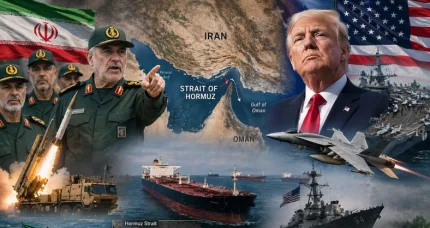
The Strait of Hormuz is a narrow waterway connecting the Persian Gulf to global shipping routes. Roughly one-fifth of the world’s oil supply passes through the corridor, making it one of the most strategically important trade routes in the world.
Shipping traffic through the strait has slowed dramatically in recent days as the attacks have intensified. Many shipping companies have halted or delayed voyages through the region due to safety concerns.
President Donald Trump has warned that the United States is prepared to increase military pressure if Iran continues interfering with vessels traveling through the passage.
Details & Background
One of the ships struck during the latest incident was the Thai-flagged dry bulk carrier Mayuree Naree. According to its operator, Precious Shipping, the vessel was hit by two projectiles while sailing through the Strait of Hormuz.
The projectiles ignited a fire and caused damage to the ship’s engine room.
Precious Shipping confirmed that three crew members were reported missing following the strike and are believed to be trapped in the engine compartment. Emergency operations were launched immediately after the attack.
“Three crew members are reported missing and believed to be trapped in the engine room,” the company said in a statement.
The remaining twenty crew members were evacuated safely and transported to shore in Oman while rescue efforts continued.
Images released by the Thai navy showed thick smoke pouring from the rear section of the vessel following the strike.
In a statement carried by Iran’s Tasnim news agency, Iran’s Revolutionary Guard claimed the ship had been fired upon by Iranian fighters. The statement suggests the incident may represent one of the first direct engagements by Iranian forces during the current conflict.
Previously, attacks in the region had primarily involved missiles or drones launched from a distance.
Reactions
The attacks have raised serious concerns throughout the global shipping industry. Insurance costs for ships traveling through the Strait of Hormuz have surged as companies attempt to assess the growing risk.
Shipping organizations have repeatedly asked for military escorts to help protect vessels traveling through the narrow waterway.
According to sources familiar with the discussions, the U.S. Navy has declined near-daily requests from shipping companies for escort operations. Military officials reportedly believe the current level of risk remains too high.
President Donald Trump has signaled a different approach.
Trump has stated that the United States is prepared to provide naval escorts if necessary and warned Iran that continued attempts to disrupt international shipping could lead to stronger military action.
Meanwhile, Iran’s Revolutionary Guards have issued their own warning, declaring that any ship passing through the Strait of Hormuz could become a target.
The escalating threats from both sides have left global markets and energy producers watching developments closely.
Why This Matters to You
The Strait of Hormuz is one of the most important economic arteries in the world. Every day, massive quantities of oil and energy resources pass through the narrow channel on their way to markets across Europe, Asia, and the United States.
When attacks occur in the region, the effects ripple far beyond the Middle East.
Energy prices often rise quickly when shipping disruptions threaten oil supplies. That can directly impact gasoline prices, transportation costs, and the broader economy affecting American families.
The situation also highlights the broader security challenges the United States faces when global trade routes come under threat.
President Donald Trump has made clear that the United States will not allow one of the world’s most critical shipping corridors to be permanently obstructed.
As tensions continue to build, the actions taken in the Strait of Hormuz could shape global security, economic stability, and the safety of international trade routes in the weeks ahead.