President Donald Trump updated the American people on Operation Epic Fury, the decisive U.S.-led military campaign against the Islamic Republic of Iran, framing it as a necessary stand to neutralize the world’s number one state sponsor of terrorism and prevent a nuclear nightmare. Trump, speaking with characteristic strength and clarity, assured the nation that after
President Donald Trump updated the American people on Operation Epic Fury, the decisive U.S.-led military campaign against the Islamic Republic of Iran, framing it as a necessary stand to neutralize the world’s number one state sponsor of terrorism and prevent a nuclear nightmare.
Trump, speaking with characteristic strength and clarity, assured the nation that after just 32 days of intense operations, America’s core strategic objectives in Iran are “nearing completion,” with the regime’s military capabilities severely degraded and its nuclear ambitions set back for years, if not decades.
“My fellow Americans, tonight I want to provide an update on the tremendous progress our warriors have made in Iran,” Trump stated early in the roughly 20-minute speech.
He praised the U.S. armed forces for delivering “swift, decisive” blows that have left Iran’s navy effectively gone, its air forces in ruins, and its top leaders reeling.
The president emphasized that Operation Epic Fury was launched to confront Iran’s long history of aggression, proxy terrorism across the Middle East, attacks on U.S. interests, and relentless pursuit of nuclear weapons that could one day threaten American cities and allies like Israel.
Trump made clear that a nuclear-armed Iran would be an “intolerable threat” to global peace and U.S. national security. Under his leadership, the United States refused to allow the world’s leading state sponsor of terror to cross that red line.
In the address, Trump highlighted the operation’s successes, including nuclear sites obliterated by precision B-2 bomber strikes, described as hit so hard “it would take months to get near the nuclear dust.” He declared Iran “essentially really no longer a threat” after a month of relentless pressure.
The president warned, however, that the mission is not yet fully complete. He signaled that U.S. forces will continue to “hit Iran extremely hard” over the next two to three weeks to ensure all objectives are met before winding down major operations.
“We are on the cusp of ending this,” Trump said, projecting confidence that the conflict could conclude “very shortly” while leaving open the possibility of targeted “spot hits” if Iran attempts to regroup or rebuild dangerous capabilities.
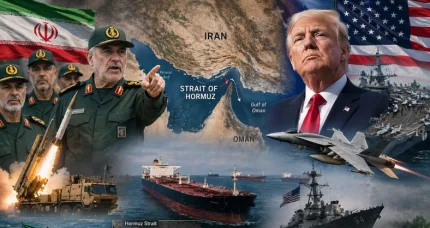
A key moment in the speech came when Trump directly challenged America’s allies and other nations dependent on oil flowing through the Strait of Hormuz. He urged them to “build up some delayed courage” and take greater responsibility for securing the vital waterway, noting that the United States does not need it for its own energy needs but has shouldered the burden for too long.
This call reflects Trump’s longstanding “America First” philosophy: the U.S. will lead when necessary, but other countries benefiting from global stability must step up rather than relying on American military strength.
Throughout the address, Trump paid tribute to the bravery of U.S. service members involved in the operation, crediting their skill and dedication for the rapid degradation of Iranian forces with minimal American casualties relative to the scale of the mission.
He also addressed rising concerns at home about oil prices and economic impacts, assuring Americans that the administration is monitoring the situation closely and that a successful conclusion to the operation will help stabilize global energy markets in the long run.
Critics from the left and isolationist corners have attacked the speech as insufficiently detailed or overly optimistic, while conservative leaders and national security hawks praised Trump’s straightforward leadership in a dangerous world.
This address marks the first major national speech by President Trump since the intensified campaign against Iran began more than a month ago, coming amid coordinated U.S. and Israeli actions to dismantle Iran’s terror infrastructure and nuclear program.
Trump reiterated that the goal has never been endless war or regime change for its own sake, but rather to eliminate the immediate threats posed by Iran’s leadership—threats that previous administrations allowed to fester through weak deals and failed diplomacy.
By confronting Iran directly, the Trump administration, according to the speech, has restored deterrence and sent a clear message to adversaries worldwide: America will not sit idly by while rogue regimes pursue weapons of mass destruction or fund terrorism.
The president noted that Iran’s military has been “eviscerated,” its ability to project power across the region crippled, and its nuclear sites reduced to rubble. These achievements, he argued, make the world safer not just for Americans but for others globally.
Trump also touched on the possibility of future negotiations if new leadership emerges in Tehran, while expressing skepticism about the current regime and emphasizing that strength is key to peace.
As the speech concluded, the president expressed optimism that U.S. forces could begin drawing down major involvement “pretty quickly,” while remaining ready to return if needed to protect vital interests.
He contrasted this approach with past policies he described as appeasement, arguing that previous agreements emboldened Iran and allowed its proxies to act with greater freedom.
Supporters of the address described it as strong and clear, highlighting progress while acknowledging remaining objectives and emphasizing national security priorities.
With gas prices under pressure from the conflict, Trump noted that short-term costs may be necessary to prevent a far greater long-term threat.
The operation’s name, Epic Fury, reflects the scale of the response to years of Iranian provocations, including attacks on shipping, support for militant groups, and missile threats in the region.
Trump’s speech comes as reports indicate significant damage to Iranian command structures and proxy networks, weakening the regime’s ability to operate across the Middle East.