Breaking President Donald Trump has issued a firm ultimatum to Iran, setting a Tuesday 8 p.m. Eastern deadline for the regime to reopen the Strait of Hormuz or face significant consequences. Speaking during a White House briefing alongside CIA Director John Ratcliffe, War Secretary Pete Hegseth, and Joint Chiefs Chairman Dan “Raizin” Caine, Trump underscored
Breaking
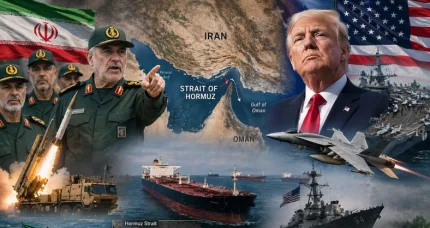
President Donald Trump has issued a firm ultimatum to Iran, setting a Tuesday 8 p.m. Eastern deadline for the regime to reopen the Strait of Hormuz or face significant consequences. Speaking during a White House briefing alongside CIA Director John Ratcliffe, War Secretary Pete Hegseth, and Joint Chiefs Chairman Dan “Raizin” Caine, Trump underscored the urgency of the situation.
“They have till 8:00 tomorrow night,” Trump stated, making clear that the deadline follows days of escalating U.S. military operations in the region. He described the current moment as critical, adding, “We’re going to find out.” The administration has already authorized thousands of strikes targeting Iranian capabilities, signaling a willingness to act decisively if compliance is not achieved.
12,200+
patriots joined
Keep reading — stay on the brief
Daily MAGA briefing in your inbox. Free, unsubscribe anytime.
Details & Background
The Strait of Hormuz is one of the world’s most vital shipping lanes, responsible for a significant portion of global oil transport. Any disruption in the region has immediate implications for international markets and energy prices. Trump’s demand that Iran reopen the strait comes amid heightened tensions and ongoing U.S. efforts to curb the regime’s influence and military reach.
Trump also reiterated his longstanding opposition to the Obama-era nuclear deal, arguing that it enabled Iran to expand its capabilities. He has maintained that withdrawing from the agreement was necessary to prevent Tehran from advancing toward nuclear weapons development. According to the administration, current military actions are part of a broader strategy aimed at weakening the regime’s infrastructure and limiting its ability to threaten regional stability.
While regime change is not officially the objective, Trump acknowledged that leadership shifts in Iran could lead to a more stable outcome. “We’re dealing with a much different regime than before,” he said, emphasizing that preventing nuclear escalation remains the top priority.
Reactions
Trump’s remarks also focused heavily on the Iranian people, distinguishing them from the ruling regime. “They want freedom,” he said, citing intelligence reports suggesting that some Iranian citizens support continued U.S. pressure despite the risks. According to Trump, many Iranians have endured harsh crackdowns, including lethal force against protesters and strict suppression of dissent.
He described past demonstrations where civilians were allegedly targeted by regime forces, stating, “They were told if you protest, you will be shot immediately.” These claims highlight the administration’s framing of the conflict as not just geopolitical, but humanitarian.
Trump also suggested that some Iranians are willing to endure hardship if it leads to change. “They would be willing to suffer that in order to have freedom,” he said, indicating that internal dissatisfaction with the regime may be deeper than publicly visible.
Why This Matters to You
The situation in Iran carries direct consequences for American families, particularly when it comes to energy prices, national security, and global stability. The Strait of Hormuz plays a critical role in the global economy, and any prolonged disruption could impact fuel costs and supply chains across the United States.
At the same time, the administration’s approach reflects a broader doctrine centered on strength and deterrence. By setting clear deadlines and backing them with military capability, the government is signaling that it will not tolerate threats to critical infrastructure or international commerce.
The emphasis on the Iranian people also underscores a larger message about freedom and governance. The administration is framing its actions not just as a response to a hostile regime, but as part of a wider effort to support populations living under repression.
As the deadline approaches, the stakes continue to rise. Whether Iran complies or resists, the outcome will shape U.S. foreign policy and global dynamics in the days ahead—and the government’s next move could define the balance between diplomacy and force.