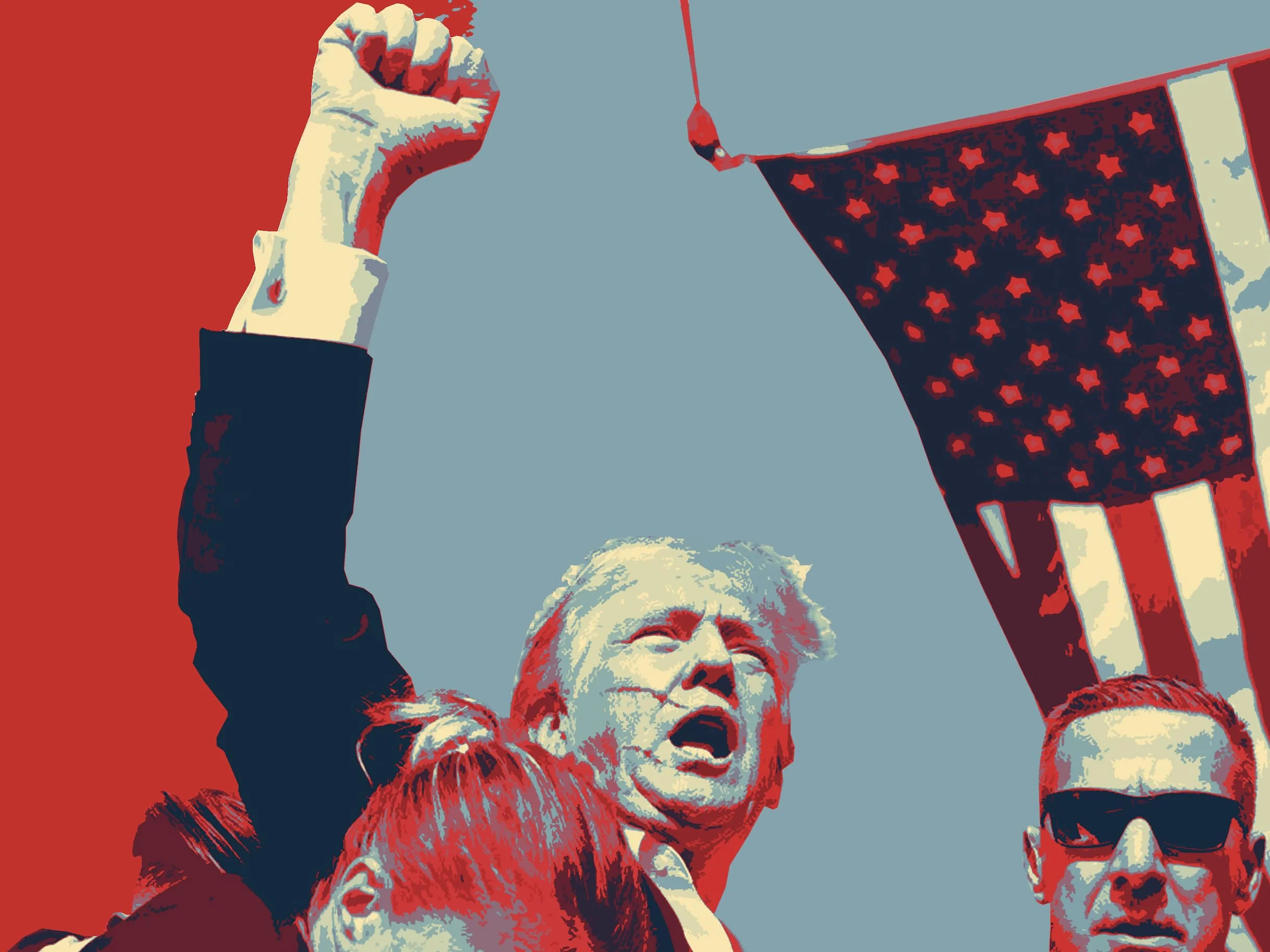
On the 250th anniversary of the first American patriots falling in battle, President Donald Trump stood before the white marble rows of Arlington National Cemetery on Memorial Day 2026 and delivered what many observers called the most moving and substantive address of his presidency. There were no talking points about political enemies, no asides about
Trump opened his remarks with the frame that would define the entire address:
“Today, here at Arlington, a very special place that holds burial grounds, battlefields across the country, and around the world, we unite in solemn observance with reverent hearts. We honor those who fell so that our republic might stand, those who died so that our nation could live, those who gave up their sacred light on Earth so that the sublime light of American freedom would shine forever and ever.”
The language was elevated, carefully chosen, and delivered without the improvisation that characterizes most of Trump’s public remarks.
Memorial Day at Arlington produced a different president than the one the press usually covers, and Monday’s address was evidence that the office and the occasion can still call something out of even the most combative of political figures.
Trump placed the observance in its full historical context:
“This Memorial Day is especially significant as we commemorate 250 years since the first American patriots fell on the field of battle. Two and a half centuries ago, at Lexington Green, Concord Bridge, Bunker Hill, brave minutemen and humble farm boys became the first to give their lives for a nation that did not yet have a name. With their deaths, men like John Brown, 23, Samuel Hadley, 28, and Abner Hosmer, 21, ignited the flame of liberty that now lights and inspires everybody and the entire world.”
The naming of those three men, young men, barely older than many of the soldiers buried in the rows behind the president, was a detail that elevated the address from ceremony into something closer to genuine remembrance.
They were not abstractions.
They were 23, 28, and 21 years old, and they died before the country they were dying for had a name.
The president continued:
“From 1776 to 2026, America has always stood as a great and moral cause. Our warriors are no mere mercenaries. They are guardian angels who stride across the battlefields of history and stand watch over the highest and most beautiful plains the human spirit has ever seen, holding the line between liberty and tyranny, between civilization and barbarism.”
That sentence, “holding the line between liberty and tyranny, between civilization and barbarism,” is a description of military service that every veteran who has ever stood a post or walked a patrol would recognize as true.
It is not a political statement.
It is a moral one, and it belongs in a Memorial Day address.
The address drew Vice President JD Vance, Secretary of Defense Pete Hegseth, Chairman of the Joint Chiefs General Caine, and the full ceremonial attendance of the United States Armed Forces to the amphitheater at Arlington for the fifth time Trump has made this pilgrimage as president.
He noted the number himself, saying it is always beautiful being there, and that it never changes.
That observation, delivered quietly before the formal address began, captured something true about Arlington that no amount of political weather can alter: the place is what it is, the people buried in it gave what they gave, and the president who comes to acknowledge that is participating in something that transcends the moment he occupies.
Trump spoke of the scope of what those graves represent:
“Entire generations, no freedom. Billions and billions of people have been delivered from poverty, tyranny, and oppression because of the sacrifices we honor this day. That’s why, from Brittany to Sicily, from Panama City to Saipan, from the Netherlands to North Africa to New Zealand, this whole planet is adorned with memorials to America’s fallen and to America’s greatness. To their courage, carved in marble and engraved in the hearts of all of mankind, we will never forget you.”
The geographic sweep of that passage deserves to be read slowly.
Brittany, Sicily, Saipan, North Africa, New Zealand: the American military cemetery network that dots the globe is not a collection of tourist attractions or historical footnotes.
It is the physical record of where American men and women fell in the service of causes that were larger than any single national interest, and the fact that the world maintains those cemeteries, tends them, and visits them with reverence across generations is the clearest possible evidence of what those sacrifices actually meant to the people who received them.
The president’s framing of the American military as guardian angels striding across the battlefields of history is an image that will be contested in some quarters, as all American military imagery is contested in the current political environment.
But Memorial Day is not a day for that argument.
It is a day for the families of the fallen, for the veterans who served alongside them, and for the country that benefits from their sacrifice to set aside whatever grievances occupy the rest of the calendar and simply acknowledge that some Americans made the ultimate choice and that it cost them everything.
Trump’s address honored that choice without equivocation.
The White House Memorial Day proclamation, signed by Trump ahead of the address, designated the day as a day of prayer for permanent peace and designated the hour beginning at 11 a.m. as a time when people might unite in prayer.
Trump called on all Americans to observe the National Moment of Remembrance beginning at 3 p.m. local time on Memorial Day.
The proclamation’s language, “the greatest fighting force the world has ever known,” is more than ceremonial boilerplate.
It is a statement of documented military fact that 250 years of American military history have earned the right to make.
The ceremony at the Tomb of the Unknown Soldier, which preceded the address, provided the visual and emotional foundation for everything that followed.
The Tomb is guarded every hour of every day of every year, in every weather condition, by a soldier whose sole responsibility is to stand watch over remains that cannot be identified.
The symbolism of that vigil, maintained without interruption since 1937, is a statement about what America owes its fallen that requires no words to convey.
Trump laid the wreath.
The bugler played Taps.
The rifles fired their salute.
And then the president spoke.
The contrast between the Arlington address and Trump’s Memorial Day morning social media activity, which included a pointed message to what he called the Dumocrats and a series of posts about political critics of the Iran negotiations, was noted by the press with more emphasis than it perhaps deserved.
Presidents are human beings with political opponents, and the insistence that every moment of a holiday be conducted in a mode of solemn gravity is not a standard that any politician of any party fully meets.
What matters on Memorial Day is the address at Arlington, and on Monday that address met the occasion.
The connection Trump drew between Memorial Day 2026 and the 250th anniversary of the Revolution’s first battles gave the address a historical dimension that previous Memorial Day speeches have rarely achieved.
The men who fell at Lexington and Concord were not professional soldiers.
They were farmers, tradesmen, and apprentices who picked up whatever weapons they had and went to stop an army at the end of a road that they walked to every day.
The chain of sacrifice that connects those men to the soldiers buried in Arlington runs unbroken through two and a half centuries of American history, and Trump’s address drew that connection explicitly and with appropriate reverence.
“They gave everything.”
That phrase, used by Trump in his closing remarks, is a statement that every Gold Star family in attendance on Monday understood in a way that no political commentary can capture or improve upon.
It requires no elaboration.
It needs no rhetorical amplification.
The men and women buried in the rows behind the president gave everything they had to give, and the president of the United States came on the most solemn day of the American calendar to say so in person.
On Memorial Day, that is what a president is supposed to do.
On Monday at Arlington, Trump did it.