Breaking Former Vice President Mike Pence is backing President Donald Trump’s strikes on Iran and praising him for refusing to listen to the isolationist wing of the Republican Party. In an interview with Fox News Digital, Pence said Trump deserved credit for taking direct action and argued that the president showed he is “no isolationist.”
Breaking
Former Vice President Mike Pence is backing President Donald Trump’s strikes on Iran and praising him for refusing to listen to the isolationist wing of the Republican Party. In an interview with Fox News Digital, Pence said Trump deserved credit for taking direct action and argued that the president showed he is “no isolationist.”
Fox News reported that Pence’s remarks come nearly three weeks into the military strikes against Iran, at a time when some voices within the MAGA and America First orbit have sharply criticized the attacks. Pence, however, took the opposite position and framed Trump’s actions as proof that he was willing to lead even when parts of his own coalition objected.
12,200+
patriots joined
Keep reading — stay on the brief
Daily MAGA briefing in your inbox. Free, unsubscribe anytime.
At the center of Pence’s praise was Trump’s decision to launch Operation Epic Fury. According to Fox News, Pence said, “It’s one of the things I give President Trump great credit for,” and added that Trump had “turned a deaf ear” to the voices urging retreat. In Pence’s telling, the president’s actions were not a departure from Republican strength, but a reaffirmation of it.
That makes this story significant beyond the narrow question of one military operation. Pence is effectively drawing a line inside the GOP and saying that a muscular foreign policy remains the dominant and responsible position. His comments also suggest that, at least on this issue, Trump’s willingness to act decisively is being embraced by senior Republican figures as a sign of leadership rather than recklessness. This last point is an inference grounded in Pence’s explicit praise and framing.
Details & Background
The Fox News report presents Pence as a longtime supporter of strong American deterrence abroad. That background matters because it gives his endorsement additional weight. He is not merely reacting to a headline. He is placing Trump’s strikes inside a broader worldview that sees the United States as the “leader of the free world” and as a nation with ongoing obligations to lead.
Pence specifically warned that “isolationist voices have taken hold in some quarters of the Republican Party.” He contrasted that trend with what he described as the understanding held by the “overwhelming majority of Republicans,” namely that America must continue to act as the “arsenal of democracy.” Those comments show that the disagreement is not just about Iran. It is about the future identity of the Republican Party on national security.
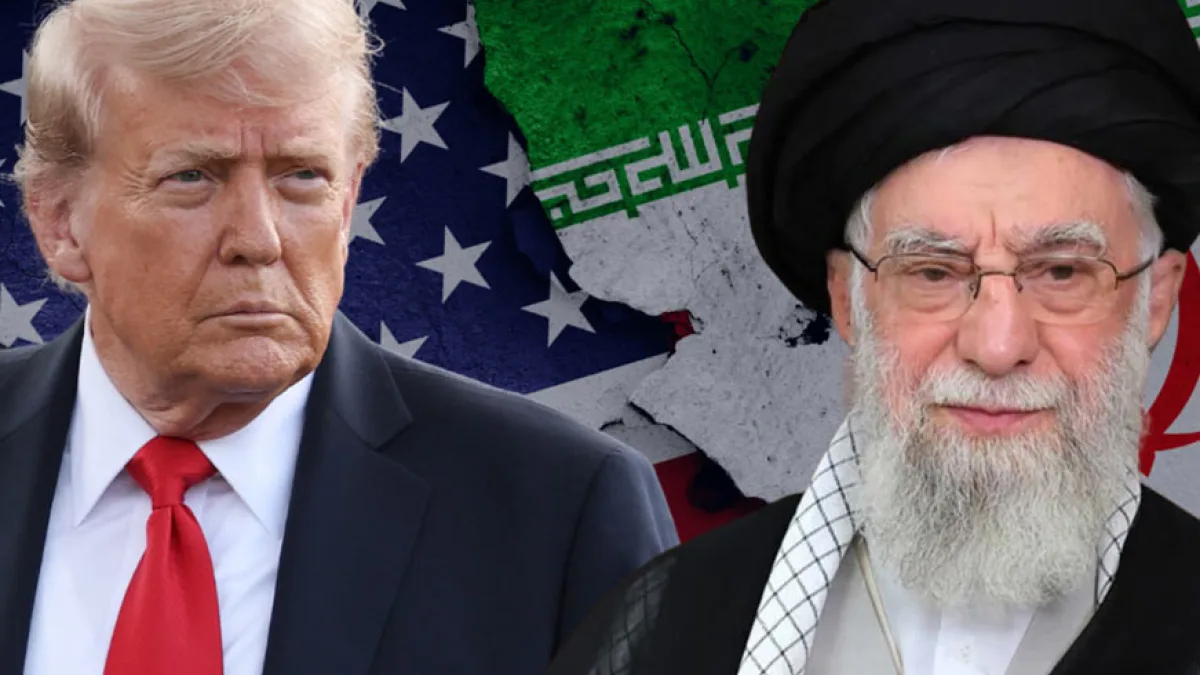
Fox News also reported on the broader fallout from the conflict. The outlet said the U.S. and Israel’s military attacks resulted in the death of Iran’s Supreme Leader, Ayatollah Ali Khamenei, and other top officials, while severely damaging the country’s military. At the same time, Iran retaliated with attacks against Israel and neighboring countries and targeted energy facilities across parts of the Persian Gulf.
The report further stated that the Strait of Hormuz has become nearly impassable to commercial shipping, halting roughly 20% of the world’s oil supply and sending fuel prices sharply higher in the United States and globally. That detail is especially important for readers because it connects a distant military confrontation to everyday American life, from gas prices to inflation pressures that hit families directly. The impact on families is an inference based on the reported oil disruption and price surge.
In that sense, Pence’s comments were about both strategy and consequence. He was not simply applauding force for its own sake. He was arguing that confronting Iran decisively is preferable to allowing threats to deepen, spread, and impose even heavier costs later. Whether every Republican agrees or not, his message was unmistakable: retreat is not leadership, and hesitation can carry its own danger. This is a fair inference from the deterrence rationale he described.
Reactions
Pence’s strongest line may have been his declaration that he could not be “more proud” of Trump for “taking the fight directly” to Iran. He also said, “I’ve told people many times, I’m proud of President Trump for making the decision to launch operation Epic Fury. But I’m not surprised, because the President I serve with is no isolationist.” Those comments were central to the Fox News report and leave little ambiguity about where Pence stands.
Just as important was his criticism of the anti-intervention bloc inside the party. Pence said Trump had “turned a deaf ear” to those voices and argued that doing so was “greatly to his credit.” That statement amounts to more than praise. It is a rebuke to the Republican figures who believe America should step back from global leadership.
The broader reaction inside the GOP appears to remain unsettled, at least as described by Fox News. The report notes that some prominent voices in MAGA and America First circles have “pilloried” the president over the attacks. Even without naming every critic, that description shows the fault line clearly: one side sees decisive military action as necessary deterrence, while the other sees it as a dangerous or unnecessary expansion of conflict.
Pence, however, is trying to close that argument by rooting his case in Republican identity. He said Republicans understand America’s role and obligations, suggesting that the interventionist position is not marginal but mainstream within the party. That framing may prove important because it gives Trump political cover from the right while also reinforcing an image of command at a time of international instability. This political significance is an inference based on the interview’s framing and quoted language.
Why This Matters to You
This matters to readers because it touches the most basic question in foreign policy: whether the United States acts before a threat expands or waits until the consequences are worse. Pence’s argument is that Trump acted, and that he acted correctly. For Americans watching from home, that debate is not abstract. It affects military posture, national credibility, energy prices, and the safety calculations made by enemies and allies alike.
It also matters because it reveals an active struggle inside the Republican Party over what strength should look like in practice. Pence is clearly saying that strength means deterrence, leadership, and a willingness to confront hostile regimes. In doing so, he is defending not just one strike package, but a broader doctrine that sees American power as a stabilizing force rather than a burden to be shed.
The government’s role here is direct and unavoidable. The administration is already responding through military action, and Pence’s remarks argue that it should continue to meet threats with resolve rather than hesitation. Based on the Fox report’s description of Iran’s retaliation and the disruption to global oil transit, the case being made is that Washington must remain focused, credible, and prepared to protect American interests and regional stability.
For readers concerned about national security, economic fallout, and America’s place in the world, Pence’s endorsement is a signal that this fight is not only overseas. It is also inside the GOP, where competing visions of leadership are now colliding in full public view. Trump’s decision, and Pence’s defense of it, may end up defining far more than one moment in the Middle East. It may define what kind of resolve Republicans expect when the next threat arrives.