The escalating conflict between the United States, Israel, and Iran has entered a dangerous new phase, with Israeli Defense Minister Israel Katz announcing that joint U.S.-Israeli strikes on Iranian targets will increase significantly in intensity during the coming week. This comes amid reports that U.S. forces, in coordination with Israel, have struck Iran’s primary nuclear
The escalating conflict between the United States, Israel, and Iran has entered a dangerous new phase, with Israeli Defense Minister Israel Katz announcing that joint U.S.-Israeli strikes on Iranian targets will increase significantly in intensity during the coming week.
This comes amid reports that U.S. forces, in coordination with Israel, have struck Iran’s primary nuclear enrichment facility at Natanz.
The war, which began with surprise U.S. and Israeli airstrikes on February 28, 2026, has already seen the targeted killing of Iran’s Supreme Leader Ali Khamenei and numerous high-ranking officials, alongside widespread degradation of Iran’s air defenses, ballistic missile capabilities, and military infrastructure.
12,200+
patriots joined
Keep reading — stay on the brief
Daily MAGA briefing in your inbox. Free, unsubscribe anytime.
The campaign aims to neutralize threats from Iran’s nuclear program, missile arsenal, and regime leadership while promoting regime change in Tehran.
Natanz, Iran’s main uranium enrichment site located in central Iran, was hit in a recent airstrike attributed to joint U.S.-Israeli operations.
Iranian state media and the country’s atomic energy organization confirmed the attack occurred on March 21, 2026, but emphasized no radiation leakage or major contamination occurred.
Reports indicate U.S. forces employed bunker-buster munitions to target hardened underground sections of the facility, which has been a focal point of international concern over Iran’s nuclear ambitions.
This strike on Natanz marks a direct escalation against Iran’s nuclear infrastructure, building on earlier phases of the conflict that focused on suppressing air defenses and destroying missile launchers.
Israeli and U.S. officials have repeatedly stated that Iran’s nuclear program posed an existential threat, justifying preemptive action to prevent weaponization.
The International Atomic Energy Agency has previously assessed that prior strikes set back Iran’s capabilities, though experts note that complete elimination remains challenging due to dispersed and fortified sites.
In response to the Natanz attack and ongoing bombardment, Iran launched ballistic missiles targeting southern Israel, including areas near Dimona—home to Israel’s nuclear research center.
Iranian strikes wounded over 100 people in communities like Arad and Dimona, with dozens of buildings damaged and Israel’s Iron Dome system failing to intercept at least two missiles.
These retaliatory barrages highlight Iran’s remaining missile reach despite heavy losses.
Iran also fired ballistic missiles at the joint U.S.-U.K. military base on Diego Garcia in the Indian Ocean, demonstrating extended-range capabilities that surprised some observers.
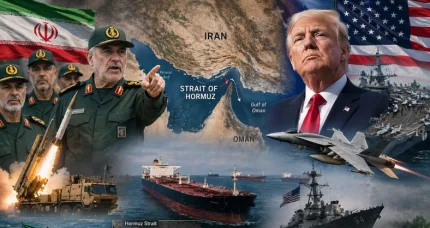
This attack, combined with threats to regional energy infrastructure, has further disrupted global oil markets, with the Strait of Hormuz under partial closure pressure from Iranian actions.
President Donald Trump has issued stark warnings, threatening to “obliterate” Iranian power plants if Tehran fails to fully reopen the Strait of Hormuz within tight deadlines.
Trump has described the campaign as a necessary response to Iran’s aggression and nuclear pursuits, while expressing openness to a post-regime transition in Iran.
Conservative voices in the U.S. and Israel have praised the decisive action as long-overdue accountability for Iran’s sponsorship of terrorism, proxy attacks via groups like Hezbollah and the Houthis, and defiance of international nuclear norms.
The strikes are seen as restoring deterrence and protecting American allies in the region.
Israeli Prime Minister Benjamin Netanyahu has rejected claims that Israel dragged the U.S. into the conflict, calling such narratives “fake news” and emphasizing joint resolve against a shared threat.
He has indicated progress in degrading Iranian capabilities, though he stressed the need for sustained operations, potentially including ground elements in the future.