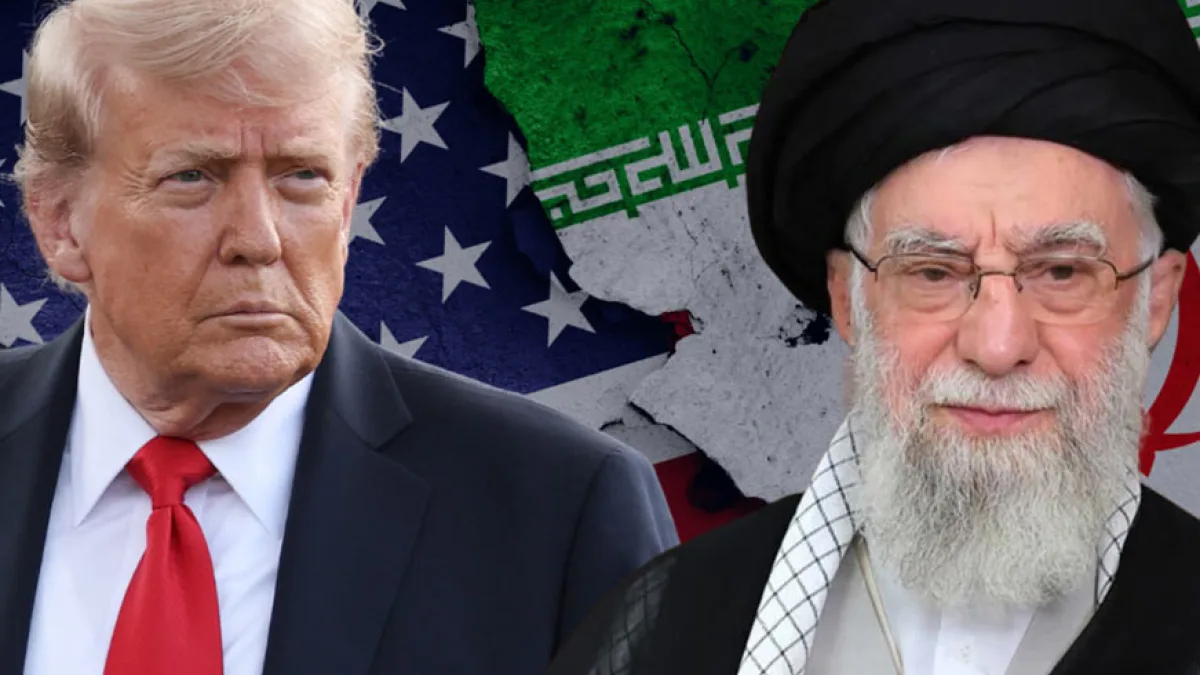
The fragile ceasefire between the United States and Iran, signed into a memorandum of understanding just days ago, was tested severely on June 26, 2026, when Iran’s Islamic Revolutionary Guard Corps struck a Singapore-flagged cargo ship in the Strait of Hormuz with an attack drone. President Donald Trump responded by accusing Tehran of a “foolish

The fragile ceasefire between the United States and Iran, signed into a memorandum of understanding just days ago, was tested severely on June 26, 2026, when Iran’s Islamic Revolutionary Guard Corps struck a Singapore-flagged cargo ship in the Strait of Hormuz with an attack drone. President Donald Trump responded by accusing Tehran of a “foolish violation” of the agreement and ordering retaliatory strikes against Iranian targets. The incident underscored the deep uncertainty surrounding what has been marketed as a diplomatic breakthrough but remains, on the ground, a conflict that neither side has fully stopped fighting.
The broader context of the Strait of Hormuz crisis dates to February 28, 2026, when the United States and Israel launched coordinated airstrikes against Iran, killing the country’s supreme leader and triggering one of the most significant geopolitical events of the decade. Iran responded by deploying its Islamic Revolutionary Guard Corps Navy to blockade the Strait of Hormuz, one of the world’s most strategically vital waterways, through which approximately 20 percent of the world’s seaborne oil trade and 20 percent of its liquefied natural gas passed before the conflict began.
The consequences were immediate and global. Major container shipping companies, including Maersk, CMA CGM, and Hapag-Lloyd, suspended transits through the strait and related routes such as the Red Sea. By early March, commercial vessel traffic through the Hormuz had dropped to near zero. Oil prices spiked dramatically, with Brent crude reaching $114 per barrel on March 27, following the IRGC’s formal declaration that the strait was closed. Analysts recorded the largest single-month increase in oil prices in history during March 2026.
The humanitarian toll on maritime workers was also severe. More than 11,000 seafarers were stranded in the Persian Gulf region as the blockade prevented normal shipping operations. The International Maritime Organization, a United Nations agency, launched emergency evacuation operations for those stranded workers once the ceasefire created limited windows of safer transit. As of June 23, vessel movement through the strait had become more regular, with MarineTraffic data showing nearly two dozen vessels transiting in a 24-hour period.
Iran’s use of sea mines added another dimension of danger to an already volatile situation. United States Central Command confirmed that Iran had laid mines in the strait, and American naval forces began mine clearance operations in April. Reports from the period indicated that Iran itself lost track of some of the mines it had planted, complicating any effort to fully reopen the waterway even after a ceasefire was nominally in place. The UAE’s state-owned oil company estimated that full flows through Hormuz would not resume until 2027, even if a deal were reached quickly.
The diplomatic path toward a ceasefire was tortuous and repeatedly came close to collapsing. On March 25, Pakistani officials delivered a 15-point American proposal to Iran that included demands for an end to Iran’s nuclear program, limits on its ballistic missiles, reopening of the Strait of Hormuz, restrictions on Iran’s support for proxy armed groups across the region, and sanctions relief in exchange. Iran rejected the package, with officials telling state media that the country would end the war “when it decides to do so.”
Tensions escalated dramatically in late March and early April. Trump threatened on March 21 to target Iran’s civilian energy infrastructure if the strait was not reopened. He then extended the threats to Kharg Island, the terminal through which nearly all of Iran’s oil exports flow, and to desalination plants. On April 7, Trump set a deadline and wrote on social media, in terms that shocked international observers, that “a whole civilization will die tonight, never to be brought back again.” The next day, a ceasefire brokered by Pakistan was announced.
That initial ceasefire was fragile from the start and was violated by both sides almost immediately after its announcement. The failure of the Islamabad Talks, announced by Vice President JD Vance on April 12, led Trump to declare a naval blockade of Iranian ports, a counter-measure that the United States maintained from April 13 through May 29. The blockade turned away more than 100 vessels seeking to use Iranian ports. Through it all, Iran insisted that military vessels approaching the strait constituted a ceasefire violation and would meet a “severe response.”
On June 11, Trump announced that new ceasefire conditions covering a period of 60 days had been agreed upon, intended to give negotiators time to resolve the war’s outstanding issues. On June 17, the presidents of the United States and Iran signed a memorandum of understanding in Geneva, mediated by Pakistan, to formally extend the ceasefire and establish a framework for final negotiations. Trump hailed the agreement on social media, saying he had authorized the Strait of Hormuz to open and declaring: “Ships of the World, start your engines. Let the oil flow!”
That declaration proved premature. Even with the memorandum signed, the situation around the strait remained fluid and dangerous. Iran’s IRGC military command declared the strait closed again on at least one occasion in the days following the signing, citing Israel’s continued strikes in southern Lebanon as a “blatant breach” of the agreement and a failure by the United States to honor its commitments. Iran’s foreign ministry contradicted the military within hours of that announcement, telling media that shipping was “operating normally,” creating confusion about who was actually in control of Iranian policy.
Vice President Vance pushed back against the latest Iranian IRGC declaration, telling Fox News: “The straits really are open. We are not seeing any evidence that the Iranians are still closing down the Strait of Hormuz.” US CENTCOM confirmed that commercial ship traffic had increased on June 20, providing some grounds for cautious optimism. But the drone strike of June 26 demonstrated how quickly the situation can reverse.
The strike on the Singapore-flagged cargo ship prompted Trump to respond on Truth Social, describing how the regime “shot at least four one-way attack drones at ships transversing the Strait of Hormuz,” one of which “solidly hit the upper deck of a large and very expensive cargo-carrying ship.” The ship was able to continue on its way, and the military knocked down three other drones, Trump said. U.S. forces subsequently launched strikes against Iranian targets in retaliation.
Lebanon has been a persistent complicating factor in the ceasefire negotiations. Iran made a halt to fighting between Israel and Hezbollah in Lebanon a precondition for any final agreement, but Israel refused to accept Lebanon as part of the ceasefire framework. Israeli Prime Minister Benjamin Netanyahu asserted that the ceasefire “does not include Lebanon,” a position backed by both Trump and Vance. Israeli Defense Minister Israel Katz stated that Israel plans to maintain troops in southern Lebanon indefinitely.
Hezbollah continued to fire drones into northern Israel even as ceasefire announcements were being made, and Israel responded with airstrikes on Hezbollah strongholds in Beirut’s southern suburbs. On at least one occasion, an Israeli airstrike on Lebanon nearly derailed the entire Geneva negotiation. Iran treated the Israeli strikes in Lebanon as evidence of American bad faith, using them as justification for interrupting traffic through Hormuz. The interconnected nature of the Lebanon conflict and the Iran ceasefire makes a durable settlement extremely difficult to achieve.
The global economic impact of the closure has been profound. An analysis by The New York Times found that the United States saw an increase in energy exports and revenue gains of approximately $50 billion in the period from the war’s start through early May 2026, as rising global prices benefited American energy producers. Russia saw a similar revenue increase of more than $15 billion. The biggest losers were the Persian Gulf nations themselves, whose oil and gas exports were choked off by the very crisis they had partly sparked.
The European Union’s response to the energy disruption revealed a continuing vulnerability. Between January and April 2026, Europe imported a record volume of Russian liquefied natural gas from the Yamal LNG project in the Russian Arctic, drawing criticism from those who argued that the crisis had inadvertently revived Europe’s dependence on Russian energy at precisely the moment when Western nations were trying to reduce that dependence following Russia’s invasion of Ukraine.
The broader unresolved issues hanging over the 60-day ceasefire period are substantial. The fate of Iran’s nuclear program, the primary strategic concern that drove the United States and Israel to launch the February 28 strikes in the first place, remains entirely unresolved in the current memorandum. Senior Iranian officials have indicated that Tehran intends to resume collecting fees from vessels transiting the Strait of Hormuz after the 60-day suspension expires, a position American officials have signaled would make any permanent deal “unfeasible.”
U.S. Secretary of State Rubio stated flatly that any Iranian tolling system in the strait would undermine the prospects for a diplomatic resolution. The United Kingdom and France, for their part, are working to establish an international defensive mission for the strait, with France’s Charles de Gaulle aircraft carrier group already in the region. Iran has warned that any such deployment would receive a “decisive and immediate response,” adding yet another potential flashpoint to an already crowded diplomatic landscape.
Despite the uncertainties, world leaders offered cautious welcoming statements when the June 17 MOU was signed. European leaders from the United Kingdom, France, Germany, and Italy called for swift implementation and the urgent reopening of the strait. UN Secretary General Antonio Guterres called the deal a “critical step.” French President Emmanuel Macron, hosting G7 leaders at a summit in Evian-les-Bains, said France and its partners were “ready to take action very quickly” to help restore normal shipping once conditions permit.
The coming weeks will test whether the ceasefire framework can hold.