A Massachusetts courtroom failed to deliver a verdict this week in one of the most gut-wrenching criminal cases the state has seen in years. Lindsay Clancy, the former labor and delivery nurse accused of killing her three young children, Cora, 5, Dawson, 3, and Callan, 8 months, in their Duxbury home in January 2023, walked
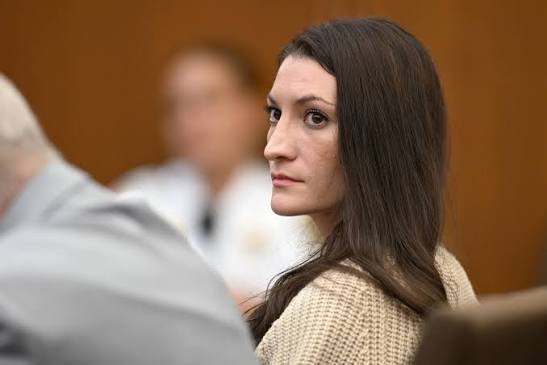
A Massachusetts courtroom failed to deliver a verdict this week in one of the most gut-wrenching criminal cases the state has seen in years. Lindsay Clancy, the former labor and delivery nurse accused of killing her three young children, Cora, 5, Dawson, 3, and Callan, 8 months, in their Duxbury home in January 2023, walked out of Plymouth Superior Court on Friday without a conviction and without an acquittal. The jury simply could not agree.
Judge William Sullivan declared the mistrial after jurors informed the court, for the third time, that they were hopelessly deadlocked following roughly 38 hours of deliberations spread across seven days. According to defense attorney Kevin Reddington, the jury stood at 11 to 1 in favor of acquitting Clancy on the grounds that she lacked criminal responsibility due to postpartum psychosis, with a single holdout juror preventing a unanimous verdict.
Let that sink in. Eleven of twelve jurors reportedly wanted to acquit a woman who, by all accounts including her own defense’s narrative, personally strangled her three children before attempting to take her own life. One juror stood in the way of that outcome. Whatever the merits of the psychiatric evidence presented at trial, it is worth pausing on just how close this case came to ending in a full acquittal for the deaths of three children.
To be clear about the legal posture here, a mistrial is not an acquittal. Clancy remains charged with murder, and prosecutors in the Plymouth County District Attorney’s office must now decide whether to retry the case, pursue a plea agreement, or, in theory, drop the charges altogether. Nobody outside the jury room knows exactly what unfolded during those seven days of deliberation, but the numbers reported by the defense paint a striking picture of just how persuasive Clancy’s mental health defense proved to be with most of the panel.
Clancy’s defense rested almost entirely on the claim that she was in the grip of severe postpartum psychosis at the time of the killings, a condition her attorneys argued left her unable to understand the nature or wrongfulness of her actions under Massachusetts law. Prosecutors pushed back hard against that narrative, arguing that Clancy acted, in their words, intentionally, rationally, and swiftly, and that her actions before and after the killings demonstrated a level of planning and awareness inconsistent with a total break from reality.
This is where the case becomes genuinely difficult, and where reasonable people can and do disagree. Postpartum psychosis is a real and rare psychiatric condition, and severe untreated cases can produce catastrophic outcomes. Nobody serious disputes that the condition exists or that it can be devastating. The question the jury had to answer was not whether postpartum psychosis is real in the abstract, but whether Clancy specifically was in its grip to a degree that erased her criminal responsibility under the law, a much higher and more specific bar than simply having experienced symptoms of depression or anxiety after childbirth.
It is worth noting that Clancy was reportedly under active psychiatric treatment in the period leading up to the killings, having sought help and been prescribed medication for postpartum depression and anxiety. Prosecutors have suggested this treatment history complicates the defense’s narrative of a sudden, uncontrollable psychotic break, since psychosis of the severity being described typically presents with symptoms that would have been apparent to treating physicians and family members well before a tragedy of this magnitude occurred.
The insanity defense, in general, deserves a level of public skepticism that it does not always receive in high profile cases. It exists for legitimate reasons, rooted in centuries of legal tradition recognizing that criminal punishment requires a guilty mind as well as a guilty act. But it is also a defense that, when successfully deployed, allows a defendant who committed an undeniably horrific act to avoid the criminal consequences that would apply to virtually anyone else who committed the same act without a diagnosed mental illness. That tension is uncomfortable, and it should be. A justice system serious about accountability owes it to victims, even young victims who cannot speak for themselves, to scrutinize these claims rigorously rather than accepting them reflexively out of sympathy for a defendant’s circumstances.
None of this is to prejudge what actually happened inside that Duxbury home in January 2023, or to claim any special insight into Clancy’s mental state that the jury, which heard weeks of expert testimony from psychiatrists on both sides, did not already weigh far more carefully than any outside commentator could. But the sheer scale of what occurred, three children of different ages killed in the same incident, deserves a justice system that does not simply default to sympathy because the underlying diagnosis sounds sufficiently sympathetic on paper.
Reddington, Clancy’s attorney, wasted no time declaring victory outside the courthouse, saying his client had, in his words, won the case, and describing the prosecution as crushed by the outcome. That characterization is, at best, premature. A hung jury is not a legal victory. It is an unresolved case that leaves prosecutors with every legal right to bring the matter before a new jury and start the entire process over again.
Reddington also took direct aim at the lone holdout juror, accusing that individual of robbing the rest of the panel of the not guilty verdict he believes they were entitled to reach. That is an aggressive characterization of a citizen who, by all indications, simply exercised the same right every juror has, to vote their conscience based on the evidence and the law as they understood it, regardless of what the other eleven people in the room believed. One person refusing to bend to social pressure inside a jury room is not evidence of some injustice. It is the entire point of requiring unanimous verdicts in the first place.
The Plymouth County District Attorney’s office has indicated it will decide soon whether to seek a retrial. Given the enormous public interest in this case, the resources already invested in a seven week trial, and the gravity of three child deaths, it would be genuinely surprising if prosecutors simply walked away at this stage. A retrial appears the far more likely path forward, though it will mean additional years of legal proceedings, additional trauma for family members forced to relive the details of the case, and additional uncertainty for a community that has already waited more than three years for some form of resolution.
There is also a broader conversation happening around this case about maternal mental health, and it is a conversation worth having on its own terms. Postpartum depression and its rarer, more severe cousin, postpartum psychosis, remain under discussed and under screened in American obstetric care, and there is a legitimate policy argument to be made that better mental health infrastructure for new mothers could prevent tragedies before they occur. That argument, however, exists separately from the question of criminal responsibility in this specific case, and the two should not be conflated simply because they involve overlapping subject matter.
It is also worth noting how differently this case might have been covered and discussed had the roles been reversed, had a father been accused of killing his three young children under a claimed mental health defense. There is a legitimate question about whether sympathy for postpartum struggles, however real the underlying condition may be in some cases, has shaped public and even legal perception of this case in ways that would not apply equally across the board. That is not an argument against taking postpartum psychosis seriously as a medical matter. It is an argument for applying the same rigorous standard of criminal accountability regardless of the sympathetic narrative surrounding a particular defendant.
For now, the case remains exactly where it was before the verdict, unresolved, with Lindsay Clancy neither convicted nor cleared of killing her three children. A status hearing has been scheduled for later this month, where prosecutors are expected to signal their intentions. Whether that means a new trial before a different jury, a negotiated plea, or some other resolution remains to be seen.