On April 3, 2026—Day 35 of the ongoing U.S.-led military operations against Iran—an American F-15E Strike Eagle fighter jet was shot down over southwestern Iran in the Kohgiluyeh and Boyer-Ahmad province. This marked the first time Iran successfully downed a manned U.S. combat aircraft since the conflict began roughly five weeks earlier.
The two-seat F-15E, a versatile strike fighter known for its air-to-ground capabilities and long-range performance, was struck by Iranian air defenses. Both crew members ejected safely, but one U.S. airman remains missing while the other was rescued by American special operations forces and is receiving medical treatment.
Iranian state media quickly claimed responsibility, releasing footage and photos of what they described as wreckage from the downed jet. Local channels broadcast appeals to citizens, offering a “precious prize” or reward for capturing any American crew members alive and turning them over to security forces rather than harming them.
12,200+
patriots joined
Keep reading — stay on the brief
Daily MAGA briefing in your inbox. Free, unsubscribe anytime.
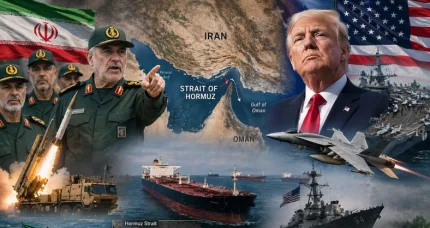
A second U.S. aircraft—an A-10 Thunderbolt II, commonly called the Warthog and designed for close air support—was also struck by Iranian fire on the same day. This incident occurred near the Strait of Hormuz. The single pilot ejected and was successfully rescued outside Iranian territory.
U.S. officials confirmed Iranian forces were responsible for the F-15E downing and described an active search-and-rescue mission in a remote, mountainous region. Israel has reportedly assisted in the operation. The rescue effort faced added risks, with reports of Iranian attempts to target supporting aircraft.
This development comes amid a broader five-week campaign involving U.S. and allied strikes on Iranian targets, including responses to earlier escalations involving missiles, proxies, and threats to key shipping lanes like the Strait of Hormuz. President Trump had recently stated that U.S. forces had achieved significant dominance, a claim now tested by Iran’s demonstrated air defense capabilities.
The F-15E is a highly capable platform with advanced radar and weapons systems, rarely lost in combat against peer or near-peer adversaries. Its downing inside Iranian territory raises questions about the effectiveness of ongoing suppression of enemy air defenses (SEAD) missions and the resilience of Iran’s integrated air defense network, which includes Russian and indigenous systems.
Conservatives have long warned that entanglement in prolonged Middle East conflicts carries high costs in American lives, equipment, and treasure. While decisive action against Iranian aggression and its nuclear ambitions is necessary for national security, incidents like this underscore the need for clear objectives, overwhelming force when committed, and an exit strategy that prioritizes American interests over nation-building or open-ended engagements.
The missing crew member’s status remains the immediate focus. U.S. forces are operating under time pressure in hostile territory, where Iranian Revolutionary Guard Corps (IRGC) elements could attempt capture. Past experiences, such as the 2019 drone shoot-down or earlier proxy attacks, highlight Iran’s pattern of provocative actions followed by information warfare and hostage diplomacy.
This event does not alter the fundamental reality that Iran’s regime has sponsored terrorism, destabilized the region through proxies like Hezbollah and the Houthis, and pursued nuclear capabilities in violation of international norms. However, it serves as a sobering reminder that even superior U.S. technology faces risks when operating deep in contested airspace without total air supremacy.
President Trump, briefed on the incident, has indicated that such losses will not derail negotiations or broader strategy if they serve American goals. Yet repeated claims of total dominance contrasted with on-the-ground realities fuel skepticism about optimistic assessments from any administration.
The broader context includes Iranian strikes on other assets and disruptions in the Strait of Hormuz, a critical chokepoint for global oil shipments. Protecting freedom of navigation and energy security remains a core U.S. interest that justifies measured military responses—but not at the expense of ill-defined, open-ended wars.
American pilots and crews train rigorously for survival, evasion, resistance, and escape (SERE) scenarios precisely for situations like this. Their professionalism and bravery reflect the best of our armed forces, deserving full support and rapid extraction.
As the search continues into April 4, 2026, the incident elevates the stakes in a conflict already marked by high tension. It reinforces the emphasis on peace through strength: maintain overwhelming military superiority, avoid unnecessary provocations, and ensure any engagement advances tangible U.S. security objectives rather than vague regional transformation.