The Iranian regime, which has spent decades funding terror proxies across the Middle East while its own people struggle to afford basic necessities, is now confronting one of the most severe fuel shortages in years. Long lines at gas stations, doubled prices, and looming rationing plans are converging into a full-blown energy crisis that is
The Iranian regime, which has spent decades funding terror proxies across the Middle East while its own people struggle to afford basic necessities, is now confronting one of the most severe fuel shortages in years. Long lines at gas stations, doubled prices, and looming rationing plans are converging into a full-blown energy crisis that is exposing just how fragile the mullahs’ grip on the economy really is.
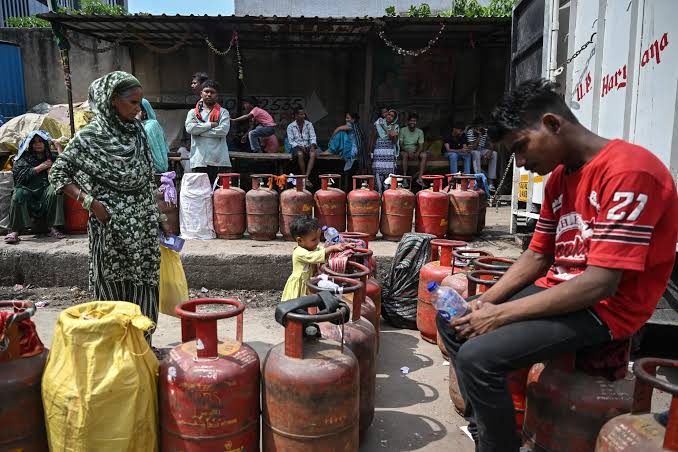
Reports out of Tehran describe gas stations running completely dry, with motorists forced into long searches across the capital just to find a pump that still has fuel. Videos and images circulating on Persian-language social media show shuttered filling stations and long lines of cars queued at the few stations still operating. Shortages have been reported across multiple districts of the capital, including both central and northern Tehran, and the disruption has even been acknowledged by state-affiliated media, which rarely admits to domestic failures.
12,200+
patriots joined
Keep reading — stay on the brief
Daily MAGA briefing in your inbox. Free, unsubscribe anytime.
This is not a minor blip. Iran is the fourth largest consumer of natural gas in the world, trailing only the United States, China, and Russia, and it relies heavily on that gas to heat homes and generate electricity given its often harsh climate. Yet despite sitting atop some of the largest gas reserves on the planet, the regime cannot keep its own citizens supplied with basic fuel, a staggering indictment of decades of economic mismanagement, corruption, and a foreign policy built around funding militias rather than investing in domestic infrastructure.
Much of the current crisis traces back to the war between Iran and the American Israeli coalition earlier this year, along with the broader closure of the Strait of Hormuz, through which more than a fifth of the world’s oil trade normally passes. Israeli airstrikes targeted Iranian gas and oil infrastructure directly, including a significant attack on the South Pars gas field, which the Wikipedia record on the strike notes accounts for as much as seventy percent of Iran’s total gas production. That single attack alone reportedly knocked out twelve percent of Iran’s total gas output and halted production at two refineries, forcing Iran to even cut off gas exports to Iraq.
The economic squeeze has only intensified as American sanctions and a naval blockade continue to choke off Iran’s ability to import refined fuel to cover the gap between domestic production and consumption. Iranian President Masoud Pezeshkian has publicly admitted that the country spent roughly six billion dollars importing gasoline in the last Iranian year alone, a staggering sum for a government that claims to be self-sufficient in energy. Officials close to the regime say falling oil revenue, restricted access to foreign currency, and blocked import routes have made that strategy increasingly untenable.
Faced with a widening structural deficit between what Iran produces and what its own citizens consume, the regime has been forced into a series of increasingly desperate measures. Iranian officials recently floated three separate rationing proposals, according to reporting on state television. One option would cap daily nationwide fuel distribution at roughly 121 million liters, meaning gas stations would simply shut down once that supply ran out regardless of demand. A second option would impose stricter individual vehicle quotas, forcing drivers who exceed their allocation to pay unsubsidized market rates for anything extra. A third option would strip fuel allocations away from vehicles entirely and instead grant every citizen, whether or not they own a car, a monthly allowance of about thirty liters that could be used or sold.
None of these proposals has been fully implemented, and Iranian officials have been careful to say the public will be informed before any final decision is made, a clear sign that the regime remembers what happened the last time it tried to raise fuel prices. In November 2019, a sudden gasoline price hike triggered nationwide protests that were met with a brutal and bloody crackdown, and the memory of that unrest appears to be constraining how aggressively the government can act even as the fuel deficit grows.
Even so, the regime could not avoid raising prices altogether. Beginning on September 8, Iran doubled the price of gasoline purchased outside the subsidized quota system, raising the non-quota rate to 100,000 rials per liter from 50,000 rials, or roughly 4.3 cents in U.S. currency. Iranian officials tried to soften the blow by leaving the two subsidized tiers, covering the first 110 liters a month, unchanged, but the increase for heavier users signals just how tight the government’s finances have become.
Analysts are skeptical the price increase will meaningfully solve anything. One oil and gas economist estimated that the hike could generate less than five hundred million dollars in additional annual revenue given current consumption patterns, a relatively modest sum against a daily production shortfall estimated at somewhere between fourteen and twenty million liters. In other words, the regime is tinkering around the edges of a crisis that requires structural solutions it appears unable or unwilling to deliver.
The numbers tell a grim story. According to officials cited by Iranian state media, the country was consuming roughly 135 million liters of gasoline per day against domestic production of only about 121 million liters, a gap of fourteen million liters daily that must be covered through imports or draws on strategic reserves that are themselves dwindling under sanctions pressure. Compare that to 2019, when Iran produced about 99 million liters a day while consuming just 87 million, and the trajectory becomes clear. Consumption has consistently outpaced Iran’s ability to produce or import enough fuel to meet it, year after year, regardless of which faction controls the government.
The government has tried to nudge Iranians toward alternatives such as compressed natural gas for the millions of dual fuel vehicles on Iranian roads, and Iran’s largest refinery, the Persian Gulf Star facility, has reportedly resorted to blending in methanol to stretch its output. But these are stopgap measures, not solutions, and they underscore just how constrained the regime has become under the weight of sanctions specifically designed to limit its access to the resources and technology needed to modernize its energy sector.
The ripple effects extend well beyond Iran’s borders. The International Energy Agency has characterized the broader disruption caused by the war and the Hormuz closure as the largest supply disruption in the history of the global oil market. Brent crude prices spiked as high as 118 dollars a barrel in the immediate aftermath of the conflict before falling back and then surging again above 100 dollars amid renewed attacks on shipping and energy infrastructure. As of early September, prices were hovering near 109 dollars a barrel, a level that continues to strain economies far beyond the Middle East.
Countries that depend heavily on Persian Gulf energy imports have felt the pain acutely. Vietnam experienced its own fuel shortages and panic buying, with long lines of motorcyclists queued at petrol stations in Hanoi. The Philippines endured a months long energy crisis, with diesel prices spiking to more than ten dollars a gallon in some areas. Even American consumers have not been spared entirely. Costco recently announced it was rationing motor oil and sharply raising prices on its Kirkland Signature brand as turmoil in global oil markets tied to the Iran war continues to filter down to ordinary shoppers at the pump and beyond.
There is a certain grim irony in all of this. For years, the Iranian regime has poured resources into its nuclear program, its ballistic missile arsenal, and its network of proxy militias stretching from Lebanon to Yemen, all while neglecting the basic energy infrastructure needed to keep its own gas stations stocked. Now, as American pressure and military strikes have degraded its energy production capacity and cut off its financial lifelines, ordinary Iranians are the ones paying the price in the form of hours long lines and rationed fuel.