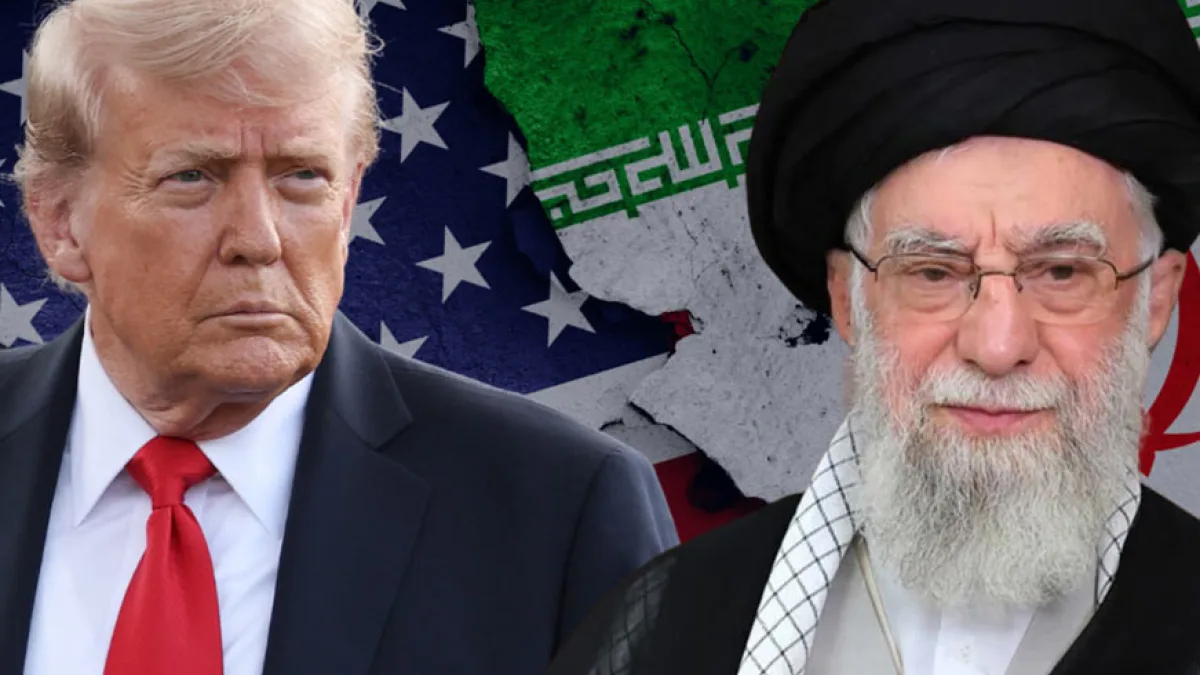
The Trump administration drew its sharpest and most unambiguous line yet in the ongoing nuclear negotiations with Iran on Sunday, delivering an ultimatum that cuts through the diplomatic language and technical complexity of weeks of back-channel talks with four words: no dust, no dollars. The phrase, used by a senior White House official in a
“The important part of how this is structured is, if Iran doesn’t perform, they don’t get anything. No dust? No dollars. As the Strait opens, the blockade loosens proportionately,” the official said.
“This is ‘trust but verify’ on steroids.”
The phrase “trust but verify on steroids” is the operative policy description that every arms control expert, every sanctions lawyer, and every Iranian negotiator needs to internalize.
Iran does not receive sanctions relief in advance of compliance.
Iran does not receive promises of relief contingent on future verification.
Iran receives sanctions relief proportionally, in real time, as it surrenders its enriched uranium stockpile and as the Strait of Hormuz reopens to international shipping.
Performance precedes payment.
Not the other way around.
The White House vowed “no dust, no dollars” for Iran on Sunday, asserting that unless the Islamic Republic gives up its enriched uranium, it will get no sanctions relief, as President Trump tapped the brakes on forecasting a peace deal that would reopen the Strait of Hormuz.
Trump revealed Saturday that the U.S. and Iran were close on a memorandum of understanding that would get oil flowing again while allowing 30 days for nuclear negotiations.
The plan unleashed panic among some Republicans and Israel backers, prompting Trump officials to clarify that no deal was imminent and that it would take at least five to seven days to finalize any agreement.
The panic among some Republicans and Israel’s supporters that followed Trump’s Saturday announcement about the memorandum of understanding is worth addressing directly, because it reflects legitimate historical concerns about what happens when American administrations reach for a deal with Iran that falls short of complete denuclearization.
The Obama-era JCPOA, which Trump withdrew from in 2018 and which has defined the contours of every subsequent Iran nuclear negotiation, did not require Iran to surrender its enriched uranium.
It required Iran to reduce its enriched stockpile and accept monitoring.
Iran complied on paper while maintaining the knowledge, the infrastructure, and the institutional capacity to restart enrichment rapidly.
The result, within a decade of the deal’s signing, was an Iranian nuclear program that had advanced further than it stood when the deal was signed.
Key details of the peace deal between Iran and the United States reveal a framework in which Iran will give up its long-term nuclear ambitions and commit to giving up its enriched stockpile.
The Strait of Hormuz will be opened and the blockade lifted.
No frozen assets will be released without the meeting of conditions as laid out by the U.S.
A senior White House official described the moderates and pragmatists in the Trump administration as ascendant in this process that will see Iran giving up its long-term nuclear ambitions.
A senior U.S. official told Fox News that no agreement will be signed “today or tomorrow,” adding that President Trump is inclined to give the process several more days to reach a final outcome.
The official said understandings have been reached on the enriched uranium stockpile and the reopening of the Strait of Hormuz, while final wording remains under negotiation.
The U.S. is prepared to resume military strikes if negotiations fail or produce what it considers a “bad deal.”
That final clause is the load-bearing element of the entire negotiating framework.
The Iranian regime’s calculation in every nuclear negotiation it has ever entered is driven by its assessment of whether the consequences of walking away from the table are more or less costly than the consequences of accepting the deal on offer.
When the alternative to a deal is military strikes that the American military has the demonstrated capability and the stated willingness to execute, the Iranian calculation looks very different than it does when the alternative is more sanctions and more diplomacy.
The Strait of Hormuz dimension of the negotiation connects the nuclear question to the economic pressure that Operation Economic Fury has been building since the administration returned to office.
The Strait, through which approximately 20 percent of the world’s oil supply passes, has been subject to Iranian interference and threatened closure for decades.
Iran has used the threat of Strait closure as leverage in every negotiation with the West, knowing that the economic consequences of actual closure would be felt immediately and severely in energy markets, supply chains, and the budgets of consumer households from Tokyo to London to Los Angeles.
The Trump administration, by making the reopening of the Strait a condition of sanctions relief rather than a separate diplomatic track, has folded Iran’s most potent economic leverage back into the negotiation itself.
The “no dust, no dollars” declaration is consistent with a maximalist U.S. demand that Iran has publicly rejected, with differences over one or two clauses of the possible memorandum of understanding still persisting according to Iran’s semi-official Tasnim news agency.
The June sub-market for Iran uranium surrender suggests participants view near-term agreement as unlikely, while the December sub-market reflects a broader window for potential compliance.
The market-based assessment that a deal before late 2026 is improbable reflects the complexity of what is being asked of the Iranian regime, not a skepticism about American resolve.
Surrendering an enriched uranium stockpile that represents decades of investment, political capital, and strategic deterrence value is not a decision that any Iranian faction can make easily or quickly, regardless of the economic pressure driving the negotiation.
The hardliners within the Iranian regime who have publicly rejected the American demand are not doing so out of stubbornness.
They understand that surrendering the uranium stockpile is, in the language of the Iranian political system, a capitulation of existential proportions.
The revolutionary ideology that has sustained the Islamic Republic since 1979 is built in significant part on resistance to American demands.
To hand over the enriched uranium that the regime has spent decades and billions of dollars developing, under American pressure, in exchange for the removal of sanctions that the American administration imposed, is to accept publicly that the American pressure campaign worked.
For the faction of the Iranian political system that has defined itself by resistance to exactly that kind of American pressure, agreeing to the deal is an admission of defeat that carries severe domestic political consequences.
The moderates and pragmatists within the Iranian system, by contrast, appear to have concluded that the economic situation has deteriorated to the point where the consequences of continuing to resist are more severe than the consequences of accepting a deal.
The CIA’s deployment to Cuba, described in a separate story this week, is being watched carefully in Tehran as an indicator of the administration’s willingness to follow through on regime change objectives.
An administration that has placed its intelligence director on Cuban soil with an ultimatum for Havana is an administration that has demonstrated its seriousness about using every instrument of national power in pursuit of its foreign policy objectives.
The administration’s insistence that the deal will require Iran to give up its long-term nuclear ambitions, not merely reduce its current stockpile, is the element that distinguishes the emerging framework from the JCPOA’s approach most fundamentally.
A deal that removes enriched uranium from Iran while leaving the enrichment infrastructure, the scientific knowledge base, and the institutional capacity to produce more enriched uranium in place is not a denuclearization deal.
It is a temporary reduction deal, indistinguishable in its strategic effect from the JCPOA that Trump spent his first term dismantling.
The administration’s use of the phrase “long-term nuclear ambitions” signals an awareness of that distinction and a determination not to repeat the predecessor agreement’s structural flaw.
Whether the Iranian regime’s moderates can sell that commitment to the hardliners, to the Revolutionary Guards, and to the Supreme Leader’s office, whose physical location the administration has reportedly made extraordinary efforts to protect from intelligence collection, is the central political question of the negotiation.
The agreement is described as 95 percent complete.
The remaining 5 percent, the language describing how Iran will stop enrichment and how that commitment will be verified and enforced, contains the most politically explosive questions in the entire framework.
Getting the language right is not a technical exercise.
It is a political negotiation within the Iranian system as much as between the Iranian and American systems.
The administration’s explicit statement that it is prepared to resume military strikes if negotiations fail or produce a bad deal is not a bluff that Iran can afford to call.
The American military’s demonstrated strike capabilities against Iranian assets, combined with the intelligence presence that the administration has established in Cuba and presumably across other points of regional concern, creates a military option that is credible in a way that the Biden administration’s threats never were.
Iran’s strategic planners have observed the Trump administration’s willingness to impose maximum pressure, to target Iranian proxy forces, to conduct operations that previous administrations avoided, and to hold firm on conditions that previous administrations eventually softened.
The no dust, no dollars ultimatum is consistent with every element of the administration’s behavior since returning to office.
The five-to-seven-day timeline that the administration indicated it would allow for finalizing any agreement places the potential signing of a memorandum of understanding in the first week of June 2026.