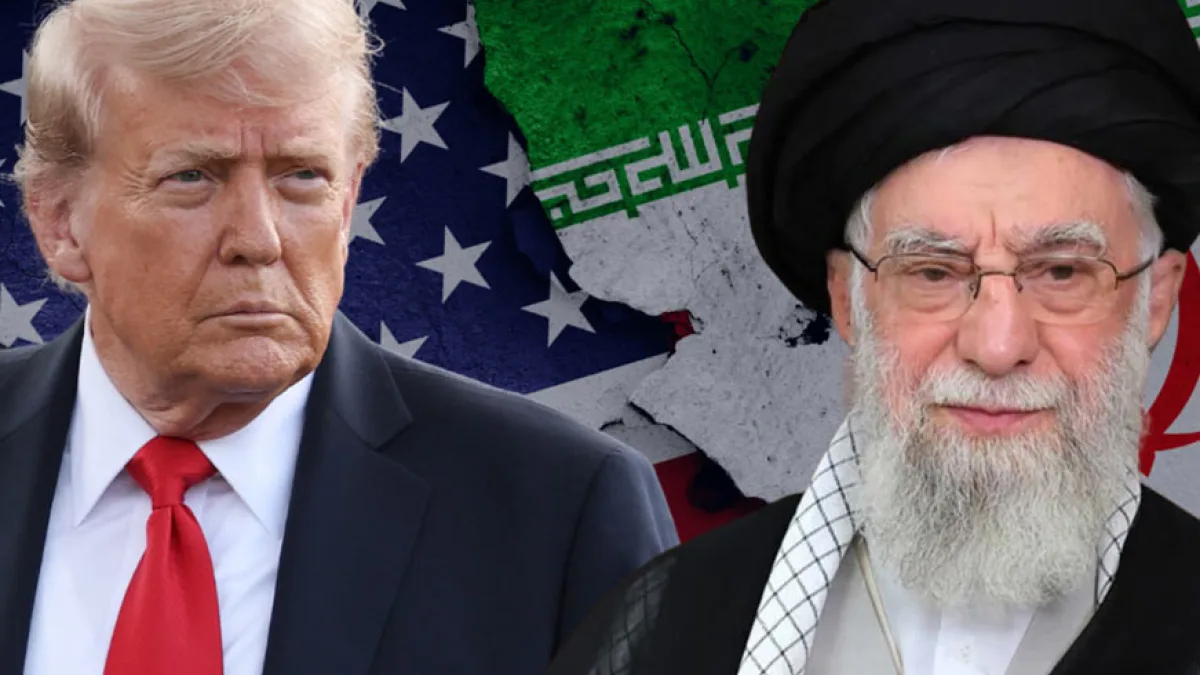
America answered Iranian aggression with fire on Tuesday after President Donald Trump ordered retaliatory military strikes following the downing of a U.S. Army AH-64 Apache helicopter near the Strait of Hormuz. The message from Washington was unmistakable: attack American servicemen and America will respond. The Apache was patrolling international waters off the coast of Oman

America answered Iranian aggression with fire on Tuesday after President Donald Trump ordered retaliatory military strikes following the downing of a U.S. Army AH-64 Apache helicopter near the Strait of Hormuz. The message from Washington was unmistakable: attack American servicemen and America will respond.
The Apache was patrolling international waters off the coast of Oman on Monday evening when it was struck and brought down. Two crew members were recovered safely within approximately two hours by a U.S. Navy uncrewed drone vessel — the first such rescue operation of its kind in military history.
12,200+
patriots joined
Keep reading — stay on the brief
Daily MAGA briefing in your inbox. Free, unsubscribe anytime.
President Trump took to social media Tuesday to lay the blame squarely on Tehran. “The Iranians shot down one of our highly sophisticated Apache Helicopters,” Trump posted. He confirmed the two pilots were “safe and uninjured,” but made clear the attack could not go unanswered: “Nevertheless, the United States must, of necessity, respond to this attack.”
U.S. Central Command wasted no time. CENTCOM announced it “began launching self-defense strikes against Iran at 5 p.m. ET” on Tuesday, acting at the direction of the Commander in Chief. The strikes were described by CENTCOM as a proportional response to Iranian aggression against American forces.
The targets of the American strike were tactically selected. The U.S. military confirmed it had “struck Iranian air defence, ground control stations and surveillance radar sites near the Strait of Hormuz with precision munitions,” with both Air Force and Navy fighter jets taking part in the operation.
Iran acknowledged the strikes took place around Bandar Abbas and elsewhere along its southern coastline, though offered no details on damage assessments. The silence from Tehran speaks volumes to military analysts — the regime knows it picked a fight it cannot win.
Two U.S. officials confirmed the Apache was brought down by an Iranian drone — specifically, reports indicate it was an Iranian Shahed-type drone that struck the helicopter. Whether the drone targeted the Apache intentionally remains under investigation, though the outcome was the same regardless of intent.
The rescue vessel that retrieved the pilots — a Corsair uncrewed surface vehicle produced by Saronic Technologies — was awarded a Navy contract in December 2025.
Its debut operational success in recovering American soldiers under combat conditions is a testament to the Trump administration’s continued investment in cutting-edge military technology.
This marks the first loss of an Apache helicopter since the current U.S.-Iran conflict escalated, raising the stakes significantly. The incident came just one day after Trump brokered a renewed ceasefire between Iran and Israel, underscoring how fragile any agreement with the Tehran regime truly is.
The downing of the Apache represents yet another act of Iranian belligerence against American forces operating lawfully in international waters. Under the Biden administration, Iran faced little consequence for its provocations. Under Trump, the calculus is different.
Trump has made clear throughout his second term that American military assets and American lives will not be targeted without consequence.
His swift response Tuesday sends a powerful deterrent message not just to Iran but to every adversary watching from Moscow to Beijing.
Critics on the left have already begun wringing their hands, calling for “diplomacy” and worrying about “escalation.” But the American people understand something those critics do not — weakness invites aggression. Strength is what keeps American pilots alive.
The Strait of Hormuz is one of the world’s most strategically vital waterways, through which nearly 20% of global oil trade flows. America’s military presence there is not optional — it is essential to energy security for the United States and its allies.
Iran has spent the past year testing American resolve through a series of incremental provocations. Shooting down an American Apache is a dramatic escalation that demanded — and received — a firm military response.
The two pilots who were rescued are a reminder of the brave men and women who put themselves in harm’s way every day to defend American interests abroad. Their safe recovery is a credit to the extraordinary capability of U.S. forces.
The use of precision munitions in Tuesday’s strike reflects American military discipline. The goal is not to start a war — it is to impose costs on Iranian aggression while minimizing the risk of broader conflict. That is exactly the calibrated strength a Commander in Chief should demonstrate.
Iran’s regime has long exported terrorism, threatened international shipping, and funded proxies across the Middle East. Each act of aggression that goes unanswered emboldens Tehran further. Tuesday’s strikes served notice that the Trump era is not the Obama era — there will be consequences.