The Pentagon has authorized the deployment of the USS Tripoli, an America-class amphibious assault ship, along with elements of the 31st Marine Expeditionary Unit (MEU) to the Middle East, bolstering U.S. forces amid the ongoing conflict with Iran. This move, approved by Defense Secretary Pete Hegseth, responds to a request from U.S. Central Command (CENTCOM)
The Pentagon has authorized the deployment of the USS Tripoli, an America-class amphibious assault ship, along with elements of the 31st Marine Expeditionary Unit (MEU) to the Middle East, bolstering U.S. forces amid the ongoing conflict with Iran. This move, approved by Defense Secretary Pete Hegseth, responds to a request from U.S. Central Command (CENTCOM) for additional amphibious capabilities to counter Iranian aggression in the region.
The deployment comes as the United States continues Operation Epic Fury, now in its third week, targeting Iranian military infrastructure following Tehran’s repeated attacks on shipping and attempts to disrupt global energy supplies. President Donald Trump has made clear that America will not tolerate Iranian interference in vital waterways, vowing decisive action to protect U.S. interests and allies.
The USS Tripoli, homeported in Sasebo, Japan, is leading this reinforcement. As an amphibious assault ship, it functions effectively as a light aircraft carrier, capable of launching F-35B Lightning II stealth fighters, MV-22 Osprey tiltrotor aircraft, and attack helicopters, assets that provide critical air support and rapid response options.
Embarked aboard the Tripoli and accompanying vessels is the 31st MEU, a versatile Marine force typically numbering around 2,200 to 2,500 Marines. These highly trained expeditionary warriors specialize in amphibious operations, crisis response, raids, and securing key maritime chokepoints.
Reports indicate the full Tripoli Amphibious Ready Group may include additional ships such as the amphibious transport docks USS New Orleans and USS San Diego, bringing the total personnel, Marines and sailors, to approximately 5,000. This combined force enhances flexibility for commanders facing Iran’s threats in the Persian Gulf.
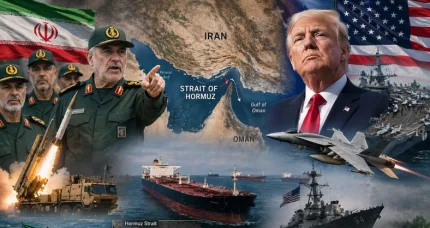
The primary focus of this redeployment appears to be the Strait of Hormuz, the narrow waterway through which roughly one-fifth of the world’s traded oil passes daily. Iran’s regime has escalated disruptions there, effectively attempting a de facto blockade that has driven up global energy prices and threatened economic stability.
U.S. officials emphasize that the deployment provides CENTCOM with more tools to ensure freedom of navigation. It does not signal an imminent large-scale ground invasion of Iran but rather strengthens deterrence and enables targeted operations to neutralize threats like mines, small boats, and missiles aimed at commercial shipping.
Defense Secretary Hegseth’s swift approval underscores the Trump administration’s commitment to projecting overwhelming American power when adversaries challenge U.S. resolve. This contrasts sharply with previous policies that allowed Iran to grow bolder through inaction.
Satellite imagery has confirmed the USS Tripoli transiting westward through the South China Sea, en route to the Middle East. The journey from the Pacific typically takes one to two weeks, meaning the force could arrive and integrate into operations soon.
The 31st MEU’s capabilities include rapid amphibious assaults, noncombatant evacuations, and maritime security missions, precisely the kind needed if Iran continues mine-laying or harassing tankers in the strait.
Recent U.S. strikes on Kharg Island, Iran’s main oil export terminal hub, destroyed naval mine storage, missile facilities, and other military sites. President Trump warned that further interference could lead to strikes on oil infrastructure itself, a step the administration hopes to avoid through demonstrated strength.
This Marine deployment adds to the more than 50,000 U.S. troops already positioned across the Middle East, including naval assets supporting ongoing air and missile campaigns against Iranian targets.
Conservative observers note that the move reflects a return to muscular foreign policy under President Trump, prioritizing American energy security and preventing hostile regimes from holding the global economy hostage.
Iran’s foreign minister has claimed the strait remains open to all except American and allied vessels, an outrageous provocation that only justifies stronger U.S. presence to protect innocent shipping.
The F-35B jets aboard the Tripoli represent cutting-edge fifth-generation stealth technology, allowing U.S. forces to operate with superiority in contested littoral environments near Iran’s coast.
MV-22 Ospreys provide unmatched speed and range for troop insertion or extraction, making the MEU a highly mobile force multiplier in dynamic crisis scenarios.
Critics of past administrations argue that delayed responses to Iranian provocations emboldened the regime. The current decisive action aims to reverse that trend and restore deterrence.
The Pentagon’s decision to redirect Pacific-based assets highlights the flexibility of U.S. naval power projection, ensuring no theater is left vulnerable while addressing immediate threats.
As gas prices rise domestically due to disrupted oil flows, this deployment reassures Americans that the government is acting aggressively to reopen supply lines and stabilize markets.
Marine veterans have cautioned against online speculation of a full invasion, noting that an MEU is designed for limited, high-impact missions, not sustained occupation of a nation the size of Iran.
Instead, the force offers options for securing shipping lanes, responding to attacks on tankers, or seizing small objectives if escalation demands it.
The administration continues to call on allies, including Britain, France, and others, to contribute warships to multinational efforts safeguarding the strait, sharing the burden of maintaining global commerce.
President Trump’s recent statements emphasize that “unparalleled firepower” awaits any who threaten American interests or those of its partners, a message clearly backed by this reinforcement.
This deployment arrives as U.S. and Israeli strikes continue to degrade Iran’s military capabilities, from missile sites to command structures, weakening the regime’s ability to sustain aggression.