US Defense Secretary Pete Hegseth announced during a Pentagon briefing that American and Israeli air forces are rapidly securing dominance over Iran’s airspace, with complete uncontested control expected within days to a week. Hegseth stated that the two most powerful air forces in the world, the United States and Israel, will soon have full control
US Defense Secretary Pete Hegseth announced during a Pentagon briefing that American and Israeli air forces are rapidly securing dominance over Iran’s airspace, with complete uncontested control expected within days to a week.
Hegseth stated that the two most powerful air forces in the world, the United States and Israel, will soon have full control of Iranian skies. Iranian leaders will look up and see only US and Israeli aircraft operating freely every minute of every day until the mission concludes.
He emphasized that Iran will be unable to respond effectively once full air superiority is achieved, describing the situation as delivering death and destruction from the sky all day long.
The announcement came amid Operation Epic Fury, now in its sixth day since launching on February 28. US and Israeli strikes have significantly degraded Iran’s air defenses, missile capabilities, naval assets, and defense-industrial base.
Hegseth noted that the Iranian air force has been effectively neutralized, with no remaining operational aircraft posing a threat. More than 200 air defense systems and radars have reportedly been destroyed at sites including Imam Khomeini International Airport and Kish Island.
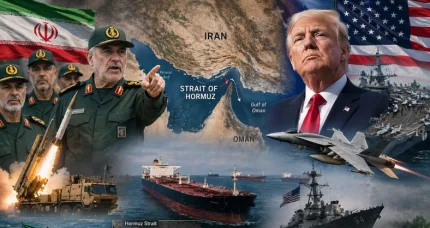
He highlighted a historic strike in which a US submarine used a torpedo to sink an Iranian warship in the Indian Ocean, marking the first submarine attack on an enemy vessel since World War II. The action contributed to the neutralization of Iran’s navy, with 17 vessels reportedly sunk.
Hegseth described the campaign as progressing decisively and without mercy. More bombers, fighters, and other assets are arriving in the region daily to accelerate the effort, including B-2, B-1, and B-52 bombers striking deep targets.
He asserted that the United States is winning the operation decisively, with Iran’s military capabilities weakening by the hour while American strength grows. Nearly 2,000 targets have reportedly been struck using more than 2,000 munitions, including hundreds of ballistic missile launchers and production sites.
The Defense Secretary cautioned that while air dominance is being established, the United States cannot intercept every incoming Iranian projectile. Enhanced air defense systems have been deployed at full capacity to protect forces and allies, and no US or Israeli aircraft losses have been reported.
Hegseth stressed that the battle has only just begun, rejecting any notion of an endless conflict similar to past wars in the region. He framed the campaign as a generational opportunity to reshape the Middle East, with goals that include regime change and nuclear disarmament.
He declared that Iran is toast and that its leaders know it, or soon will, as the United States and Israel hunt down remaining threats from uncontested airspace following the killing of senior IRGC figures and the supreme leader.
Additional updates show intensified bombardment of Iranian security forces, symbols of power, and infrastructure across cities, including Tehran. Strikes have reportedly hit sites near media centers, IRGC naval bases, and underground facilities such as Imam Ali and Bid Ganeh using bunker-buster munitions.
The conflict has widened, involving strikes in Lebanon against Hezbollah, which has entered the conflict with precision strikes on northern Israel. Iranian retaliatory actions have also targeted regional military and economic sites in Gulf states, including Bahrain and Kuwait.
Reports indicate severe degradation of Iran’s missile and drone capabilities, with missile launches reportedly down 86 percent since early February. Iran has increasingly relied on cheaper drones as more than 300 launchers have been destroyed.
Iran has fired more than 500 ballistic missiles and 2,000 drones in response, though their effectiveness appears to be declining as barrages against Israel and Gulf states decrease.
The Israeli Air Force has reportedly dropped around 5,000 munitions on targets across Iran since the conflict began, weakening military infrastructure and reducing missile launch abilities.
Hegseth confirmed that no ground forces have been deployed in Iran. Control over airspace and waterways has largely been achieved without boots on the ground, though Iranian ground forces remain mostly intact.
The US Senate voted down a bipartisan resolution to limit President Trump’s war powers and require congressional authorization for further hostilities. The House is expected to vote on a similar measure.
President Trump has pushed back against critics, with administration officials citing prior Iranian threats as justification for the strikes, including the assassination of the supreme leader.
Hegseth dismissed some media coverage that he said attempts to highlight US casualties in order to undermine the campaign. He acknowledged that losses have occurred, including service members killed in attacks that penetrated defensive systems.
Questions remain about the full scope, duration, and endgame of the operation. Civilian impacts are under investigation amid reports of strikes in populated areas and death tolls rising above 1,000.
The administration maintains that the strikes are intended to prevent Iran from pursuing nuclear weapons and to address imminent threats to US and allied interests. Officials say operations could continue for weeks.
Hegseth reiterated that the military has sufficient munitions and resources for sustained operations. He vowed to take whatever time is necessary to ensure success, with US Central Command reporting that operations are ahead of the original plan.