President Donald Trump announced this week that the United States and Iran have reached a memorandum of understanding to end a war that has shaken the Middle East and rattled global energy markets for more than three months, with a formal signing ceremony taking place Friday in Geneva as the world watched one of the

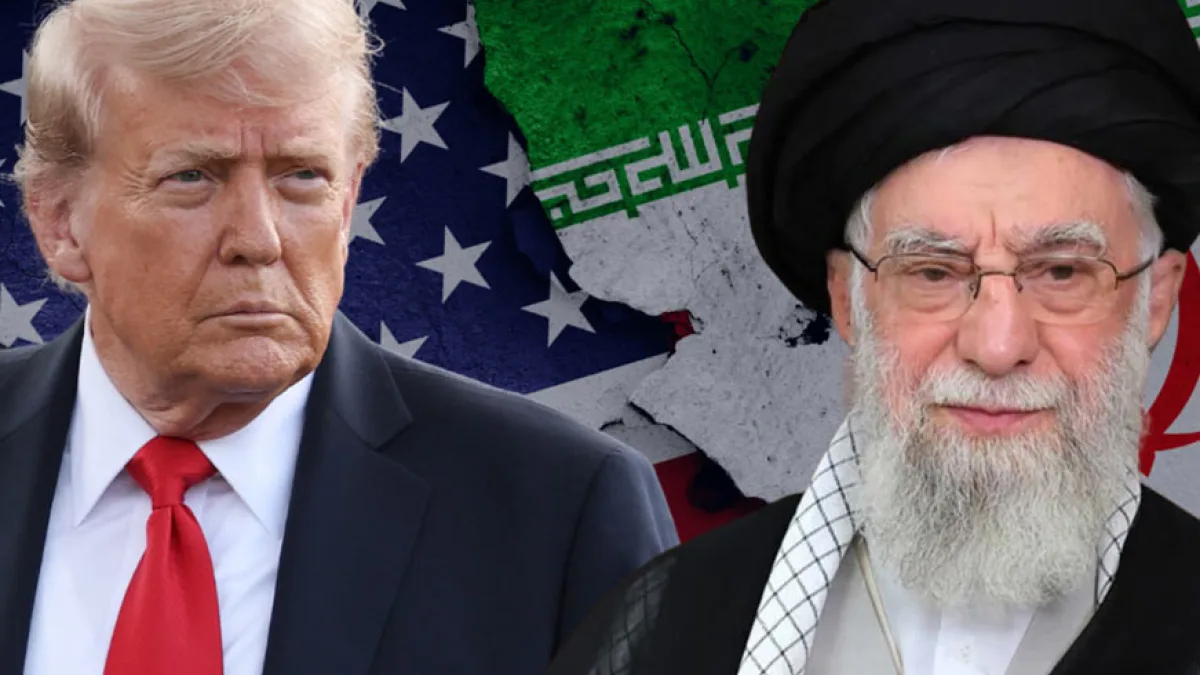
President Donald Trump announced this week that the United States and Iran have reached a memorandum of understanding to end a war that has shaken the Middle East and rattled global energy markets for more than three months, with a formal signing ceremony taking place Friday in Geneva as the world watched one of the most consequential diplomatic breakthroughs of his presidency.
The deal, mediated by Pakistan and Qatar after months of on-and-off negotiations, includes a 60-day ceasefire framework, the immediate reopening of the Strait of Hormuz to all international shipping, the lifting of the American naval blockade on Iranian ports, and Iran’s renewed pledge to never acquire a nuclear weapon.
In exchange, it paves the way for formal technical negotiations on the future of Iran’s nuclear program and the broader question of sanctions relief.
Trump greeted the announcement with characteristic fanfare on Truth Social, writing that ships of the world should start their engines and let the oil flow, capturing in a single line both the economic stakes of the deal and his administration’s unapologetic enthusiasm for the outcome.
Global markets surged on the news, with oil prices falling more than four dollars a barrel as traders priced in the restoration of shipping through a chokepoint that handles roughly 20 percent of the world’s traded oil.
The war itself traces back to February 28 of this year, when coordinated American and Israeli strikes targeted Iranian nuclear and military sites amid a rapidly deteriorating diplomatic environment.
Those strikes came after an earlier round of indirect negotiations mediated by Oman and Italy collapsed and after Israel launched its own strikes on Iranian nuclear installations in mid-June of last year.
The conflict that followed drew in Hezbollah, disrupted global shipping, and sent energy prices to levels not seen in years.
Trump had told reporters on the sidelines of the G7 summit in France in mid-June of last year that he believed Iran would eventually sign an agreement, calling it foolish for Tehran not to do so.
It took another year of hostilities, back-channel diplomacy, and multiple ceasefire attempts before his prediction came to pass.
Vice President JD Vance framed the deal in sweeping terms, telling Fox News that Trump had created the real space to transform the Middle East through his diplomacy with Gulf countries and regional partners.
Vance added that the administration could say with confidence that Iran would never have a nuclear weapon, describing the moment as the potential dawn of a new era for the region.
Iran’s deputy foreign minister Kazem Gharibabadi confirmed from Tehran that the text had been finalized ahead of the signing and said a permanent and immediate end to the war had been declared on all fronts.
Tehran also said the agreement encompasses Lebanon, where Israel and Iranian-backed Hezbollah forces have been engaged in near-constant conflict since early March.
The deal notably does not include Israel as a formal party.
That absence has drawn significant attention, as Israeli Prime Minister Benjamin Netanyahu had not publicly commented on the agreement at the time of the signing.
An Israeli official briefed on the matter told reporters that Netanyahu was seeking a direct meeting with Trump to discuss the terms, a signal that whatever satisfaction exists in Jerusalem over the degradation of Iran’s nuclear capabilities may be tempered by unease over a deal reached without Jerusalem’s direct involvement.
The Council on Foreign Relations noted that the agreement explicitly addresses Lebanon, committing to an immediate and permanent end to military operations there and a guarantee of Lebanese sovereignty, which experts say could create a framework for a broader Israeli-Lebanese settlement if Hezbollah chooses to abide by the restrictions Tehran may now place on it.
Trump’s approach to Iran’s nuclear program in the agreement represents a notable shift from his earlier public posture.
The president had for years called for the complete dismantling of Iran’s entire nuclear enrichment capacity, but in an interview with the New York Times conducted around the time of the deal’s announcement, he indicated that Iran would be permitted low-level enrichment as part of any final agreement.
Resolving the precise limits on enrichment, the release of frozen Iranian assets held abroad, and the scope and timing of sanctions relief will be among the central tasks of negotiations during the 60 day window.
Trump said the full text of the memorandum of understanding would be released relatively soon after the signing, acknowledging that many details remained to be publicly disclosed.
Critics on both sides of the political spectrum noted the compressed negotiating timeline, with hardliners arguing that 60 days is insufficient to resolve disputes that have festered for decades and skeptics warning that Iran has a well-documented history of using diplomatic processes to buy time.
The path to Friday’s signing was anything but smooth.
Multiple ceasefire attempts over the preceding months had stalled or collapsed, often disrupted by Israeli military action in Lebanon or Iranian retaliation. The days immediately before the Geneva ceremony were similarly tense, with reports of planned strikes emerging and then being called off within hours, underscoring how fragile the diplomatic gains remained even at the moment of formal agreement.
Pakistan’s Prime Minister played a visible public role as a co-mediator alongside Qatar, a positioning that reflects Islamabad’s growing ambitions as a regional diplomatic actor and its deep historical ties to both Washington and Tehran. Qatar’s role drew less surprise, given Doha’s track record of back channel facilitation across numerous Middle Eastern disputes over the past decade.
Conservative commentators have been divided in their assessments. Hawks who have long pressed for a more maximalist approach to Iran’s nuclear program expressed concern that the deal essentially grants Tehran a 60 day window to stall while retaining significant enrichment infrastructure. Others, including figures aligned with Trump’s broader foreign policy vision, pointed to the reopening of the Strait and the cessation of active hostilities as concrete and immediate wins that no previous administration had managed to deliver.
Steve Witkoff, Trump’s special envoy who played a central role in the negotiations alongside Jared Kushner, has been a key architect of the administration’s broader Middle East strategy. CENTCOM commander Brad Cooper also participated in the talks, a signal of how directly military considerations were woven into the diplomatic framework throughout the negotiation process.
European allies, who pursued their own separate negotiating track with Iran through the E3 grouping of France, Germany, and the United Kingdom, were briefed on the framework but played no direct role in the final deal. The European track, which had focused on Iran’s enrichment levels, broke down entirely when Israeli strikes resumed last year, leaving the field clear for the American-led effort that ultimately produced Friday’s agreement.
For the global economy, the stakes of the deal can hardly be overstated. The Strait of Hormuz, through which flows not only a large share of the world’s oil but also significant volumes of liquefied natural gas from Qatar and the broader Gulf, has functioned under a de facto Iranian blockade for months. Insurance premiums for vessels attempting to transit the waterway spiked dramatically, and the broader disruption contributed to inflationary pressures affecting countries far removed from the conflict itself.
The most immediate practical consequence of the deal will be felt at the pump and in energy markets globally, as the restoration of full commercial traffic through the strait brings anticipated relief to oil and gas prices. Analysts cautioned that the price drop observed on the announcement could partially reverse if the ceasefire fails to hold during the 60-day negotiating window or if technical talks on the nuclear file break down.
On Capitol Hill, Republican leaders largely praised the announcement, with several senators describing it as a historic moment and crediting Trump’s willingness to apply maximum military pressure before reaching for diplomacy as the key to extracting an agreement Tehran had long resisted. Democratic critics were more cautious, with several noting that the full terms of the memorandum of understanding remained undisclosed and that no final resolution of the nuclear question had yet been achieved.