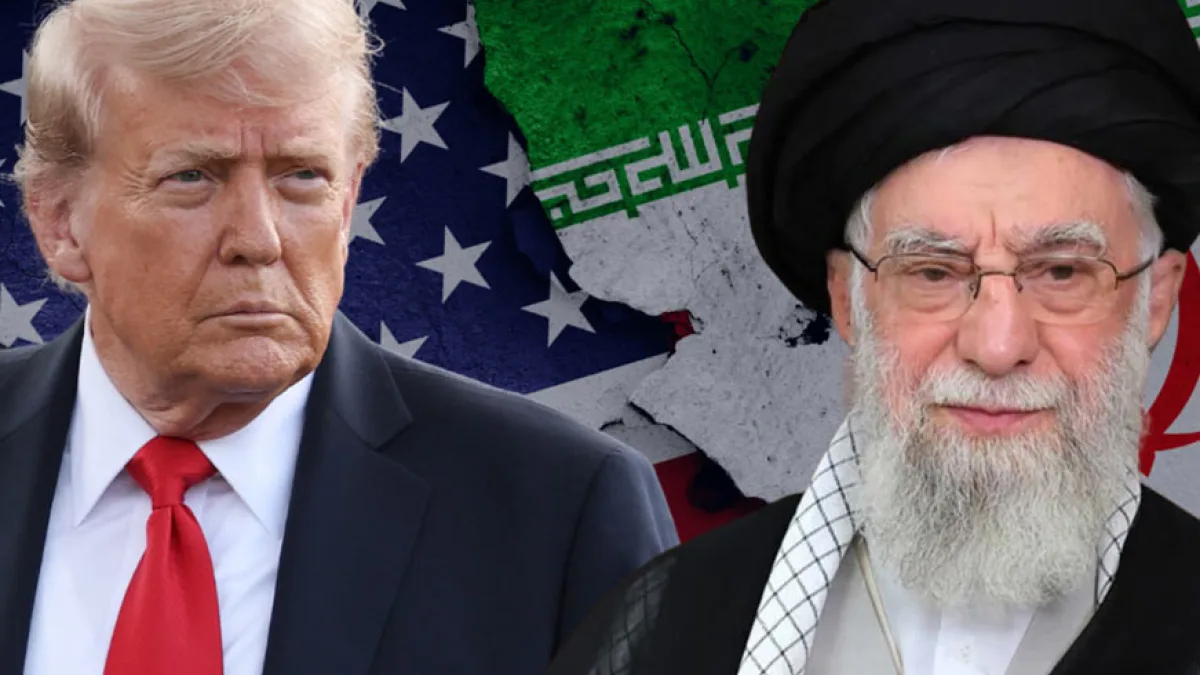
U.S. Central Command confirmed that American forces conducted self-defense strikes on Iranian coastal surveillance radar and command-and-control sites at Goruk, Iran and on Qeshm Island — a clear and proportionate response to a dangerous series of Iranian provocations that threatened American lives, U.S. allies, and the free flow of global commerce through the Strait of

U.S. Central Command confirmed that American forces conducted self-defense strikes on Iranian coastal surveillance radar and command-and-control sites at Goruk, Iran and on Qeshm Island — a clear and proportionate response to a dangerous series of Iranian provocations that threatened American lives, U.S. allies, and the free flow of global commerce through the Strait of Hormuz.
According to CENTCOM’s official statement, the strikes on Saturday and Sunday came directly in response to Iran’s shootdown of a U.S. MQ-1 drone that was operating in international waters — a sovereign provocation that demanded a response. “U.S. Central Command conducted self-defense strikes on Iranian radar and command and control sites for drones in Goruk, Iran and Qeshm Island this weekend,” CENTCOM announced on the social platform X. The strikes were described as “measured and deliberate.”
12,200+
patriots joined
Keep reading — stay on the brief
Daily MAGA briefing in your inbox. Free, unsubscribe anytime.
The provocations that triggered these strikes were not isolated incidents. On June 5, U.S. forces intercepted multiple Iranian ballistic missiles and drones launched by Iran toward the Strait of Hormuz, Kuwait, and Bahrain.
Iran fired seven ballistic missiles toward Kuwait and Bahrain — two nations hosting American troops — hours after CENTCOM shot down four Iranian one-way attack drones that had been launched toward the Strait of Hormuz and determined to pose an immediate threat to regional maritime traffic. The attacks represent a brazen and multi-pronged act of Iranian belligerence that cannot go unanswered.
CENTCOM’s official reporting makes the strategic rationale explicit: U.S. forces struck the Iranian radar sites specifically “to defend against further maritime attacks.” In other words, this was not retaliation for its own sake — it was active force protection, neutralizing the Iranian regime’s surveillance and targeting infrastructure that enables future attacks on American vessels, partner nations, and the commercial shipping lanes that keep the global economy functioning.
The Strait of Hormuz carries roughly 20 percent of the world’s oil supply; any disruption there is a direct threat to American prosperity and global stability.
Iran’s state-linked media acknowledged the impact of the strikes, with the Iranian Revolutionary Guard Corps stating that a telecommunications tower was hit in Sirik, in the area of Goruk city. Notably, Iranian state media made no mention of the strike on Qeshm Island — a telling silence that suggests the damage there may have been even more significant.
The Guard also claimed to have responded by targeting the base from which the American strike was launched, an assertion that underscores the escalatory nature of the Iranian regime’s posture.
The broader operational context surrounding these strikes reflects a U.S. military presence fully engaged in defending American interests and regional security. CENTCOM separately confirmed that it stopped a commercial vessel from docking at an Iranian port during a U.S. naval blockade of the Strait of Hormuz. CENTCOM forces observed the vessel, sailing under a Gambian flag, transiting international waters toward an Iranian port in the Gulf of Oman and issued more than 20 warnings before the ship was “disabled” for violating the blockade. That is not the behavior of a passive military — it is the posture of a superpower that takes its commitments seriously.
Six of the seven Iranian ballistic missiles launched toward Kuwait and Bahrain were successfully intercepted by U.S. forces. The seventh did not reach its intended target. This interception record is a testament to the readiness of American air and missile defense capabilities deployed in the region — capabilities that protect not only U.S. service members but the thousands of civilians in partner nations who live under the shadow of Iranian aggression.
The broader campaign context is one of Operation Epic Fury, the U.S. and Israeli joint operation to systematically degrade the Islamic Revolutionary Guard Corps’ capacity to project force across the region. According to Gulf News and defense publications, CENTCOM has conducted strikes on close to 2,000 targets across Iran’s military infrastructure, including ballistic and cruise missile launch sites, air defense batteries, IRGC command nodes, and naval assets. Admiral Brad Cooper, CENTCOM commander, reported that 17 Iranian ships — including a submarine — were destroyed in the first 100 hours of the operation.
Satellite imagery and declassified footage released alongside official statements confirm widespread physical destruction of Iranian military facilities across multiple sites. These are not warnings; they are consequences. Iran’s military leadership is now confronting the reality that its decades-long strategy of calibrated provocation — attacking by proxy, harassing shipping lanes, shooting down American drones, and threatening U.S. allies — carries a price that the United States under President Trump is willing to collect.
The domestic political significance of these strikes should not be understated. For years, critics of American strength argued that robust military responses in the Middle East were provocative, unnecessary, or counterproductive. The events of June 2026 are the rebuttal: Iran did not stop its aggression when America signaled restraint. It escalated. It shot down American drones. It launched ballistic missiles at countries hosting U.S. troops.
The lesson is as old as geopolitics itself — strength deters, weakness invites. The Trump administration has chosen strength, and the results speak for themselves.
American service members in the region continue to perform their duties with professionalism and valor under extraordinarily demanding conditions. The strikes on Iranian radar sites — precise, purposeful, and legally grounded in the right of self-defense under international law — are a direct product of that professionalism. These men and women do not pick fights. But they finish them. And the message sent to Tehran through the smoking ruins of those radar sites on Qeshm Island and in Goruk is one that the Iranian regime would be wise to heed: the United States of America will not be intimidated, harassed, or attacked without consequence.
The situation in the Gulf remains dynamic, and American vigilance remains total. The naval blockade of the Strait of Hormuz continues. CENTCOM forces remain at the ready.