
Welcome to MAGA Media Hub
Your daily briefing on the stories the legacy press refuses to cover — straight, unfiltered, and on your side.
 Patriot Desk
The Trump administration secured a significant legal victory this week as a federal appeals court upheld a key immigration enforcement policy, reinforcing the government’s authority to detain certain illegal immigrants without bond hearings. The ruling marks a turning point in the broader legal fight over how far federal agencies can go in enforcing immigration law
The Trump administration secured a significant legal victory this week as a federal appeals court upheld a key immigration enforcement policy, reinforcing the government’s authority to detain certain illegal immigrants without bond hearings. The ruling marks a turning point in the broader legal fight over how far federal agencies can go in enforcing immigration law within the United States.
The decision came from the U.S. Court of Appeals for the Eighth Circuit, which ruled 2-1 in favor of the administration’s interpretation of existing immigration statutes. By overturning a lower court’s attempt to limit detention authority, the appellate court made clear that federal law still grants significant discretion to immigration officials. This was not an isolated ruling, but part of a growing pattern in which higher courts are increasingly siding with enforcement-focused policies.
According to reporting from Reuters, the central legal question involved whether certain migrants arrested within the interior of the country could be treated as “applicants for admission.” That classification is not just technical language. It carries real consequences, allowing authorities to detain individuals without providing a bond hearing while their cases proceed through the system.
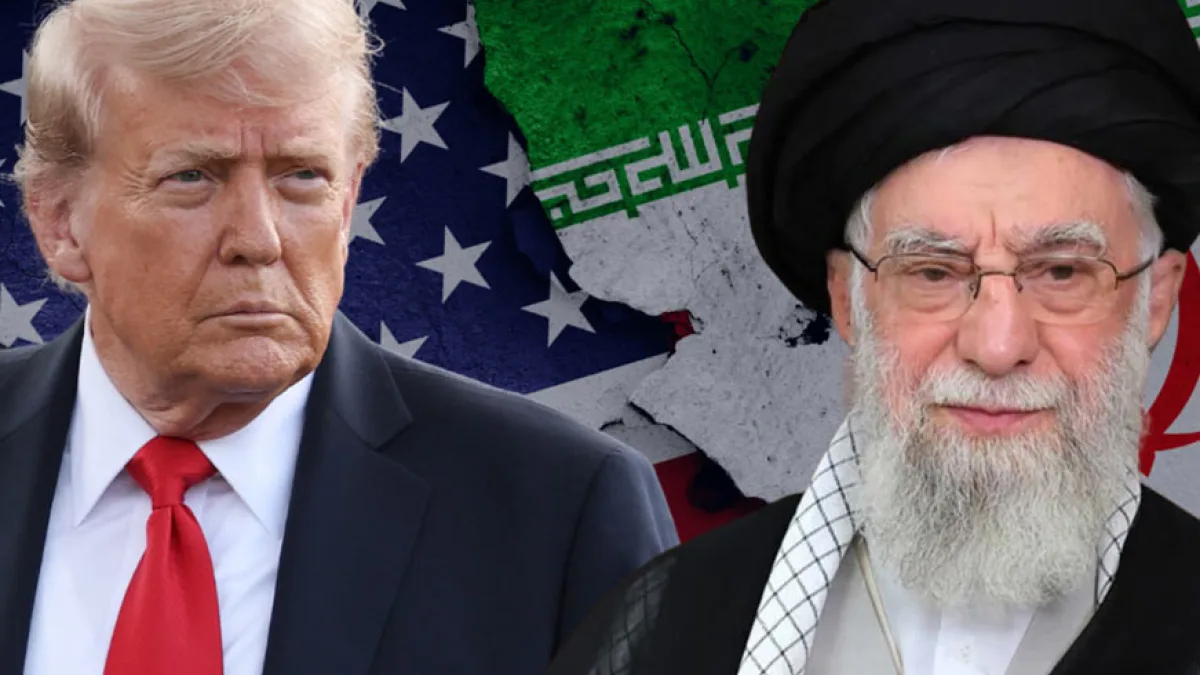
Iran says it will declare an exclusion zone in the Strait of Hormuz and punish ships that pass through. Another empty threat — they cannot enforce it. Is Iran all talk on the Strait of Hormuz?
Daily MAGA briefing in your inbox. Free, unsubscribe anytime.
The court ultimately agreed with the administration’s position, affirming that this interpretation fits within the framework of existing immigration law. In doing so, the ruling provides renewed legal backing for enforcement strategies that critics have long tried to challenge in court. It also reinforces a basic but often contested idea: immigration law, as written by Congress, gives the federal government tools to detain individuals when necessary.
The decision applies across the seven states within the Eighth Circuit, giving agencies like U.S. Immigration and Customs Enforcement clearer authority as they carry out operations. For ICE, this clarity is crucial. Enforcement does not happen in theory. It happens on the ground, where uncertainty about legal limits can directly affect how policies are implemented.
For the Trump administration, the ruling represents more than a legal technicality. It serves as validation of an approach that has consistently emphasized law and order, border control, and the consistent application of immigration statutes. For years, critics have argued that aggressive enforcement measures push beyond legal boundaries. This decision directly challenges that claim.
Opponents of the policy continue to argue that detention without bond hearings raises serious due process concerns. But those arguments often overlook the statutory distinctions built into immigration law itself. Congress created categories that treat different groups of non-citizens differently, particularly when it comes to entry and admissibility. The court’s ruling reflects that structure rather than rewriting it.
That distinction is important because it highlights the proper role of the judiciary. Courts are not meant to create policy. They are meant to interpret the law. In this case, the interpretation favored the government’s authority to enforce immigration rules as they currently exist, rather than limiting that authority based on broader policy concerns.
The broader political implications are difficult to ignore. Immigration remains one of the most defining issues in American politics, and enforcement policies have been at the center of that debate. This ruling strengthens the administration’s position by showing that its approach is not only politically assertive but legally defensible.
It also signals a potential shift in how courts handle future challenges. Legal battles have long been a primary tool for opponents seeking to block or delay enforcement policies. But as appellate courts begin to uphold these measures, that strategy may become less effective, forcing a shift in how the debate is carried out.
At the same time, the ruling underscores the divide between two fundamentally different approaches to immigration. One prioritizes strict enforcement and clear legal boundaries. The other emphasizes expanded procedural protections and limits on detention. The Eighth Circuit’s decision leans firmly toward enforcement, reinforcing the idea that laws must be applied consistently to have meaning.
Supporters of stronger immigration enforcement argue that detention authority is not just a legal tool but a practical necessity. Without it, they say, the system risks becoming ineffective, as individuals may be released without sufficient assurance that they will comply with legal proceedings. From this perspective, the ruling helps restore balance to a system that has struggled with enforcement challenges for years.
Critics, however, maintain that such policies can be overly broad and risk sweeping in individuals who pose no threat. But the court’s decision suggests that these concerns, while politically significant, do not override the legal framework established by Congress. That is a key point in understanding the ruling’s impact.
The decision does not end the legal fight over immigration policy. Other cases are moving through the courts, and different circuits may reach different conclusions. But for now, the trend is clear. The judiciary is increasingly willing to uphold enforcement measures that align with the statutory language of immigration law.
For the Trump administration, that trend provides both legal support and political momentum.
🚨 SHARE NOW — the REAL poll numbers are much higher than what's being shown publicly 👀
Share this post + vote today for a chance to receive a FREE surprise gift from our store before the next update drops 🎁⏳
Your daily briefing on the stories the legacy press refuses to cover — straight, unfiltered, and on your side.
MAGA Insider: Top Political Stories for Patriots – April 19, 2026 Welcome to MAGA Insider, the go-to source for the latest political news for proud Trump supporters! Ditch the Fake News Media and join MAGA Insider Today! 1: Shreveport Mass Shooting Leaves 8 Children Dead After Domestic Rampage Tragedy Shocks Nation A horrific mass shooting
MAGA Insider: Top Political Stories for Patriots—April 19, 2026 Welcome to MAGA Insider, the go-to source for the latest political news for proud Trump supporters! Ditch the Fake News Media and join MAGA Insider today! 1: BREAKING: Omar Says $30M Asset Filing Was Just An “Accounting Error” Far-left Rep. Ilhan Omar (D-MN) is scrambling to
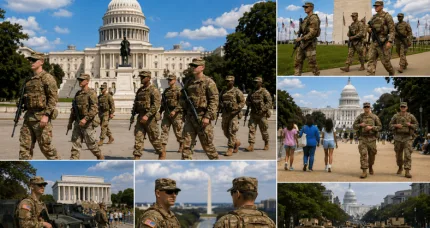
Homicides in Washington, D.C., have plummeted 52 percent in the early months of 2026 compared to the same period last year, as the sustained deployment of National Guard troops and federal law enforcement continues to transform the nation’s capital from a dangerous embarrassment into a far safer city. According to the latest Metropolitan Police Department
Leave your Name and Email to subscribe
Get the daily MAGA brief in your inbox.
🇺🇸 Before you go —
Get the daily MAGA brief in your inbox. Free, unsubscribe anytime.
One email a day. Real news, not press releases.
🎉 You're on the briefing.
Check your inbox — we've sent a welcome email.
Starting tomorrow morning you'll get daily MAGA news, quick polls and priority alerts — straight to your inbox.