An Iranian drone shot down a U.S. Army AH-64 Apache helicopter during a routine patrol on the night of June 8, 2026. Both crew members survived the attack and were pulled from the waters of the Gulf of Oman in what military officials are calling a historic first: a rescue carried out entirely by an

An Iranian drone shot down a U.S. Army AH-64 Apache helicopter during a routine patrol on the night of June 8, 2026. Both crew members survived the attack and were pulled from the waters of the Gulf of Oman in what military officials are calling a historic first: a rescue carried out entirely by an autonomous unmanned surface vessel.
The helicopter went down near the coast of Oman while patrolling regional waters. The soldiers were safely rescued within approximately two hours and are in stable condition. The cause of the incident remains under investigation. Though initial statements from U.S. Central Command was careful not to immediately assign blame; the picture came into sharper focus within hours.
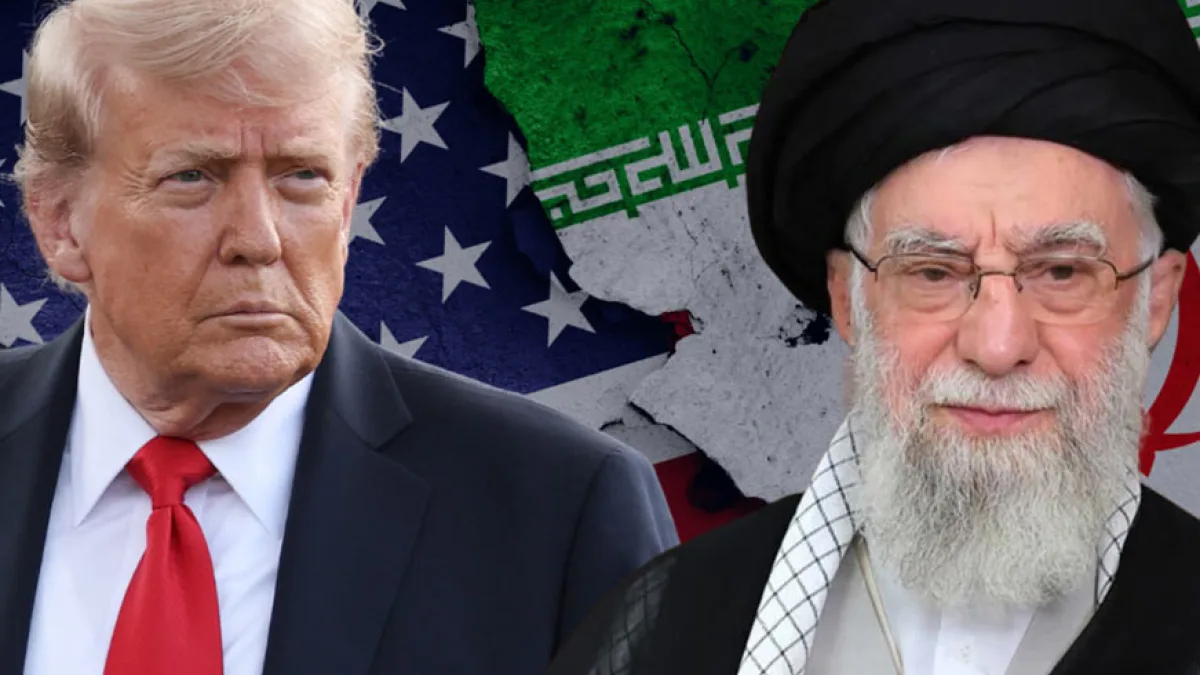
President Donald Trump said the Apache was shot down by Iran and that the U.S. would retaliate. Speaking via his Truth Social account, the president said he had just been informed by the military that the Iranians shot down one of America’s highly sophisticated Apache helicopters while it was patrolling over the Strait of Hormuz, signaling that America would not absorb the provocation without consequence.
“There were two pilots involved; both are safe and uninjured. Nevertheless, the United States must, of necessity, respond to this attack,” Trump wrote. The statement was unambiguous: Iran had crossed a line, and the United States military would answer it with force.
As the U.S. began retaliatory strikes, officials told reporters that an Iranian Shahed drone was believed to be responsible for the downing of the U.S. Army AH-64 Apache during the patrol. The Shahed-series drone has become one of Iran’s most feared asymmetric weapons, deployed widely across multiple theaters of conflict in recent years.
The survival of the two crew members under such circumstances is being described by military analysts as nothing short of extraordinary. The drone, armed but reportedly unexploded on impact, flew directly into the cockpit of the Apache, yet both pilots managed to survive and reach the water alive.
The helicopter went down at approximately 11:33 p.m. local time on Monday. A recovery effort was immediately launched by U.S. Naval Forces Command and the 82nd Airborne Division, with support from U.S. Air Force and Navy units. The speed of the response likely saved the pilots’ lives.
What made this rescue unlike anything in American military history was not just who responded but what responded. The American military deployed an autonomous Corsair maritime drone built by Saronic Technologies to find and recover the two soldiers who were stranded near the Strait of Hormuz after their helicopter crashed. No sailor, no rescue swimmer, no manned vessel put themselves in harm’s way to bring those pilots home. A machine did it.
The Corsair picked the Apache crew up and transported them to another location on the water where they were then hoisted up to a helicopter for further transport, according to CENTCOM spokesman Capt. Tim Hawkins. The seamless handoff between an autonomous sea drone and a recovery helicopter illustrated the growing maturity of America’s unmanned systems integration.
The Corsair is a 24-foot autonomous vessel built for long, rough missions. According to Saronic Technologies, it can run faster than 35 knots and haul more than 1,000 pounds over a range of 1,000 nautical miles. Task Force 59 only began fielding these drones in the theater in late March. The fact that a system deployed only months earlier was already pulling American servicemembers from hostile waters speaks volumes about the rapid operational integration underway within U.S. Naval Forces Central Command.
The Navy tapped Texas-based Saronic Technologies to produce multiple batches of its autonomous maritime drones by mid-2031 under an other transaction agreement worth more than $392 million. That investment is now paying dividends in the most literal sense: American lives saved in an active combat zone.
Task Force 59, established to fast-track unmanned systems into fleet operations, had previously used the Corsair as a sensor node and security screen. This rescue operation dramatically expands the proven operational envelope for the technology. What was once a platform deployed for surveillance and perimeter defense has now proven itself as a life-saving tool in an active combat zone.
The incident marks the first time during Operation Epic Fury that an Apache has been lost, and also the first time a U.S. Army Apache has been shot down since the Iraq War. That sobering fact underscores just how intense the U.S.-Iran confrontation in and around the Strait of Hormuz has become.
The broader context of this incident cannot be understated. On March 19, 2026, the United States began an aerial campaign against Iranian targets to reopen the Strait of Hormuz following its closure by Iran. U.S. forces deployed A-10 Thunderbolt II jets to strike Iranian fast-attack watercraft and AH-64 Apache gunships to handle one-way attack drones as part of the broader effort to reopen the strategically vital waterway.
Army AH-64 Apaches have been a central part of the U.S. effort to enforce the blockade of Iran and protect commercial shipping in the region. Just last month, Apaches and U.S. Navy MH-60 Seahawk helicopters destroyed six small Iranian boats that were threatening commercial ships in and around the Strait of Hormuz, according to Navy Admiral Brad Cooper, head of CENTCOM.
Iran has claimed to have shot down 30 MQ-9 Reaper drones since hostilities began in February. The downing of the Apache marks a significant escalation, representing the first crewed aircraft of its type lost in the campaign. It is also the second known time U.S. service members have been rescued during the Iran conflict, following the earlier recovery of two F-15E Strike Eagle crew members after their aircraft was shot down by an Iranian anti-aircraft missile in April.
With the rescue complete, attention quickly shifted to America’s military response. CENTCOM released a statement confirming that forces began launching self-defense strikes against Iran at 5 p.m. ET on June 9, at the Commander in Chief’s direction, in direct response to the downing of the Apache helicopter. The command described the mission as a proportional response to unjustified Iranian aggression.
Targets struck included Iranian air defense systems, ground control stations, and surveillance radar sites near the Strait of Hormuz. Precision munitions were delivered by U.S. Air Force and Navy fighter jets. The strikes were described as proportional, but the message to Tehran was unmistakable.
Trump told ABC News that the response was deliberate and powerful. “This is a response to what they did with our helicopter last night, and I believe the response should be very strong, very powerful, and that’s what this one is,” the president said. For an administration that has long argued that economic pressure and military strength go hand in hand, the Apache shootdown presented both a test and an opportunity to demonstrate resolve.
Iran’s response to the U.S. strikes was predictably defiant. The Iranian Revolutionary Guard claimed it conducted drone and missile attacks on the U.S. Navy’s 5th Fleet in Bahrain, launched missiles toward F-35 fighter jet hangars and the command and control center of the U.S. Army in Al-Azraq, Jordan, and targeted the Ali Al-Salem military base in Kuwait. Tehran was clearly unwilling to absorb the retaliatory blows without answering back.
Iranian Foreign Minister Abbas Araghchi responded to Trump’s threat on social media, writing that foreign forces in proximity to Iranian territory are at constant risk due to their own human errors, plain accidents, or potentially being caught in crossfire, and that the best solution to reduce risk is for them to leave. He added that Iran prefers the language of diplomacy but speaks other languages too. The statement was a thinly veiled threat wrapped in diplomatic language, a signature move from Tehran.
Despite Iran’s bellicose posturing, President Trump held firm, returning to his consistent message that economic pain and military resolve would ultimately bring Iran to the negotiating table.